The Met’s “Chasing Clouds” Examines Photography’s First Century
The Met’s “Chasing Clouds” spans the early 1800s to 1929, tracing how blue-sensitive processes, painted clouds and Gustave Le Gray’s composite exposures shaped photography’s first century.
By Marcus Bennett
“Chasing Clouds,” an exhibition at the Metropolitan Museum of Art, traces photography’s struggle with clouds from the early 1800s to 1929, roughly the medium’s first century. The show joins art and science, but it does not arrange that history as a clean march from experiment to mastery.
It opens with painted cloud studies, ends with photographic modernism and lets visual discovery unfold between painting and technology.
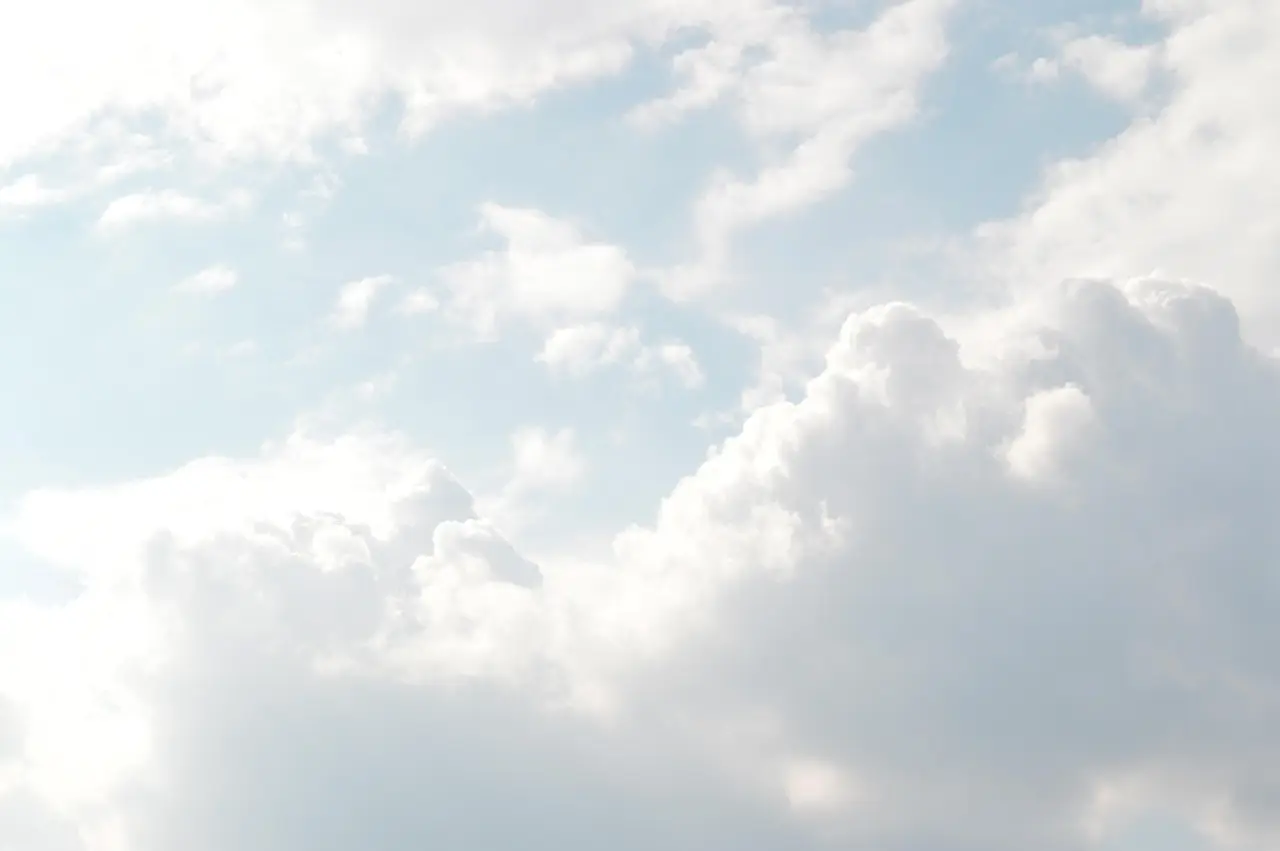
The familiar image is now so common that its difficulty can disappear. The original 1996 Windows XP default background is arguably the most-viewed photograph in all time: cumulus puffs crossing an intensely blue sky, embedded in countless Y2K childhoods.
“Chasing Clouds” restores that lost problem. Clouds were once among photography’s greatest technological challenges, not because artists lacked sky-shaped subjects, but because early photographic processes were excessively sensitive to blue light.
Why were clouds so hard to photograph?
The first processes registered the sky as blank white space and rendered it implausibly overexposed. Photography’s promise as “the pencil of nature” therefore met a specific material contradiction: the medium could describe light with extraordinary literalism, yet failed at one of the most conspicuous forms that light takes.
That failure did more than spoil exposures. In some landscapes, it produced a minimalist mystique, including John Beasley Greene’s “The Nile in Front of the Theban Hills” (1853–54). In other cases, photographers painted clouds into their landscapes by hand, adding a painted element to a camera-made view and making the seam between direct record and artifice part of the image itself.
The early cloud problem, then, was not simply a defect waiting for better chemistry. It shaped what photographers could see, how they constructed a picture and whether they accepted a single exposure as sufficient. That makes the technical history inseparable from the history of pictorial invention.
What did Gustave Le Gray change?
The initial breakthrough came from the French photographer Gustave Le Gray. He figured out how to stitch together two pictures: one calibrated to the sky, the other calibrated to land and sea. Instead of asking one exposure to carry incompatible tonal demands, he combined separate records into a single landscape.
That method solved the practical problem while establishing a persistent ambiguity. The point is plain: “Photographic fakery is as old as the medium itself.” Le Gray’s composite was an answer to a chemical and optical constraint, but it was also a constructed photograph, and both facts had to remain visible in any serious history of the technique.
There is no claim here that painted clouds or combined exposures were illegitimate. The point is narrower and more useful: photographers made convincing images by choosing how to assemble evidence. Craft lay in deciding which exposure the landscape required, which it required from the sky and where the two belonged.
What do the photographs show?
Linnaeus Tripe’s “Pugahm Myo: Distant View of Gauda-palen Pagoda” (1855), an albumen silver print from a waxed paper negative, appears among the exhibition’s material evidence. Its precise caption matters because the show treats the object as both image and result: a view made possible by specific choices about light, paper and combination.
The sequence moves from painted cloud studies at the beginning to photographic modernism at the end. Between those points, discoveries arrive through a dialogue between painting and technology, not as one triumph replacing another. Old and new methods remain in the same frame, allowing viewers to see what each approach reveals and conceals.
That structure gives the Met exhibition more weight than a technical retrospective. “Chasing Clouds” places cloud imagery inside photography’s first century and then follows its implications into modernism, where the sky becomes something more than a subject waiting for a workable exposure. It becomes evidence of the medium’s construction.
What does this change for how we see clouds?
For viewers, the Microsoft desktop image changes from a generic tasteful backdrop into the endpoint of a long technical argument. The clouds in that 1996 file are familiar because photographers had already confronted blue-light sensitivity, blank white skies and the need to join exposures. A commonplace now carries the residue of earlier experimentation.
The Met’s sequencing also resists turning obsolescence into neutral progress. The governing lesson is blunt: “Obsolescence is often a capitalist public relations trick.” Applied here, that warning asks viewers not to confuse a later technology’s victory with the earlier work’s failure, especially when the earlier work involved hand painting or deliberate assembly.
As “Chasing Clouds” reaches 1929, the cloud shifts from an engineering obstacle to a modernist formal problem. The exhibition points toward a fuller photographic history in which art, science and manipulation remain joined, rather than a story in which one technique quietly erases the others.
Key points
- The Met’s “Chasing Clouds” covers the early 1800s to 1929, roughly photography’s first century.
- The 1996 Windows XP default background is described as arguably the most-viewed photograph of all time.
- John Beasley Greene made “The Nile in Front of the Theban Hills” in 1853–54.
- Gustave Le Gray combined two pictures, one calibrated for the sky and one for land and sea.
- Linnaeus Tripe’s 1855 “Pugahm Myo” is an albumen silver print from a waxed paper negative.
Source: hyperallergic.com
Marcus Bennett
Show full bio
Correspondent covering companies, deals and strategy in Photography exhibitions, photographers, photo books, festivals and awards at Lens Gazette.