Why the Best Nature Photographs Withhold More Than They Show
A new PetaPixel essay argues that mystery is nature photography's most undervalued tool: the unseen and the ambiguous transform a literal photograph into an expressive one.
Updated
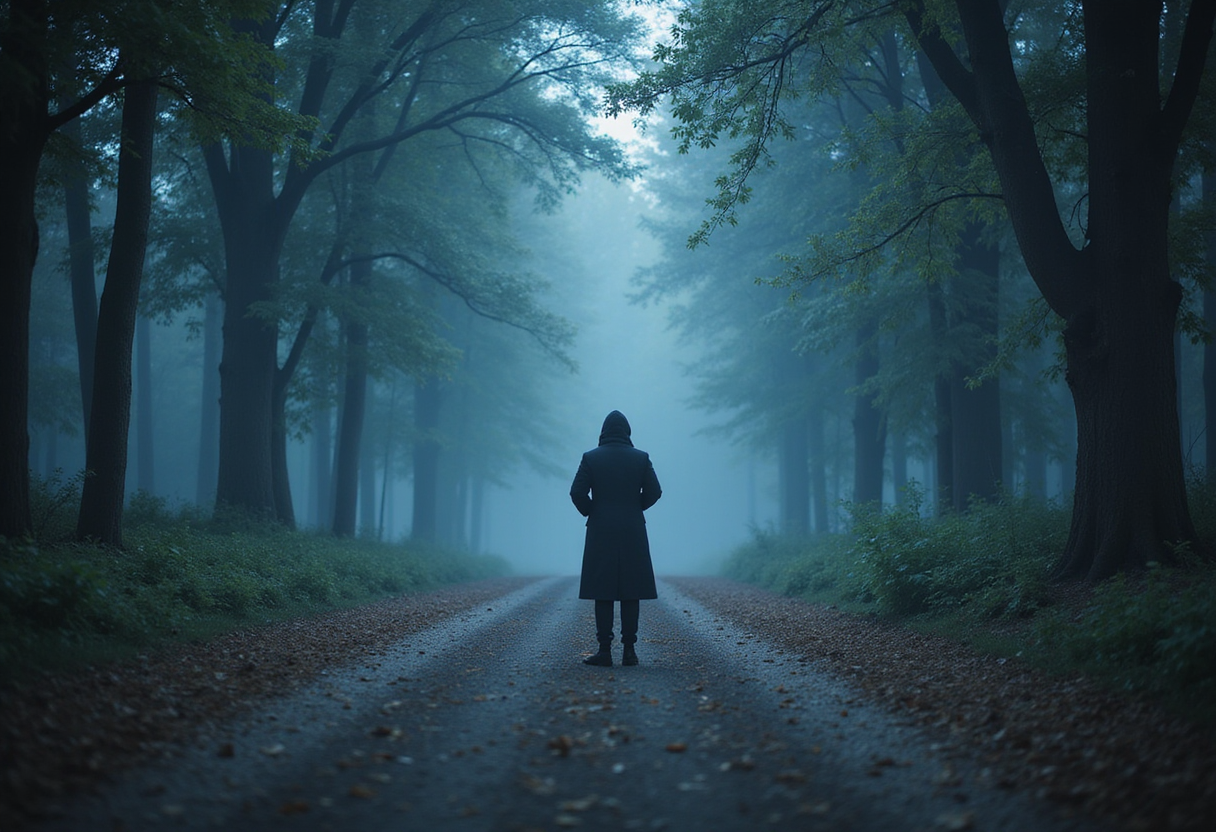
The most provocative claim in photography this week comes not from an exhibition wall but from an essay: what a photographer chooses not to show is often more powerful than what the frame reveals.
Published on PetaPixel on 28 September 2026 under the title "The Magic of Mystery: Why Great Images of Nature Ask More Questions Than They Answer," the piece opens with a paradox that cuts against much of contemporary practice. In a culture of oversharing and instant gratification, the author argues, mystery has become the photographer's secret weapon — and perhaps the most undervalued tool of all.
The essay's central distinction is between the literal photograph and the expressive one. A literal image documents: an elephant stands against a golden sunset, a bighorn sheep appears framed by birch trees — the two examples illustrated in the article's header image. An expressive image, by contrast, withholds. It lets the unseen, the suggested and the ambiguous do the work. And that restraint, the author contends, is what makes a picture haunt us long after we have looked away.
It is an argument with a long pedigree. Photographers from Minor White to Saul Leiter built entire careers on suggestion rather than disclosure, and the nature-photography tradition — often caricatured as a pursuit of maximum sharpness and maximum detail — has its own lineage of withholding: fog-drowned forests, backlit silhouettes, animals reduced to shape and gesture. The essay's title frames this as a question of epistemology rather than technique. Great images of nature, it proposes, ask more questions than they answer.
That framing matters at a moment when the default modes of nature imagery run in the opposite direction. High-resolution sensors, focus-stacking and automated subject tracking push photographers toward ever more complete description — the feather resolved to the barb, the eye caught mid-blink in tack-sharp detail. Description is not the enemy here; the essay does not argue for vagueness as an aesthetic in itself. The claim is subtler: that the ambiguous frame engages a viewer as a participant rather than a consumer, and that a photograph which resolves everything resolves nothing.
The header image makes the case visually. On the left, a dark silhouette of an elephant against a golden sunset reduces the animal to form — a shape we complete with our own knowledge and feeling. On the right, a white bighorn sheep framed by birch trees is half-swallowed by its environment, more suggested than stated. Neither image tells us everything. Both ask us to bring something to them.
There is an institutional dimension to this argument as well. The imagery that dominates stock libraries, calendar pages and social feeds is imagery that answers questions instantly — legible, generic, endlessly reproducible. Work built on mystery resists that economy precisely because it cannot be fully catalogued; its meaning depends on the viewer's completion of it. If the essay has a polemical edge, it lies here: in an age of oversharing, the withholding photograph is a quiet act of resistance.
One might push back. Ambiguity can shade into vagueness, and vagueness into failure; not every underexposed silhouette is expressive, and the essay's celebration of the unseen risks romanticizing mere obscurity. The strongest version of the argument is the one the title implies — that mystery in a photograph functions only when the image is asking a genuine question, not when it is merely withholding information it never had.
Still, as a corrective to a photographic culture that treats revelation as the default, the essay is timely. Its provocation — that the most undervalued tool in the photographer's kit may be omission — invites practitioners and editors alike to reconsider what a nature photograph owes its audience: an answer, or a question that lingers.
Key points
- PetaPixel published the essay "The Magic of Mystery: Why Great Images of Nature Ask More Questions Than They Answer" on 28 September 2026.
- The essay argues that what a photographer withholds can be more powerful than what is revealed, calling mystery the most undervalued tool in photography.
- Its header image pairs a silhouetted elephant against a golden sunset with a white bighorn sheep framed by birch trees to illustrate suggestive rather than literal imagery.
Original: muenchworkshops.com
James Calloway
Show full bio
Market editor covering industry trends and analytics at Lens Gazette.