Layered Composition Rewrites How Landscape Photographers Build Depth
A new PetaPixel guide with photographs by Kate Garibaldi argues that landscape depth comes from connecting foreground, middle ground and background — and gives exact positions, apertures and focal lengths to do it.

A new guide on layered landscape composition argues that the difference between a flat photograph and a dimensional one lies in the relationship between three zones: foreground, middle ground and background. Published by PetaPixel with photographs by Kate Garibaldi, the piece works through each plane in turn and treats craft decisions — camera position, focal length, overlap and light — as the mechanics that make depth legible on a two-dimensional print.
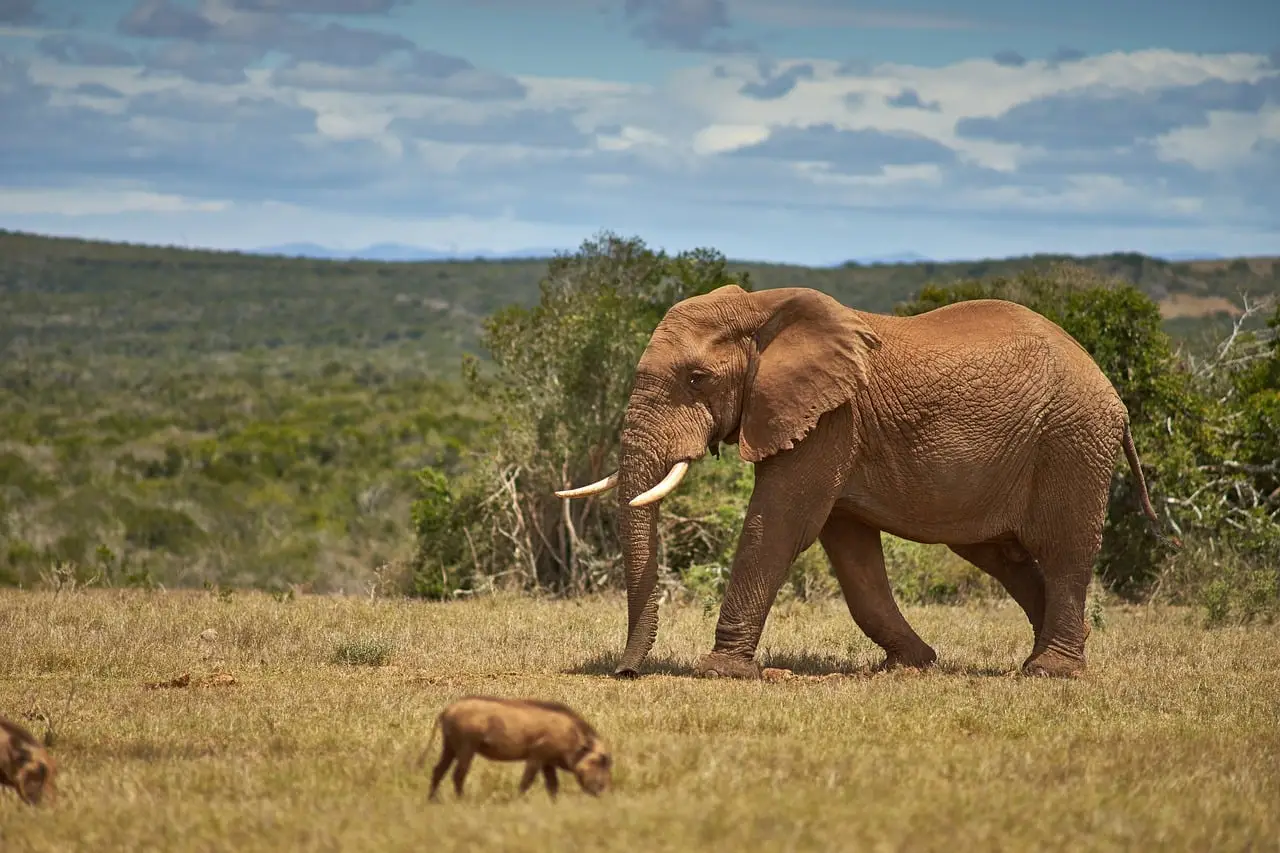
The guide's central claim is structural. The foreground anchors the immediate setting and gives the viewer an entry point; the middle ground bridges that starting point to the wider landscape; the background provides context, scale and distance. When these elements complement one another, the photograph carries dimension that a composition built around a single distant subject cannot.
Why does the middle ground matter so much?
The guide identifies the middle ground as the most overlooked zone in the practice. Photographers concentrate on a striking foreground and a dramatic background, leaving the space between them without a clear visual role. Yet rolling hills, tree lines, rivers, valleys, waterfalls and rock clusters are what bridge near and far, and what give the viewer a route through the frame.
A river winding between a foreground shoreline and distant mountains, the guide notes, provides that route explicitly. A series of hills creates successive bands that gradually recede toward the horizon. Repeating forms — ridges, tree-covered slopes — build a visual rhythm that reinforces depth without a prominent foreground subject.
How much do camera position and focal length change?
Considerably, according to the guide. Lowering the camera gives nearby objects greater visual weight and exaggerates their apparent size relative to the background, especially with a wide-angle lens. Getting too close, however, can make a foreground object overwhelm the photograph. The author recommends moving the camera forward and backward while checking how much space the foreground occupies and whether it stays connected to the distant view.
Focal length receives equally specific treatment. Wide-angle lenses capture nearby detail alongside distant scenery and exaggerate perspective between close and far objects. Telephoto lenses do the opposite: they narrow the field of view and compress distant features closer together, which can emphasize repeated layers of mountains, hills or trees. Neither approach is inherently better, the guide argues — a scene that looks open through a wide-angle lens may reveal a more graphic arrangement through a telephoto.
Edge discipline runs throughout. A partially cropped rock or branch along the border can look accidental if it draws attention without adding to the composition; sometimes shifting the camera a few inches is enough. In forests, where branches and trunks intersect into visual tangle, the guide advises looking for openings where individual trunks remain distinguishable rather than trying to include every interesting tree.
What role do light and weather play?
Light and atmosphere do much of the separation work that composition alone cannot. Sidelighting reveals the contours of distant mountains; low-angle sunlight casts alternating bands of brightness and shadow across hillsides. Fog, mist and atmospheric haze distinguish successive layers by reducing contrast as the landscape recedes, producing tonal transitions that make distant features appear farther away.
The guide also names the exposure problem: bright skies behind dark mountains at sunrise and sunset create wide dynamic range. It recommends checking the histogram and highlight warnings, and using exposure bracketing or a graduated neutral density filter to preserve tonal detail across the scene. After a storm, breaks in clearing clouds can spotlight individual sections of a landscape while leaving others in shadow — conditions the author says warrant working quickly and taking multiple exposures as light moves.
How does the guide handle clutter?
Adding layers can introduce too much visual information. A foreground full of rocks, a middle ground crowded with trees and a background of overlapping peaks may leave the viewer unsure where to look. The guide's solution starts with identifying the primary subject — which may be a mountain range, a winding river or repeating ridgelines — and then judging whether each layer supports it.
Simplification, it argues, does not always mean removing layers; it often means adjusting how much visual weight each one carries. A smaller foreground can establish context without competing with the background; a longer focal length can trim distracting edges. Bright highlights, stray branches and high-contrast objects deserve a full frame scan, corners and edges included, before the shutter fires.
What settings does the guide recommend in the field?
The technical prescriptions are specific. For front-to-back sharpness in a static landscape, a mid-range aperture of f/8 or f/11 is a reliable starting point, with focus set roughly one-third of the way into the scene and verified on the review screen. When a very close foreground and a distant background cannot both render sharply in one frame, focus stacking is the recommended alternative for still conditions.
The guide also cautions against letting low ISO force an overly slow shutter speed: wind moving through grasses or foliage often calls for a faster exposure, even at the cost of raising ISO, because a tripod eliminates camera shake but cannot freeze motion within the landscape.
The closing argument is methodological. Before leaving a location, photograph the scene at several focal lengths and compositions — wider frames that emphasize the foreground, then tighter ones that compress repeating layers — and revisit under different light and weather, since shifts in atmosphere can completely transform a scene's character. For practitioners, the guide's lasting contribution is its insistence that layers must connect, overlap and remain visually distinct, and that the strongest composition often sits just a few steps away from the obvious viewpoint.
Key points
- The guide structures layered composition around three zones: foreground, middle ground and background
- Recommended apertures for front-to-back sharpness: f/8 or f/11, with focus one-third into the scene
- Photographs accompanying the guide are by Kate Garibaldi, published on PetaPixel
- Wide-angle lenses exaggerate depth between planes; telephoto lenses compress repeated distant layers
- Focus stacking is recommended when a close foreground and distant background cannot both render sharply
Original: instagram.com
James Calloway
Show full bio
Market editor covering people, launches and day-to-day practice in Photography exhibitions, photographers, photo books, festivals and awards at Lens Gazette.