Polaroid 600 Film Is Back, and the Modern Emulsion Beats Its Reputation
Polaroid killed Type 600 in 2008. The Impossible Project rebuilt it in a Dutch plant, and today's ISO 640 emulsion has outgrown its bad early reputation — here's what it delivers now.
Polaroid discontinued Type 600 film in 2008. Today, almost two decades later, the format is alive again, and the current emulsion is far better than its stubbornly poor reputation suggests.
The comeback runs through a company called The Impossible Project. When Polaroid shut down film production, three men — Florian Kaps, Marwan Saba and André Bosman — leased one of the old Polaroid plant buildings in the Netherlands, bought the old equipment, and hired ex-Polaroid engineers to build a replacement film from scratch. They focused on the integral formats: 600, SX-70 and Spectra. The pack films stayed dead.
The corporate lineage matters if you're keeping score. The Impossible Project acquired rights to the Polaroid name in 2017 and rebranded as Polaroid Originals. Roughly a year later, it dropped "Originals" and became simply Polaroid. So the company now selling Polaroid film is not the original Polaroid company — it's Impossible wearing the name.
How bad was the early Impossible film?
Pretty awful, by most accounts. The first generations faded quickly, demanded shielding the moment the frame ejected, and ran wildly inconsistent. To be fair, the team was trying to recreate a chemical process Polaroid itself had spent decades perfecting.
They kept iterating. Multiple successive generations of film followed, and the problems got fixed. The reputational damage didn't. Photographers still complain about flaws that were resolved years ago, treating long-corrected faults as current ones.
The honest way to frame today's product: it's not the original Polaroid film, and not a resurrected version of it. It's its own thing. Where Fujifilm's Instax delivers crisp, bright, sharp colors, Polaroid 600 keeps a vintage analog look with real character.
What do the current emulsions actually look like?
The black-and-white 600 stock now carries solid contrast, with crisp, deep shadows and highlights that fall short of Instax's cleanliness. The monochrome rendition is fairly neutral, with a touch of ivory warmth. At ISO 640, grain is visible — more so than in the color emulsion — but it's good-looking grain. Stated development time is 5–10 minutes, with ambient temperature the biggest variable.
Color 600 runs richer but less predictable. It throws occasional color casts, and its contrast reads higher than the black-and-white, with deeper, more blocked-up shadows and warm, creamy highlights rather than stark whites. Development takes 10–15 minutes. Results still vary shot to shot — nowhere near the old inconsistency, but not uniform either. Given that most of this film passes through thrift-store Polaroid cameras, that element of chance is hard to separate from the format's appeal.
Edwin Land, the inventor, put the format's essential appeal better than anyone: "[A Polaroid camera] places before you a thing that is more of the thing than the thing was." Each exposure is a unique object — no reprinting the negative, a limited edition of one.
What does this change for shooters?
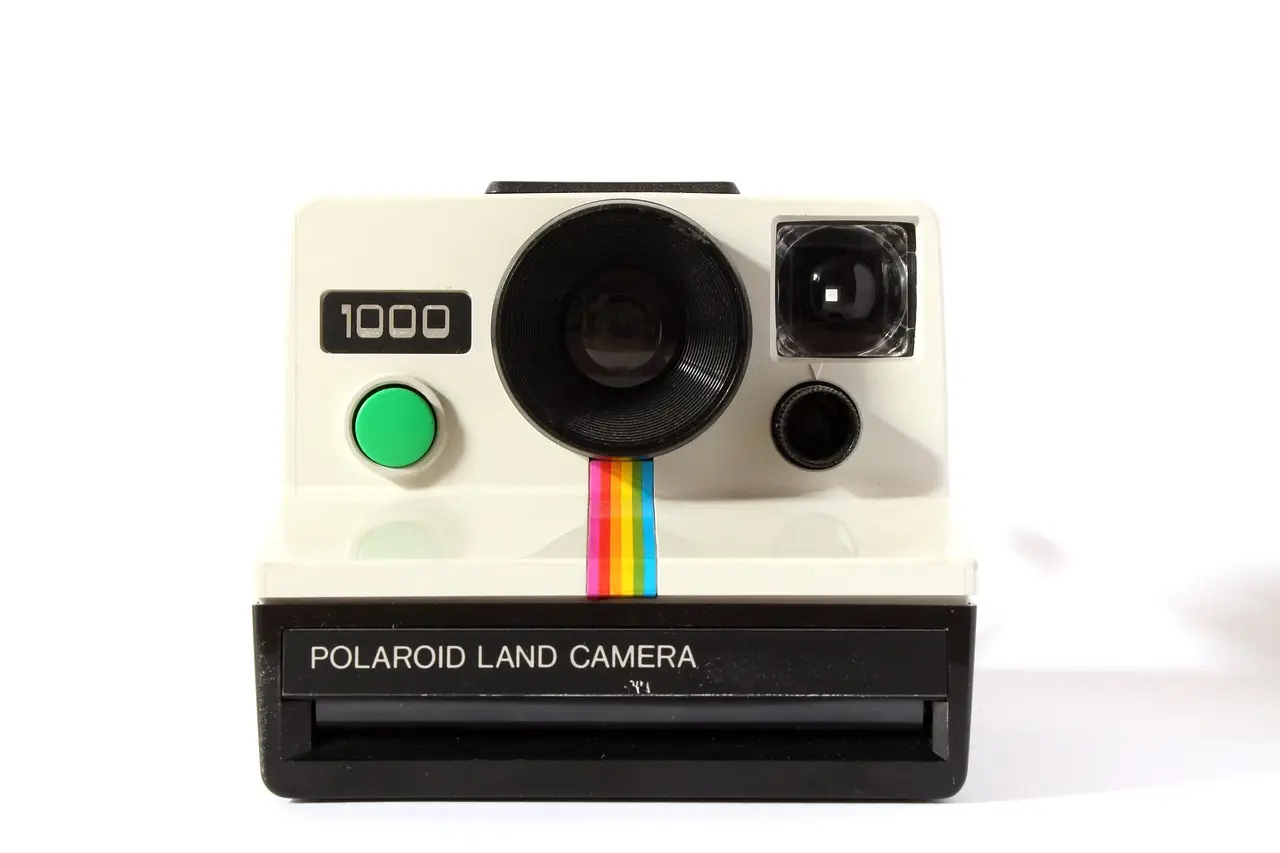
Practical points. Polaroid 600 is ISO 640, against ISO 160 for SX-70, which makes it the better pick in dimmer light — though not every 600 camera has a built-in flash. When flying, Polaroid advises avoiding airport X-rays entirely: keep the film out of checked luggage, which gets stronger scans, and request a hand check at security.
Shielding still matters. The film keeps some light sensitivity after ejection, so tuck the developing frame away from bright light; peek if you must, but sustained exposure means a faded, washed-out result.
The camera ecosystem remains half the fun. Dozens of Polaroid cameras and piles of accessories from the 1970s through the 2000s pair with the modern film — one staffer's very-'80s tri-image filter being a case in point. Editions with creative borders, such as the Round Frame, which encloses the image in a circle, and various colored borders, have appeared over the years.
One last distinction: Polaroid's i-Type film shares 600's chemistry and ISO 640 speed but ships without the battery pack that vintage 600 cameras rely on to power themselves. i-Type feeds the modern OneStep reissues and the new I-Series cameras, which carry their own rechargeable batteries — hence the lower price.
With the emulsion stable, the name restored and a modern camera line built around it, Polaroid's second act looks less like nostalgia and more like a format that has quietly earned its keep.
Key points
- Polaroid discontinued Type 600 film in 2008; The Impossible Project revived the integral formats soon after.
- The Impossible Project bought Polaroid naming rights in 2017, became Polaroid Originals, then simply Polaroid.
- Current Polaroid 600 is ISO 640, with 5–10 minute development for B&W and 10–15 minutes for color.
- i-Type film shares 600's chemistry but drops the battery pack, serving modern cameras with rechargeable cells.
- Polaroid advises against airport X-ray exposure and recommends hand checks when traveling with the film.
Original: bluemooncamera.com
Marcus Bennett
Show full bio
Correspondent covering companies, deals and strategy in Photography exhibitions, photographers, photo books, festivals and awards at Lens Gazette.