25 Craftsmen, One Hand-Built Teak Dhow: Mandvi's Shipyards Endure
A photo essay documents Mandvi's surviving shipyards, where ~25 craftsmen still spend years building teak dhows by hand in a port marginalized since 1947.
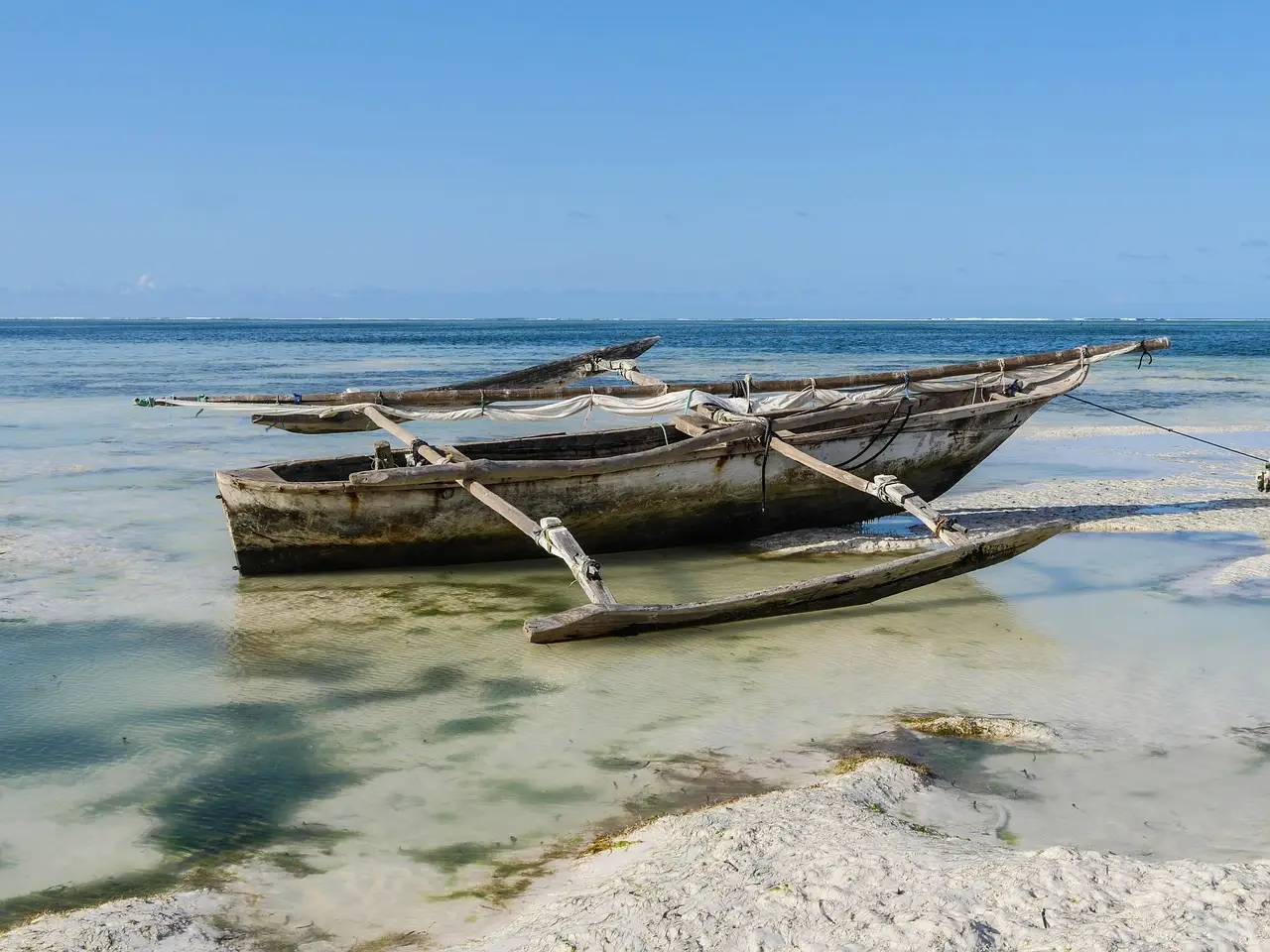
Mandvi's shipyards still build each teak dhow by hand, over several years, with a crew of roughly 25 craftsmen — in a port city whose commercial obituary was written decades ago. A new photo essay documents what remains of the industry, and what it says about survival against the odds.
The pictures come out of Kutch, on India's west coast, and they land in a long documentary tradition: the shipyard as working theatre, the hull as the stage. What they capture is not a museum reconstruction. It is a functioning trade, employing many families of carpenters and other workers, in a city that has otherwise remade itself around tourism and neglected heritage architecture.
How did Mandvi matter in the first place?
The rulers of the kingdom of Kutch founded the port city in the 16th century. It grew fast. Its position on the estuary of the Rukmavati River — which flows into the Arabian Sea in the Gulf of Kutch — placed it astride monsoon wind routes across the western Indian Ocean, and the city's sailors mastered that navigation. Mandvi plugged into maritime networks running to the Gulf, the Arabian peninsula and east Africa.
Trade made it rich. The port exported cotton textiles, indigo, cereals and handicrafts. It imported dates, pearls, Arabian horses and luxury goods. The shipyards specialised in huge teak dhows built for long ocean voyages, and that craft industry became a pillar of the local economy, extending Mandvi's influence far beyond India.
What happened to it?
Decline came in instalments. From the 19th century onward, three forces squeezed the port at once:
- Steamships replaced sail, and with them the dhow's commercial logic;
- Modern deep-water port infrastructure demanded investment Mandvi could not match;
- British colonial rule restructured maritime trade to serve its own interests.
Trade migrated to better-equipped ports such as Mumbai. Then, after independence in 1947, the creation of the nearby port of Kandla delivered the final commercial blow, definitively marginalising the old city. The 2001 earthquake in Kutch added physical damage to economic irrelevance, toppling some of the old buildings and accelerating urban transformation.
That is the arc the essay implies without stating it directly: a port that shaped the Indian Ocean's trading world, now known locally for its beaches and its crumbling architecture, drawing Indian tourists and middle-class locals. Nobody is booking passage to Zanzibar.
Who actually builds the boats?
Here the essay is at its most interesting, and its most careful. The workers in Mandvi's few remaining traditional shipyards come from different religious communities. A large proportion are Muslim. But shipbuilding, the source notes, is also part of a very ancient Hindu tradition — the trade belongs to neither community alone, and the shipyard is one of the few places in the city where that shared identity still does practical work.
The craft itself is inherited rather than taught. Apprenticeships begin in adolescence. Teams are made up of relatives. The trade is as much cultural as it is technical, which is a polite way of saying that no engineering degree will get you a job caulking a hull in Mandvi. Each dhow takes years; the workforce stays because the families stay.
Should we trust the romance?
Not entirely. The essay's framing — decline, endurance, multi-faith craftsmanship — is attractive, and the pictures presumably make the most of teak ribs and hand tools under open sky. What it does not supply is economics. Who buys these dhows, at what price, and for which routes? A trade that survives on a fraction of its former volume can look timeless in a photograph and be one bad decade from extinction in a ledger. "Several years to build" cuts both ways: devotion, yes, and also a business model with no slack in it.
Still, the core claim holds up. Mandvi's shipyards are not a heritage performance for tourists; they employ working families today, on the same estuary that made the city a 16th-century power. The essay's quiet argument — that a port can lose everything commercial and keep its hands — is worth the look. Whether the next generation of adolescents still enters those apprenticeships, though, is the question the camera cannot answer.
Key points
- Each dhow takes several years to build by hand with about 25 craftsmen.
- Mandvi was founded in the 16th century by rulers of the kingdom of Kutch.
- The port of Kandla, created after independence in 1947, definitively marginalized Mandvi commercially.
- The 2001 Kutch earthquake damaged some old buildings and accelerated urban change.
- Most shipyard workers are Muslim, but shipbuilding is also an ancient Hindu tradition.
Source: theguardian.com
Daniel Okafor
Show full bio
News editor covering companies, deals and strategy in Photography exhibitions, photographers, photo books, festivals and awards at Lens Gazette.