Fax Machines, Satellites and the Concerned Photograph: Lucy Helton
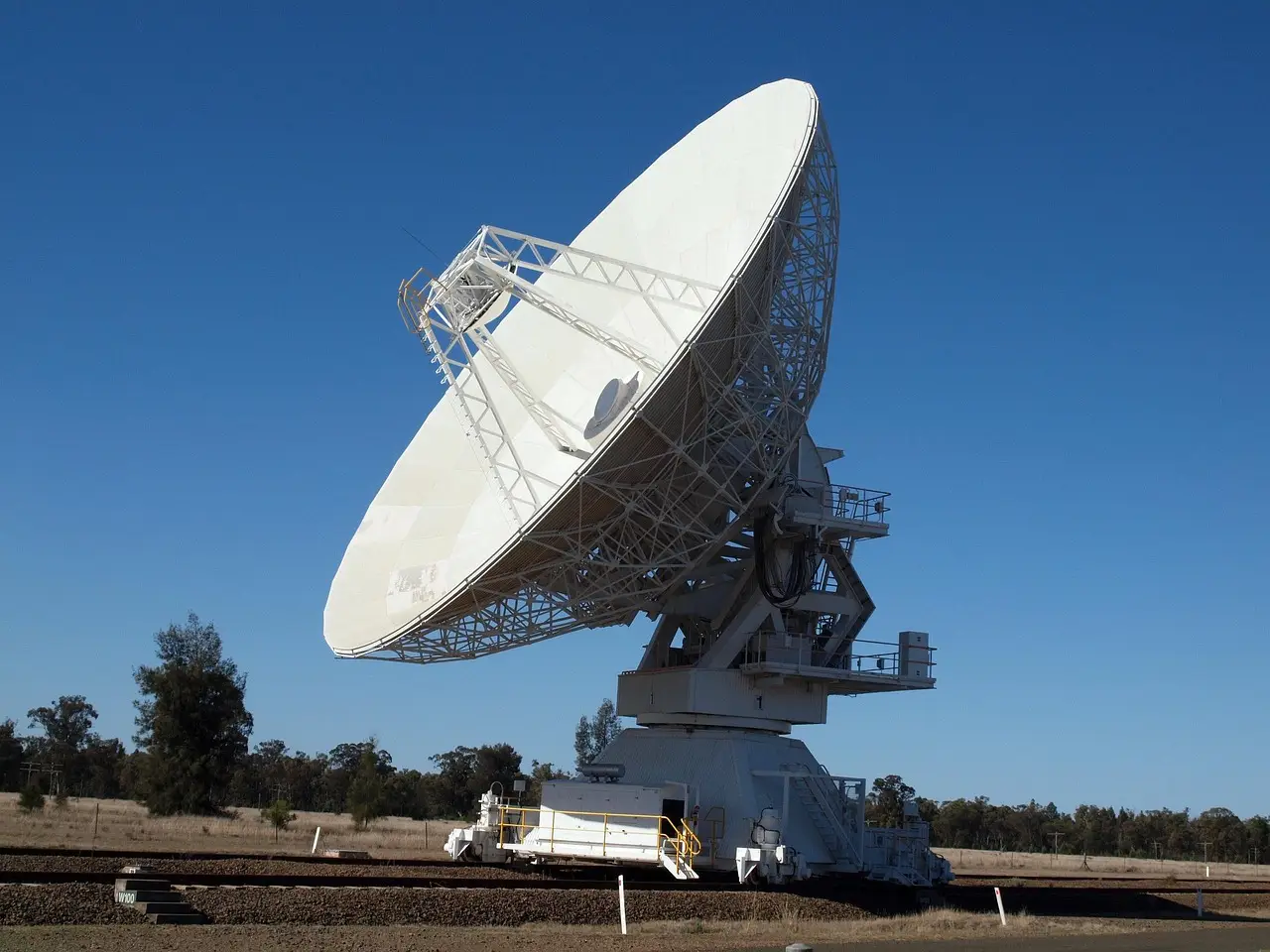
Lucy Helton told Lenscratch she stopped sending radio image transmissions because she was "just adding to the noise" — now she only receives, converting satellite data into art.
Lucy Helton, the London-based artist whose book Actions of Consequence sits in the collections of MoMA's library, the Tate Library Special Collection and the Martin Parr Foundation, has told Lenscratch that she has stopped sending radio image transmissions entirely — because she was "just adding to the noise, adding to global data streams." The interview, conducted by photographer Nika McKagen as part of Lenscratch's annual series pairing former Top 25 Student Prize winners with a hero or mentor, published on November 4, 2026.
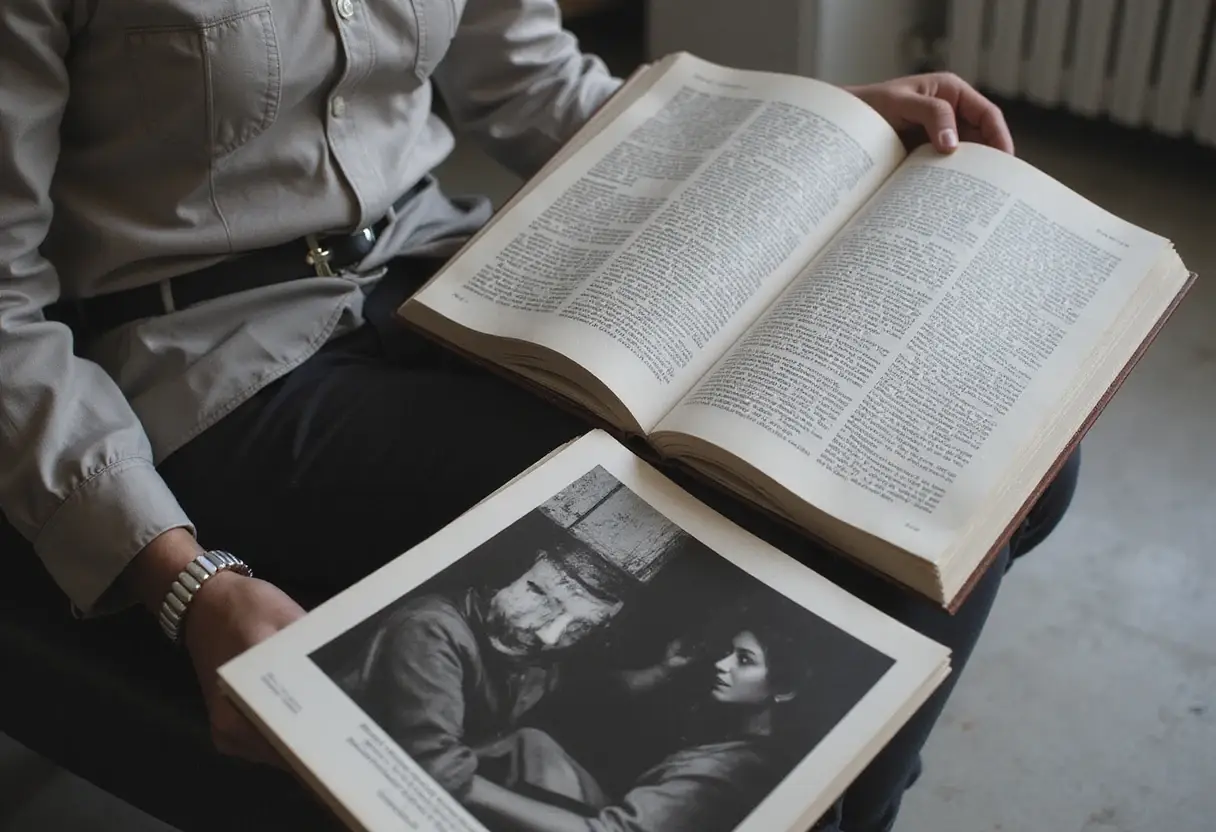
McKagen first encountered Helton's work as a library mystery: a cover bearing numbers that felt "vaguely longitudinal," checked out from the Kohler Art Library in Madison, Wisconsin. Helton appropriates images from various contexts, rearranging and retransmitting them until their original power structures blur — work McKagen frames through Mette Sandbye's essay It Has Not Been – It Is, which argues photography today is "a practice of making cuts in the flow of imagistic data" rather than the freezing of a single indexical moment.
Why send a photograph as a radio signal?
In her series QSL, which combines image, transmission, machine and photograph to explore weather and climate change, Helton converts pictures into sound and back into image via amateur radio. The consequence is loss — glitches, gaps, static. She embraces it.
"Usually, the transmitted photograph evidences climate change, a signal the environment of the planet is changing for the worse, a signal human beings need to stop stripping it bare and consuming it to death," Helton said. The degradation visible in the received image becomes the metaphor: transmission loss standing in for the loss of Earth's thriving natural environment.
What does a fax machine add to a photograph?
Helton's turn toward performance came from a material problem. Thermal fax paper isn't archival, and once she stopped trying to fix that — "thinking about the commercialisation of the art world" — she realized her prints were performative, changing over time like the environment itself. A gallerist advised her to sell the documentation instead. She declined, in effect.
She prefers the term "analogue" over "ancient" technology, and her reasoning is pointed: old machines aren't mysterious black boxes like mobile phones, and they print line by line, slowly, placing "a question mark of time" in the work. Her installation Relic presented fax machines as possible technofossils — man-made objects destined to join Earth's future geological record — printing book pages live, the resulting book becoming a document of the performance. Live performance, she admits, is "extremely stressful, especially for someone who hates public attention," though a friend reassured her that no viewer knows what the performance should be.
Her data-visualization methods, the basis of her practice-led PhD at the Slade School of Fine Art / UCL on human environmental impact in outer space, include printing live satellite transmissions via radio fax, punching transmitted binary code as pattern holes in computer tape, and laying heated objects on thermal paper to make images of TV signals crossing the Sun.
Science fiction over stark photographs
Helton, who studied photojournalism and earned her MFA from Hartford Art School in 2014 after 18 years in New York, argues we've become desensitized to "hard hitting stark photographs of traumatic events." Her alternative: visually seduce first, deliver the message second. Actions of Consequence speculates on Earth's future through science fiction, a genre she defines via Rod Serling: "fantasy is the impossible made probable. Science fiction is the improbable made possible."
On scientific "perfection," she's blunt: all science rests on assumptions, and every colour image of galaxies we admire is falsely coloured — "these perfectly beautiful scientific representations are fake."
On photography's cultural standing, she's equally dry. Photography remains "painting and sculpture's poorer cousin," and while citizen journalists now work under the banner "we are all photographers now," the depth of trained documentary work is, in her word, incomparable. Her counter-move is to make each image and print unrepeatable, like a painting. A good photographer, she argues, works as both scientist and engineer.
Helton says she can't imagine running out of ways to visualize data artistically — and, having shifted from transmitting to receiving, she'll keep converting the world's incoming noise into artworks from her London studio.
Key points
- Lucy Helton is pursuing a practice-led PhD at the Slade School of Fine Art / UCL on human environmental impact in outer space
- Her book Actions of Consequence was shortlisted for the Paris Photo – Aperture First Book Award 2015
- Her books are held by MoMA, the Tate Library, Brooklyn Museum and the Martin Parr Foundation, among roughly a dozen collections
- Her installation Relic presented fax machines as technofossils, printing book pages live
- She earned her MFA from Hartford Art School in 2014 after 18 years in New York
Original: https
Olivia Hart
Show full bio
Staff writer covering people, launches and day-to-day practice in Photography exhibitions, photographers, photo books, festivals and awards at Lens Gazette.