Berlin's State Musees Turn to Helmut Newton's Early Books
The Staatliche Museen zu Berlin feature Helmut Newton's early books, reading the photographer's first published volumes as historical objects in his native city.
Updated
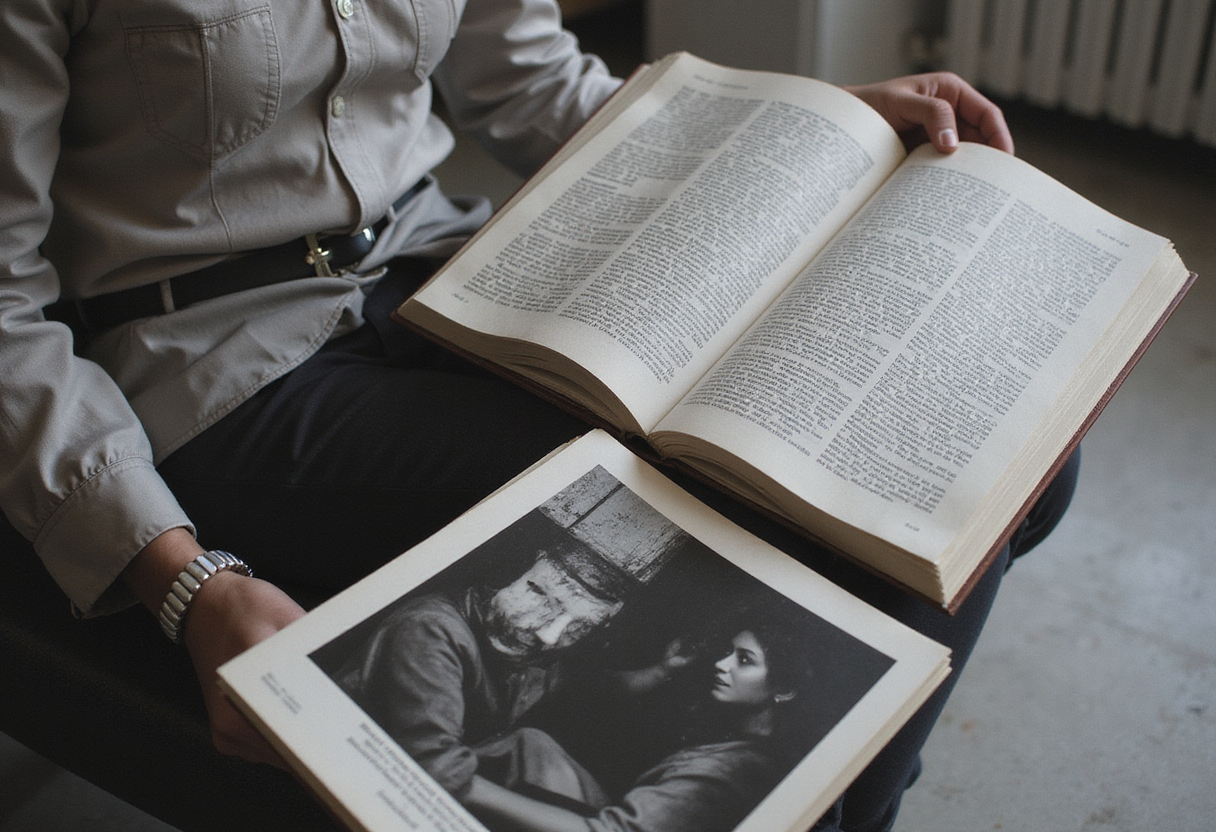
The Staatliche Museen zu Berlin have published a feature on Helmut Newton's early books, turning attention to the printed volumes that carried his photographs into the world before his name became shorthand for a certain kind of fashion image.
The subject is narrow but significant. Newton, who died in 2004, built his reputation largely through the page: magazine assignments, monographs and book projects that circulated his work far beyond any single gallery wall. An institutional focus on the early books asks readers to look at the objects themselves, not only at the famous pictures inside them.
Why do the early books matter?
Books were Newton's first durable format. Before large museum retrospectives, before the foundation that now bears his name, his photographs lived in print. Sequences, page order, cover choices and paper stock all shaped how viewers first encountered the work.
An examination of these volumes therefore doubles as an examination of reception. The early books record which images the photographer and his editors chose to lead with, and which they left out. That editorial record is a primary source for anyone studying how the Newton persona was assembled, image by image, over decades.
The takeaway is simple: the book, not the single print, was the unit through which Newton's audience first knew him.
What does Berlin's institutional interest signal?
The Staatliche Museen zu Berlin occupy a particular position in relation to Newton. He was born in the city in 1920 and left it as a young man; his later career unfolded in Paris, London and Los Angeles, but the connection to Berlin remained a fixed point in his biography. When the state museums engage with his early publications, they engage with a Berlin émigré's output as preserved and presented in his home city's public collections.
This is the mechanism behind the story. A museum group with holding institutions across the city signals, through editorial attention of this kind, which parts of a photographer's oeuvre it considers worth renewed study. Early books sit exactly at the intersection of photography, publishing history and institutional collecting, and that intersection is where much current scholarship on the medium concentrates.
Institutional framing also does quiet critical work. It treats the books as objects with histories: editions, printings, differences between one release and the next. That is a more exacting standard than treating them merely as containers for well-known photographs.
The plain summary: Berlin's state museums are reading Newton's early books as historical objects, not just as picture albums.
What can a reader take from this focus?
For photography audiences, the value lies in proportion. Newton's most reproduced images are known in isolation, stripped from their original context. The early books restore that context, returning the pictures to the sequences in which they first appeared.
For students of the photobook, the case is straightforward. Newton's volumes belong to the broader history of the photography book in the second half of the twentieth century, a field that institutions and publishers have studied with growing seriousness over the past two decades. Berlin's attention to his early publications fits that wider shift.
The reader's gain: a reminder that a photograph's first home often decided its meaning.
Where does this lead?
The feature suggests continued institutional appetite for Newton's printed legacy in Berlin. As the Staatliche Museen zu Berlin keep documenting their holdings, further treatment of the photographer's publications, and of the photobook more generally, looks like a natural next step for the museum group.
Key points
- The Staatliche Museen zu Berlin have published a feature on Helmut Newton's early books.
- Newton was born in Berlin in 1920 and died in 2004.
- The feature treats the early volumes as objects of publishing and institutional history.
- Newton built his reputation through printed books and magazine work before museum retrospectives.
Source: Google News: photo book award
Grace Kim
Show full bio
Senior reporter covering companies, deals and strategy in Photography exhibitions, photographers, photo books, festivals and awards at Lens Gazette.