Sonia Fattori’s Common Matter Finds the Human in the Land
Sonia Fattori’s Common Matter pairs eight diptychs of Rajasthan portraits with Salta landscapes in Dodho Magazine Issue #38, turning resemblance into a case for shared belonging.
By Olivia Hart
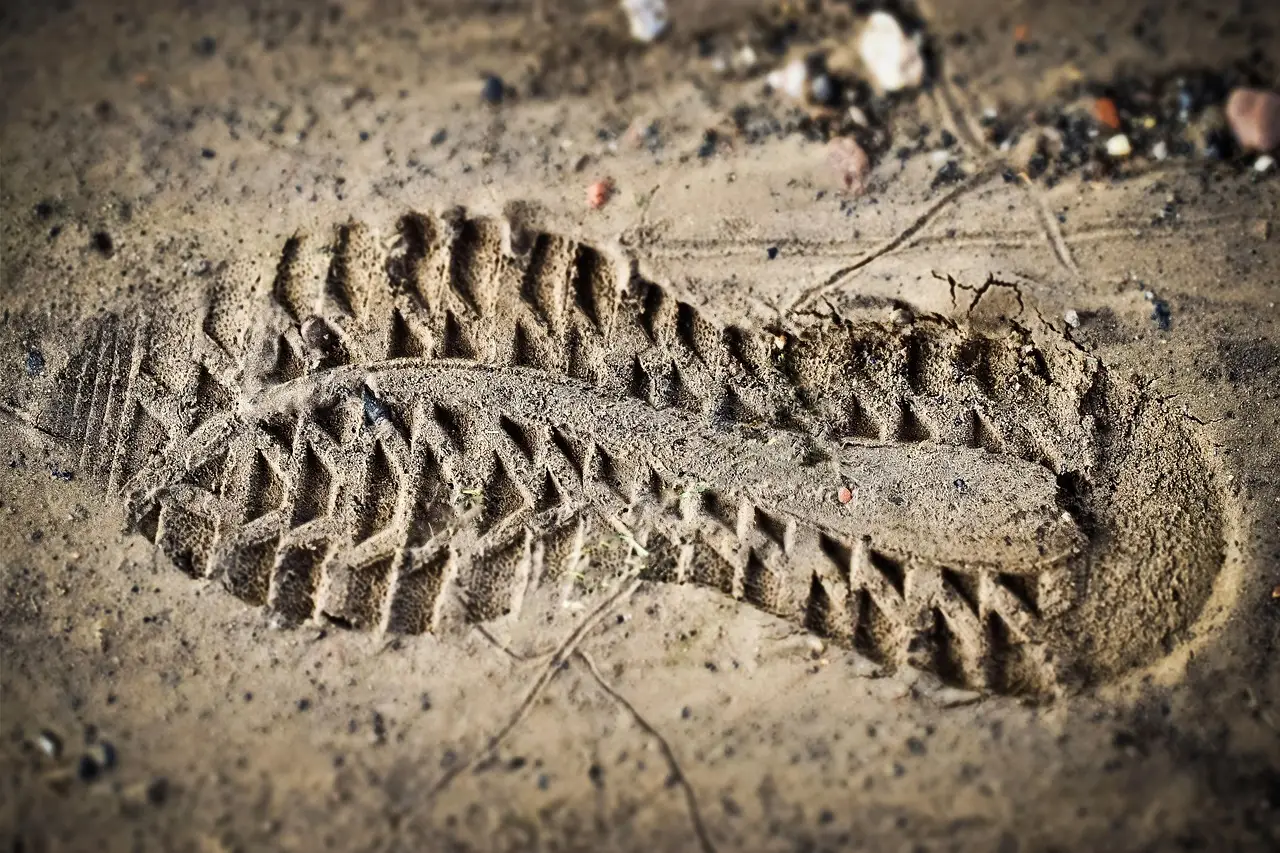
Common Matter comprises eight diptychs—eight paired photographs—and one closing image, The Imprint, in Issue #38 of Dodho Magazine’s print edition. Italian photographer Sonia Fattori made its portraits in Rajasthan, India, and its landscapes in Argentina’s Salta province. The final image brings a human shadow into contact with tree shadows on one surface.
Weathered faces and bodies rhyme with rock, folds and earth, an immediately legible proposition and an obvious risk: a face can become a decorative specimen when made to resemble a landscape.
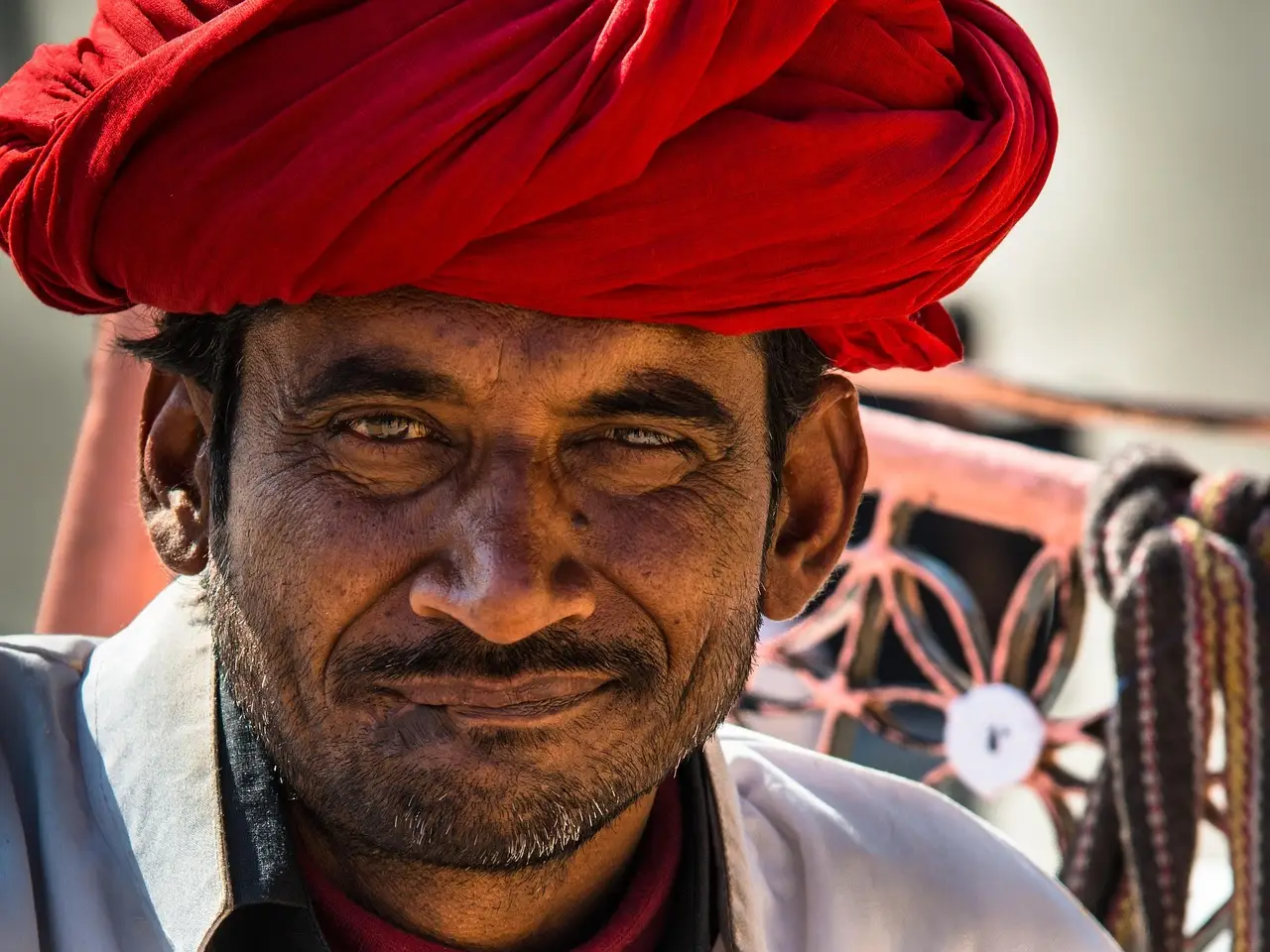
Fattori resists that reduction: “I was not looking for a face that resembled a rock: I photographed what moved me and what I wanted to convey.” Each face retains an encounter’s memory; each landscape keeps its own presence.
How did two journeys become one series?
Looking back at photographs from Rajasthan and Salta, Fattori noticed correspondences in shape, colour and surface. In Rajasthan she concentrated on village life, children’s gestures and Holi’s colours; in Salta she pursued vast landscapes where, she says, everyone can find a space of their own. The pairing arrived after the journeys, through comparison rather than planned symbolism.
Common Matter began with eight images, then expanded to eight diptychs plus The Imprint, organised around time, continuity, belonging and transformation. Line, fold and hue lead the eye between frames, while the selection tries to preserve each photograph’s independent strength. The work belongs to the grammar of montage, but its charge lies in accumulated attention rather than a single shock.
How did Fattori approach people and inhabited places?
During her Salta journey, Fattori met Indigenous people in Cachi and Salta, in markets and homes, and listened to their music. Research into their efforts to preserve identity and territory showed her that the landscapes remain inhabited places shaped by history, tradition and the continuity of culture.
In Rajasthan, she worked among poorer rural villages with photographer Stefano Pensotti, whose knowledge facilitated dialogue. Her method was discreet: seek connection through a gesture before raising the camera, then leave room for each person’s way of being.
Light brings out wrinkles, relief and layers; composition decides what receives attention and how elements meet. In the diptychs, colour echoes clothing, skin and earth.
Fattori locates a place in work, habits, inherited gestures and relationships. A welcome, a handshake and shared time turn geography into attachment; she has put down roots in distant places through such bonds. Viewers may recognise holding a child or the marks of time on a face, she says, while Rajasthan and Salta retain their distinct histories.
When did photography become more than capture?
At ten, Fattori picked up a camera and found it “felt like a part of me,” a means of recovering an expression or gesture after it had passed. Travels through Europe, Africa, India, Brazil, Argentina and Lampedusa supplied documentary projects, solo exhibitions and multivision works, but Mali supplied its ethic.
Her Mali photographs first sought to explain the experience to her nieces and nephews. On returning, she and a fellow traveller conceived Progetto Mali to bring well water to a village and founded Vento di Terre Lontane. Images and travel accounts raised funds for two wells and a school; Fattori later travelled to a refugee camp in Burkina Faso, where the association supports humanitarian work.
She calls Mali the turning point at which photography became conscious expression and engagement, and says photography and humanitarian work have nourished each other. At the 3 October commemoration in Lampedusa, she switched off her camera and respected participants’ silence. That restraint complicates the formal appetite for resemblance.
How do books and multivision extend the narrative?
Her 2022 book Uno scoglio chiamato Lampedusa – A Rock Called Lampedusa, co-authored with journalist Marta Daneluzzi, grew from a large archive and repeated stays beginning in 2015. Fattori first photographed young people arriving from Africa by boat, then befriended fishermen and residents; she now returns several times a year.
Together with Daneluzzi, she chose not to centre migration, the island’s defining public story, but its natural environment, community, hospitality and solidarity. Each chapter opens with short text and uncaptioned photographs, placing words and images in dialogue. The process taught Fattori that a photographic narrative grows through time, relationships and exchange.
Multivision extends sequence logic through sound. Fattori controls image duration, dissolves and music; during an overlap, a third image briefly appears. For years she organised events to introduce the form, which she says remains little-known. Exhibition visitors choose their own pace, leaving the diptychs more open-ended than performed presentations.
Daneluzzi and Fattori later developed DESTINAZIONE INCONTRO, through which they met sculptor Franco Maschio. Their 2026 book, Franco Maschio, semplicemente artista – Franco Maschio, Simply an Artist, pairs his life and work with Fattori’s photographs and Daneluzzi’s texts. The chief challenge was reproducing colour, form and material faithfully across changing settings and light; each work received time and a chosen viewpoint.
What does Common Matter ask of the environment?
Common Matter’s ethical stakes become explicit in its account of damage. One Salta photograph shows a riverbed filled with boulders shifted during rain-driven floods; in Rajasthan villages, Fattori saw environmental degradation affect health and cause illness. Water, soil and natural cycles make life possible, she says, so damaging them has consequences for us.
She asks, “What connects us to the place where we live? How well do we know it, and how much attention do we give it?” Photography, she argues, gives a distant-seeming issue a face and a form. The project asks viewers to slow down, look more carefully at their surroundings and carry that attention into everyday responsibility.
With Common Matter now in Dodho Magazine’s Issue #38, Fattori says her future work will return to people and inhabited places, preserving traces of encounters and creating new connections for viewers. The next proposition should earn that ambition.
Key points
- Common Matter expanded from eight images to eight diptychs and one final photograph, The Imprint.
- Dodho Magazine’s print Issue #38 publishes Common Matter.
- The series pairs portraits from Rajasthan with landscapes from Salta, Argentina.
- Progetto Mali raised funds for two wells and a school.
- Fattori and Marta Daneluzzi’s books date to 2022 and 2026.
Original: soniafattori.it
Olivia Hart
Show full bio
Staff writer covering people, launches and day-to-day practice in Photography exhibitions, photographers, photo books, festivals and awards at Lens Gazette.