Twelve artists document senior life in “Life Takes Place”
Twelve photographers document older residents’ daily choices in “Life Takes Place” at Beijing’s Taikang Art Museum, where images made inside senior communities run through 30 November 2026.
By Grace Kim
Twelve artists, half from outside China, document the daily lives of older residents in “Life Takes Place,” an exhibition at Beijing’s Taikang Art Museum that runs through 30 November 2026.
The show brings together photographers from China, Spain and the United States. The photographed residents live in senior communities in Hangzhou, Shanghai, Chengdu and other designated cities. Taikang Art Museum presents the results in Beijing’s central business district. The pictures begin inside community routines, not around the museum’s own setting.
What does the exhibition document?
Rather than treating older people as passive subjects of observation, the exhibition follows the choices and relationships that shape daily life within shared social settings.
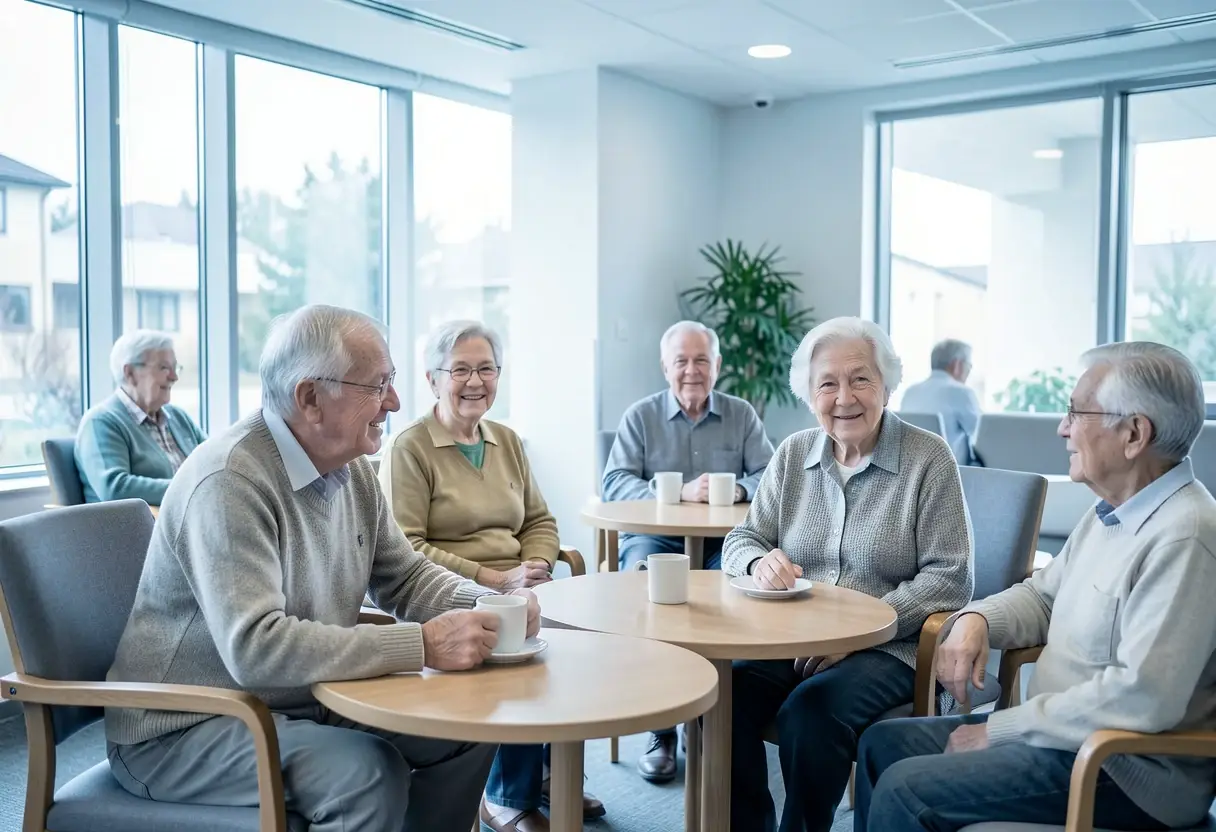
The scenes include decisions about where to eat, whether to sign up for violin lessons, and whether to join young people in live acting role-play games such as “Murder Mystery Game.” These moments resist sentimental readings of age. They show older adults making choices about meals, learning and play with younger participants.
The camera records action within a social setting. It does not turn residents into symbols of youthful energy or passive decline. Daily choice gives each image its direction.
In plain terms, the show records what residents decide, not merely how they look.
How did photographers enter these communities?
Curator Shen Chen said the invitation aimed “to present real senior citizens’ daily life from as many different perspectives as possible.” The invitation brought together twelve artists from China and further abroad. Six came from other countries. Among them was the Spanish photographer Aleix Plademunt, alongside artists from the United States.
The artists moved to live within senior communities in designated Chinese cities, spending time with residents and caregivers while their projects developed inside the settings of everyday life.
Hangzhou, Shanghai and Chengdu formed part of the programme. Each community had its own location, architecture, residents and routines. Those differences offered distinct angles. Photography became a practical means of understanding each community’s world.
The basic takeaway is clear: proximity shaped both method and subject.
What can visitors see at the museum?
One image by Aleix Plademunt came from a senior community in Hangzhou, in eastern China. He made the photograph while living there. The display places it among work from other photographers and communities. That structure makes the image both a personal encounter and part of a broader argument.
Zhang Xiao provides a more constructed form: rows of clocks inset with photographs he took in Chengdu line a hall at Taikang Art Museum in Beijing.
These clocks form “At the Same Time,” the artwork’s title. The installation makes the gallery wall part of the photographic work rather than a neutral support for isolated pictures.
The gallery therefore shows two related practices. One records life through individual photographs created in close contact. The other organises photographs into a physical arrangement. The display keeps both the encounters and the museum structure in view.
The takeaway is equally direct: the display joins individual pictures to a deliberate museum framework.
What does the show mean for documentary photography?
The exhibition sits within a broad tradition of documentary work concerned with social life, but its distinctive proposition rests on relationships. Photographers shared space and duration with their subjects, and Shen Chen assembled Chinese and overseas artists to make that method plural rather than singular.
That method shifts the camera away from detached authority. Images arise from shared time and the artist’s effort to understand a community from within. They record participation rather than a single comprehensive account.
Varied buildings and routines across the communities resist a single visual formula. No two settings offered the same conditions. No one account of later life could stand in for them. The photographs gain force from differences in place and daily practice.
The material also resists making independence its only measure of value. Residents can choose where to eat, study music or play a live role-playing game. Caregivers also form part of daily community life. The photographs hold choice and care together rather than ranking one above the other.
That position gives the exhibition a wider institutional question: how can a museum present age without turning it into a type, a burden or a reassuring spectacle? “Life Takes Place” answers through direct contact, varied viewpoints and sustained attention.
As the exhibition continues through 30 November 2026, its practical lesson is that proximity can show active lives without pretending that every life looks the same.
Key points
- “Life Takes Place” features 12 artists, half of them from outside China.
- The exhibition runs at Beijing’s Taikang Art Museum through 30 November 2026.
- The artists lived in senior communities in cities including Hangzhou, Shanghai and Chengdu.
- Zhang Xiao’s “At the Same Time” combines clock faces with photographs he took in Chengdu.
- Spanish photographer Aleix Plademunt made an exhibited photograph in a Hangzhou senior community.
Source: Google News: photography exhibition
Grace Kim
Show full bio
Senior reporter covering companies, deals and strategy in Photography exhibitions, photographers, photo books, festivals and awards at Lens Gazette.