Beneath the Surface Traces 200 Years of Mining in American Photography
Some 150 works at the National Gallery of Art and Milwaukee Art Museum trace mining as a leitmotif of American photography, from O'Sullivan's Comstock shafts to Wilson and Maisel.
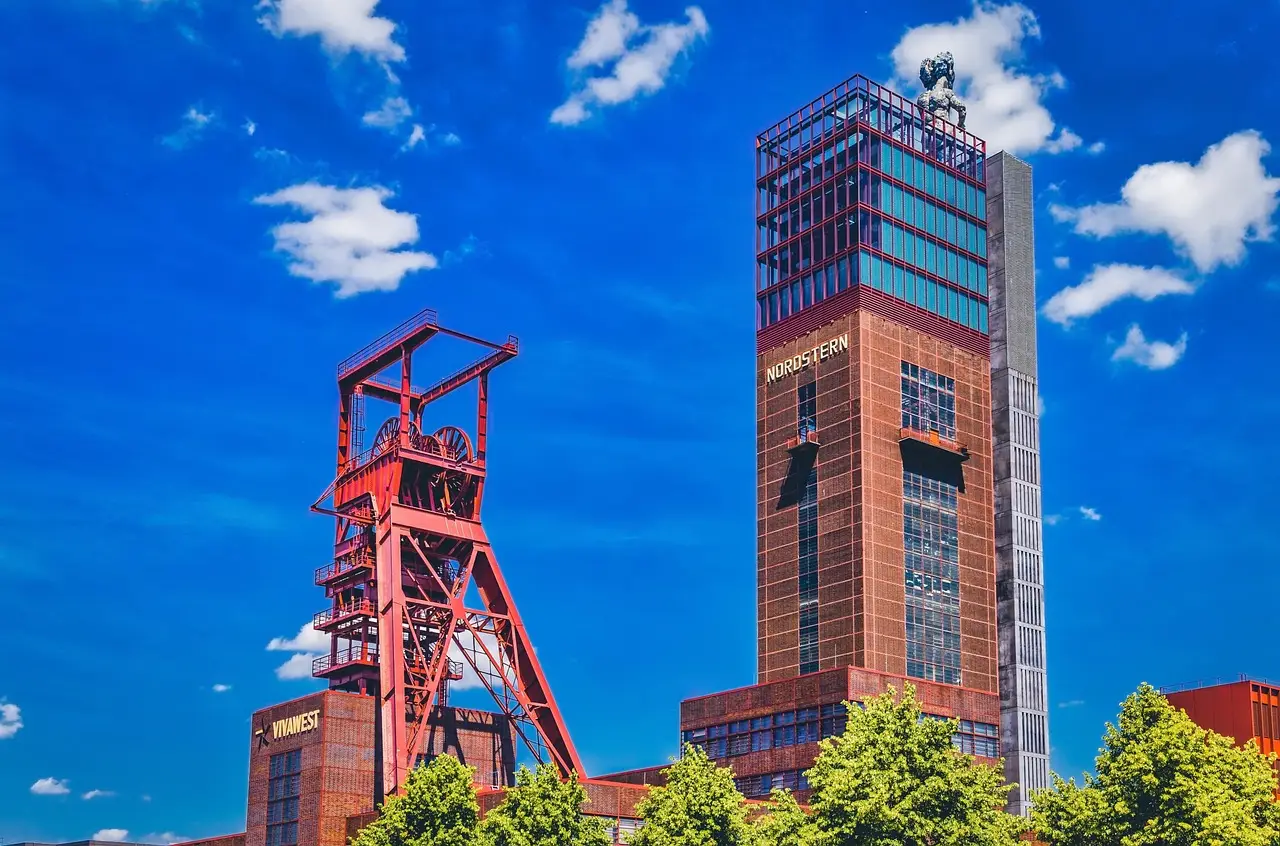
An exhibition of some 150 works, Beneath the Surface: Mining and American Photography, opened a multi-city tour this May at the National Gallery of Art in Washington, DC, and travels this October to the Milwaukee Art Museum. Curated by Diane Waggoner and Kristen Gaylord, the show argues that mining is not a Western curiosity but a leitmotif running through nearly two hundred years of American photography — one that crisscrosses the United States from the Comstock Lode to the rust belt of Braddock, Pennsylvania.
The curators frame the stakes plainly. The focus, Waggoner and Gaylord said, lets viewers "understand photography as a central tool in both depicting and critiquing the industries that enable our contemporary world, and to help us all better understand how photographers have deployed it throughout the medium's history."
How deep does the connection run?
Deeper than iconography. Recent ecologically minded scholarship reminds us that photography itself is a mineral medium: recording photonic energy was, chemically, metallurgy in miniature, with precious amalgams activated by other chemicals affixed to copper or tin. The medium's rise in the 1840s was made possible by new strikes of silver and gold, and many early camera operators pointed their lenses at those doing the sluicing, digging and refining. Timothy H. O'Sullivan, famous for battlefield images and harsh framings of the Rocky Mountains, was among the first to document the Nevada rush towns that sprang up after the Comstock Lode was found in 1859. His Savage Mine, Curtis Shaft, Virginia City, Nevada (1868), an albumen silver print held by the Amon Carter Museum of American Art in Fort Worth, Texas, anchors that lineage in the show.
What does the contemporary work show?
The Diné artist Will Wilson adapts the surveillant mode of the aerial image to expose a colonial cycle that persists in the West: speculation in new minerals on Indigenous land, abandonment of those who live there, and the waste left behind. His Shiprock Disposal Site, Shiprock, Navajo Nation, 36 (2020) foregrounds a sprawling pentagonal complex in New Mexico that a viewer might mistake for a Michael Heizer earthwork, while storm clouds dapple a desert sunset near Tsé Bit'a'í, the rock monolith of cosmological significance to the Diné. Wilson juxtaposes two kinds of mapping — the ruthless abstraction of the surveyors' grid and the emplaced topographies of people on the ground.
The site holds radioactive residues of a twentieth century in which tens of millions of tons of uranium were cleaved from Indigenous land for warheads, reactors — J. Robert Oppenheimer built his bomb a few hours away — and X-ray photography. Hidden just beyond Wilson's frame runs the San Juan River, a fragile lifeline in an arid region.
David Maisel's American Mine (Carlin, Nevada 1) (2007) depicts a gold-processing tailings pond seeping across the frame in a cyanide-infused "lurid green." Gold processing relies on cyanide and sulfuric acid and yields wastewater laden with heavy metals. "The word pond connotes something idyllic, perhaps a site where Thoreau might reflect on the natural world," Maisel notes — "but no human-made tailings pond is wholly impervious to failure; they are essentially earthen dams."
Of the seduction such images hold, he adds: "We may be seduced by its beauty and then feel a sense of betrayal when we comprehend the darkness of its subject. I like that contradiction, that ricochet between beauty and horror, seduction and betrayal."
Where do the workers enter the frame?
LaToya Ruby Frazier, raised in Braddock, Pennsylvania, where Appalachian coal country met the industrial imperium of the early twentieth century, contributes work from her celebrated photo-essay of domestic interiors — including Grandma Ruby and Me in Her Livingroom (2007) — alongside a 2013 black-and-white view of the Monongahela River arcing around two operational furnaces. By her 1980s childhood, most of the US Steel plant and its jobs had left while the toxicity remained; even the local medical center closed, leaving the borough to foreclosure or gentrification. Seen beside anonymous nineteenth-century mine workers and journalistic forebears like Gordon Parks and Margaret Bourke-White — whose molten-ore study Four Thousand Fahrenheit, Otis Steel Company (ca. 1927–28) appears in the show — Frazier's portraits ground extraction's involute systems in human terms.
The curators strike a difficult balance: the widest conceptual angles of extractive capitalism against the humans toiling at the ore face, where drowning, explosion, asphyxiation and collapse were constant dangers, and silicosis and black lung stalked workers for years afterward. With a scramble now on for rare earth metals to power cars, microchips and military technology, the exhibition's multi-city tour should keep what happens beneath the surface reverberating in the light above.
Key points
- Beneath the Surface: Mining and American Photography opened in May at the National Gallery of Art, Washington, DC, and in October at the Milwaukee Art Museum.
- The exhibition gathers some 150 works spanning nearly 200 years of American photography.
- Curators are Diane Waggoner and Kristen Gaylord.
- Works range from Timothy H. O'Sullivan's 1868 Savage Mine photograph to Will Wilson's 2020 Shiprock Disposal Site.
- The show appears in Aperture No. 262, 'The End of Nature?', Spring 2026.
Original: nga.gov
James Calloway
Show full bio
Market editor covering people, launches and day-to-day practice in Photography exhibitions, photographers, photo books, festivals and awards at Lens Gazette.