So Hing Keung's 'Portraits of South China' Opens at Developing Room
So Hing Keung's 'Portraits of South China' shows at Wong Chuk Hang's Developing Room from 31 October to 5 December 2026, alongside his new book of Chaoshan portraits begun in 1995.

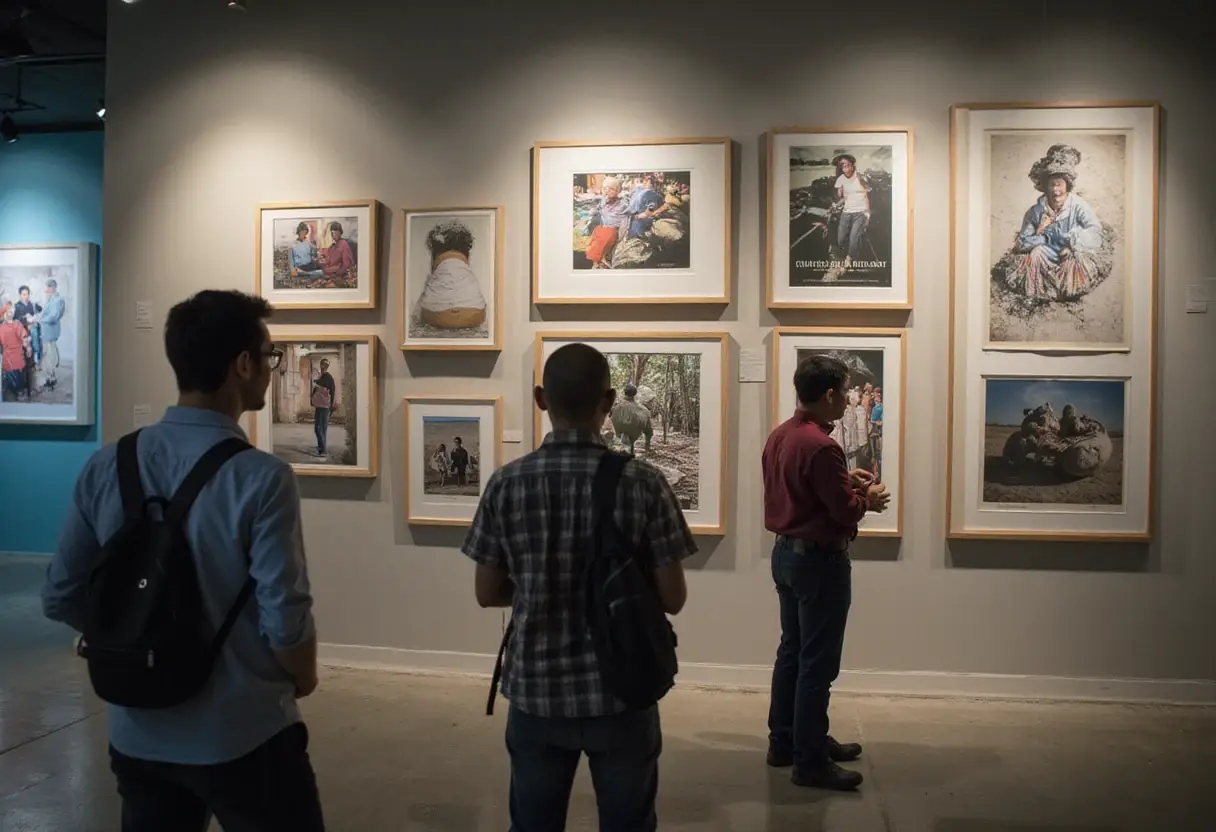
A solo exhibition of So Hing Keung's 'Portraits of South China' runs at Hong Kong photography bookstore space Developing Room from 31 October to 5 December 2026, timed to the release of his new photography collection of the same name. The Wong Chuk Hang venue — located in the Yip Kam Lai Industrial Building — will show portrait works So made across South China from the 1990s to the 2000s, drawn from a documentary project now more than three decades old.
The exhibition grounds a simple fact practitioners should register: a long-form regional survey, started on 35mm film in the mid-1990s, has been refined into a book and a gallery showing, with works already held by the Hong Kong Museum of Art and the Hong Kong Museum of History. That institutional collecting record is the strongest signal of how the series is positioned within Hong Kong's documentary tradition.
How did the project begin?
So started travelling to mainland China in 1981, in the initial phase of Reform and Opening Up. Transport was inconvenient; he used his holidays to reach Yunnan and Sichuan in the southwest, then Tibet and Xinjiang in the far west, and Harbin in the northeast. His early work photographed landscapes and daily life across these regions.
Over more than a decade, he narrowed his scope deliberately. He moved from the whole country to South China, then to Guangdong Province near Hong Kong, and finally concentrated on the Chaoshan region — an area known for its traditional customs and strong family values, where he sought deeper insight into the authentic lives of local people.
What changed in 1995?
The pivotal shift came in 1995, when So began a multi-year project documenting towns and villages. He replaced his initial 35mm camera with a medium format 120 camera, a move that let him capture finer details of daily life with greater precision. For working photographers, this is the case's clearest lesson: the format change followed the subject, not the reverse — the slower, larger-negative system served a more focused and patient engagement with the Chaoshan communities he was photographing.
He titled the series 'Geography of South China', with portraiture as one of its key components. The current book and exhibition distil that portrait strand into 'Portraits of South China'. Some works from the series entered the collections of the Hong Kong Museum of Art and the Hong Kong Museum of History — an outcome that placed the project within the city's institutional record of Chinese social documentation before it ever became a trade book.
Why the Chaoshan focus matters
So's trajectory traces an arc from breadth to depth that few documentary projects sustain. The Chaoshan region, with its dense clan networks and preserved rituals, offered a cultural continuity that much of fast-changing Guangdong was losing. His portraits, made across roughly a decade from the mid-1990s, sit squarely in the period when South China's towns and villages were being reshaped by the manufacturing boom that followed Deng-era reforms — a context the exhibition's 1990s-to-2000s timeframe makes explicit.
The venue itself is part of the story. Developing Room operates as a photography bookstore space in Wong Chuk Hang, an industrial district that has become one of Hong Kong's densest clusters of galleries and creative spaces. Hosting the show there frames the book as an object for close looking rather than a retail novelty, and it gives local photographers direct access to prints from a series already validated by two public museums.
What comes next
After more than 30 years of photography, the 'Portraits of South China' volume compiles images that existed largely as project files and museum holdings into a crafted book — and the Developing Room exhibition runs through 5 December 2026, offering the first sustained public viewing of the portrait strand in its refined form.
Key points
- Exhibition runs 31 October – 5 December 2026 at Developing Room, Yip Kam Lai Industrial Building, Wong Chuk Hang.
- So Hing Keung began photographing in mainland China in 1981, during the initial phase of Reform and Opening Up.
- From 1995 he documented Guangdong's towns and villages on a medium format 120 camera, replacing his original 35mm kit.
- Works from the 'Geography of South China' series are held by the Hong Kong Museum of Art and the Hong Kong Museum of History.
- The exhibition coincides with the release of the book 'Portraits of South China', covering portraits from the 1990s to the 2000s.
Source: Google News: photography exhibition
James Calloway
Show full bio
Market editor covering people, launches and day-to-day practice in Photography exhibitions, photographers, photo books, festivals and awards at Lens Gazette.