Donggang Festival Turns Its Lens Toward African Photographers
The Donggang International Photo Festival in Yeongwol, South Korea, centers its programming on African photographers examining post-apartheid realities and their long aftermath.
Updated
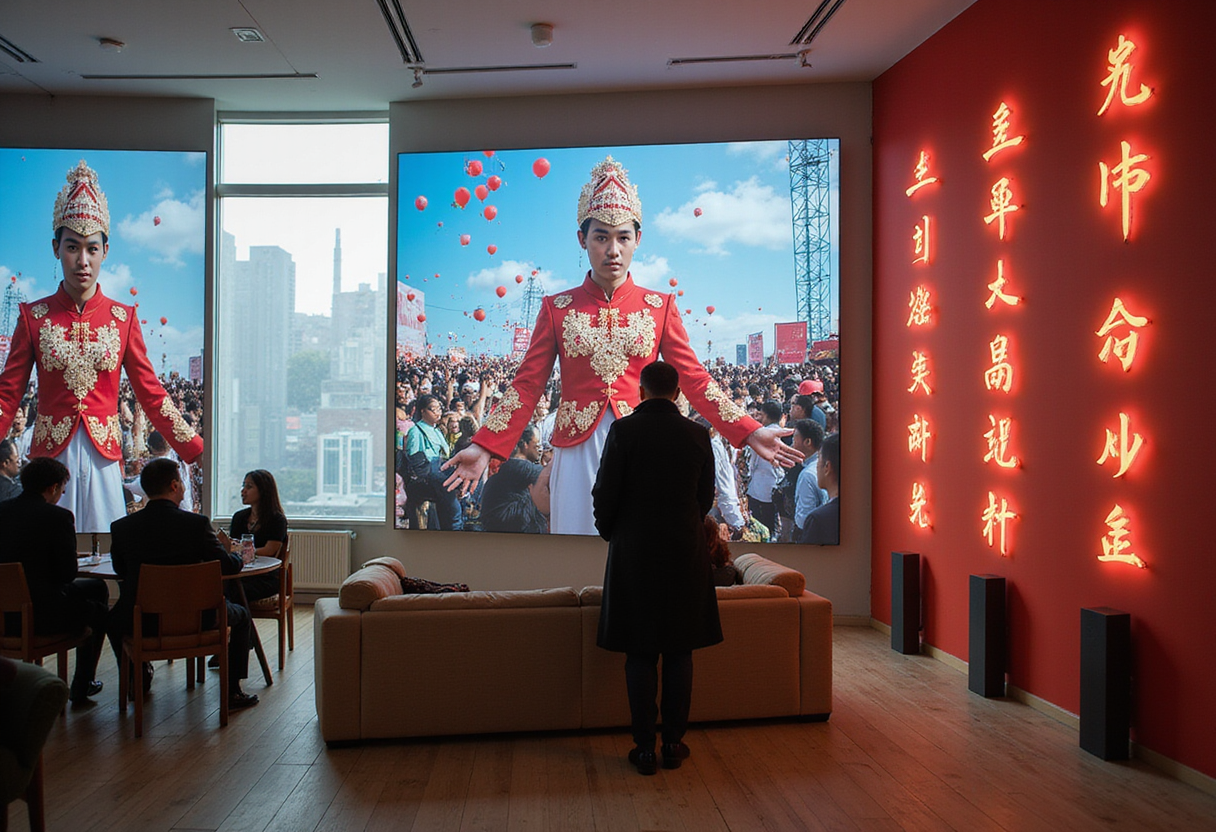
The Donggang International Photo Festival, held annually in Yeongwol County, South Korea, has built its programming around African photographers whose work confronts the realities of the post-apartheid era. The festival's current edition places this body of work at the center of its exhibition schedule, marking one of the more significant institutional gestures toward contemporary African photography in the Asian region.
The headline program, as announced by the festival, foregrounds photographers examining what life looks like in southern Africa after the formal end of apartheid — the negotiated settlement, the democratic transitions, and the long aftermath that followed the political watershed of the early 1990s. This is territory that South African photography has mined with extraordinary depth for three decades, from documentary traditions rooted in the struggle era to more recent conceptual and studio-based practices that interrogate identity, land, memory, and the unfinished business of equality.
What makes the Donggang presentation noteworthy is the venue itself. Yeongwol, a rural county in Gangwon Province roughly two hours from Seoul, is an unlikely setting for a survey of African imagemaking. Yet the Donggang festival has, since its founding, carved out a reputation for thematic curatorial direction rather than open-call miscellany, and an edition devoted to post-apartheid realities extends that editorial ambition. It signals a willingness to look beyond the East Asian photographic circuits that typically dominate Korean festival programming.
Post-apartheid photography as a subject carries a specific art-historical weight. The genre's lineage runs through the drum-magazine tradition, the documentary collectives of the 1980s, and later generations of photographers who shifted from recording resistance to interrogating the social conditions that persisted after 1994 — uneven development, migration, urban reinvention, and the politics of representation itself. Work in this vein has been steadily absorbed into major international collections and biennales over the past two decades, and its arrival at a Korean festival reflects that continued institutional momentum.
For Korean audiences, the exhibition offers a point of comparison with the peninsula's own photography of political rupture and its aftermath — a parallel the festival's framing implicitly invites. How photographers document societies emerging from systemic division, and how those images circulate internationally, remains one of the medium's most generative questions, and one that Korean and southern African practitioners have each answered in distinct ways.
The Donggang International Photo Festival runs through its summer season in Yeongwol, and the African program stands as its most prominent curatorial statement this year. Whether the festival sustains this internationalist direction in future editions — or treats it as a one-season departure — will be worth watching for anyone tracking how contemporary African photography travels beyond its established circuits in Europe and North America.
Key points
- The Donggang International Photo Festival in Yeongwol County, South Korea, highlights African photographers in its current programming.
- The featured work addresses post-apartheid realities in southern Africa.
- The program marks a significant Korean institutional gesture toward contemporary African photography.
Source: Google News: photography festival
Grace Kim
Show full bio
Senior reporter covering consumer brands and retail at Lens Gazette.