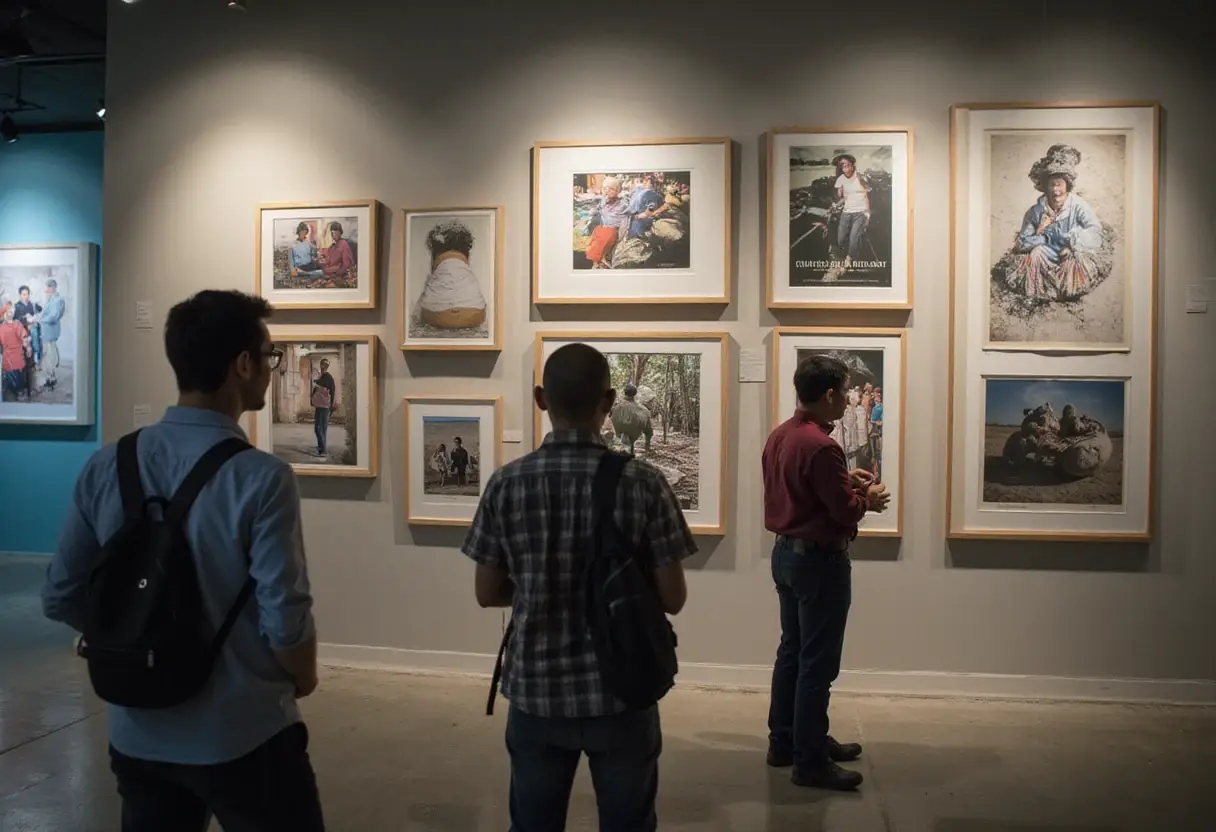
Kowloon Walled City memories surface again in new exhibition
A new exhibition turns a missionary's first-hand stories of the Kowloon Walled City into its centerpiece, reviving memory of the demolished Hong Kong enclave.
A new exhibition has opened devoted to the Kowloon Walled City, built around the stories of a missionary who lived and worked inside the demolished enclave, the South China Morning Post reports.
That is the headline fact. The details matter, and here the record thins out fast. The exhibition's venue, its curators and its closing date do not appear in the announcement as published. What we do know is the framing: one witness, one body of remembered stories, one institution choosing to stage them.
Why does one missionary's account carry the show?
The Walled City demands eyewitnesses. Demolished in the early 1990s after standing for centuries as a Chinese enclave within British colonial Hong Kong, it exists now mostly in photographs, film and testimony. Buildings rose fourteen storeys in places. Sunlight rarely reached the alleys. An estimated tens of thousands of residents packed into roughly 2.6 hectares, making it one of the densest settlements ever recorded.
Against that density, a single missionary's recollections might seem slight. They are not. First-person accounts from inside the walls are scarce relative to the mythology that has grown around the site, and institutions have learned that memory outdraws speculation. A show built on one person's stories trades scale for verifiable human detail.
It also carries risk. Memory is selective. A missionary's vantage point — charitable, often focused on the sick and the poor — captures one slice of a settlement that also housed dentists, noodle makers and small factories. The announcement does not say whether the exhibition sets the account against other testimonies. That omission is worth noting before anyone treats the show as definitive.
What does this fit into?
The Walled City has never left the exhibition circuit. Photographers documented it obsessively before the bulldozers arrived, and the resulting images — cramped stairwells, dripping pipes, rooftop antennas against the skyline — have anchored retrospectives from Hong Kong to Japan and Europe. Games, films and design studios have recycled its visual language for decades.
A show centered on spoken stories rather than dramatic photographs marks a shift. It suggests curators now trust testimony to hold a room on its own, the way oral-history exhibitions have done for wartime London or old industrial districts elsewhere. Whether the missionary's voice can do that work depends entirely on execution, and the announcement gives no preview of the installation.
What remains unanswered?
Fair questions for anyone planning a visit:
- Where exactly is the exhibition mounted, and for how long?
- Are the missionary's stories presented as audio, text or re-staged imagery?
- Do the organizers name photographers or lend objects from the former settlement?
- Will the show travel beyond its opening venue?
None of these points appears in the published announcement. The South China Morning Post's report names the subject and the format but withholds the institutional specifics that readers would need to act on it.
The larger picture
Hong Kong has spent three decades converting the Walled City from civic embarrassment into heritage touchstone. The site is now a park, its yamen preserved, its notoriety softened into nostalgia. Exhibitions like this one keep the conversion going — each new show adds a layer, and each layer risks sanding off the harder edges of what the place actually was.
A missionary's stories could cut either way. They could restore the human texture that glossy photography flattened, or they could sanctify a settlement that residents themselves often described in harsher terms. The evidence, for now, sits inside the exhibition, unquoted.
Expect fuller details — venue, dates, programming — to follow as the organizers release them, and expect the Walled City's afterlife in galleries to continue well beyond this single show.
Key points
- A new exhibition centers on a missionary's stories of the Kowloon Walled City
- The Walled City was demolished in the early 1990s after centuries as a Chinese enclave
- The settlement packed tens of thousands of residents into roughly 2.6 hectares
- Venue, dates and curatorial details were not disclosed in the announcement
Source: Google News: photography exhibition
Daniel Okafor
Show full bio
News editor covering companies, deals and strategy in Photography exhibitions, photographers, photo books, festivals and awards at Lens Gazette.