Instax Mini at 25: The Credit-Card Instant Film That Refuses to Fade
Launched in 1998, Fujifilm's credit-card-sized Instax Mini outlasted Polaroid's exit, and shop staff now choose it unprompted to record daily life.
Fujifilm's Instax Mini has now been on the market for more than 25 years, launched in 1998 as the first of the Instax formats. Blue Moon Camera and Machine in Portland, Oregon devoted its weekly Film Friday feature to the small instant film, and the response from its own staff said more than any specification sheet could. When the shop requested samples of Instax Wide film a month ago, one employee stepped forward. This week, three staff members brought substantial Instax Mini collections, and only one had been asked. The other two volunteered. The takeaway: the people who handle film for a living reach for Instax Mini by choice.
How did Fuji get into instant film at all?
The story begins in the 1980s. Polaroid's success pushed other manufacturers toward instant photography, and both Kodak and Fuji built their own versions. The outcomes diverged sharply. Polaroid sued Kodak and won, ending Kodak's instant film on patent infringement grounds. Fuji took a different route, reaching an agreement with Polaroid that let it produce instant film as long as it stayed out of North America. The two companies also swapped technology: Fuji helped Polaroid develop magnetic recording media, and Polaroid shared its instant film expertise. By the time Instax arrived in 1998, Fuji carried years of engineering in the format. That history explains much of the film's reliability today.
Instax stayed an Asian-market product for its first decade. The turning point came in 2008, when Polaroid announced it would discontinue its film and Fuji began marketing Instax in North America. That move gave Fuji a head start over the Impossible Project, which launched in 2010. Instax remains more popular in Asia than in North America and Europe, but the gap keeps narrowing. Instant prints now appear on the walls of coffee shops and on shelves beside fashionable clothing. The format's long run shows no sign of ending.
What makes the format technically distinct?
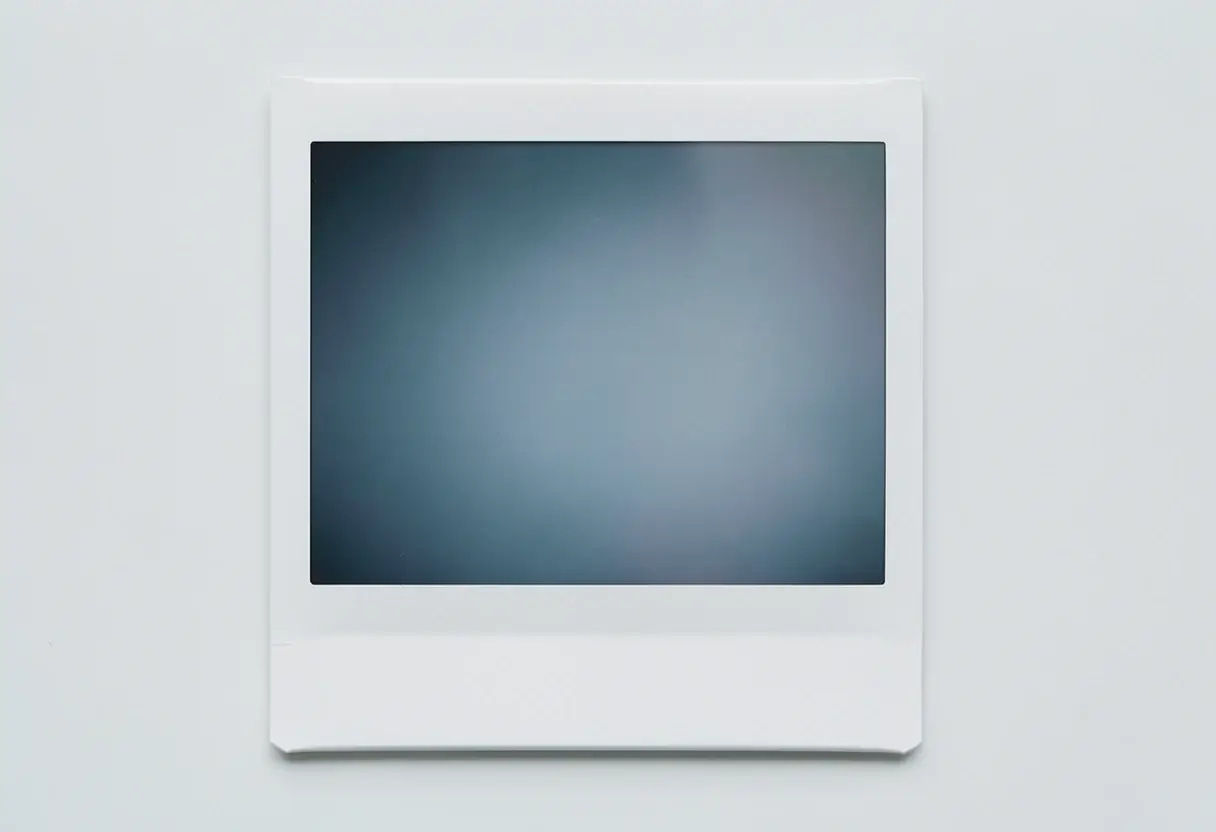
Instax Mini is an ISO 800 color film roughly the size and shape of a credit card. Two design choices trace back to Kodak's doomed instant system. The film is exposed through the back of the sheet, so cameras need no reversing mirror and can be far more compact. Fuji also placed the batteries and pressure plates in the camera body rather than the film pack, which cuts the cost of each sheet. The result is a film that is fun, relatively inexpensive, and consistent.
The image quality, in the shop's assessment, is the real argument. Prints are crisp, sharp, and saturated, and the film performs reliably, shot after shot. Unlike the wider Instax format, which uses essentially the same chemistry, Mini is pocketable, and its prints fit in a wallet.
How do people actually use it?
Sifting through staff samples, the shop found almost no landscapes. The pictures were of lives: nights out, Halloween parties, and moments from home. Lab manager David brought in prints of a young boy shaving and washing his first dish, a spoon — memorable moments from raising his stepson, Cash. He chose the Instax Mini over his other cameras, then added handwritten notes to the prints after they ejected. Negative film could have produced the same keepsakes, but only after finishing the roll, developing it, and printing it — days or weeks later. Instax delivered them in moments, with the image forming on the sheet within a few minutes of leaving the camera.
The film comes in color and monochrome versions, both ISO 800 with visibly smooth grain and strong contrast. The color emulsion leans punchy; the monochrome offers rich tonality from shadows to highlights. Fuji also sells the format with a range of decorative borders, including a contact-sheet style.
The feature closes with a fair verdict: Instax Mini does not get taken terribly seriously, and perhaps it should not be. It is fun to shoot, and its prints can end up mattering more than anything made on a 35mm or medium-format camera. Even after decades with instant film, watching a print develop never quite loses its magic.
Blue Moon is running a one-day sale on Instax Mini in both color and monochrome, online and at its Portland shop, which also stocks the cameras themselves. All images in the feature come courtesy of Blue Moon Camera and Machine, with individual photo credits, and PetaPixel members receive 10% off the lab's services. If the staff's unprompted enthusiasm is any measure, expect small instant prints to keep spreading.
Key points
- Fujifilm launched Instax Mini in 1998, the first Instax format.
- Fuji began marketing Instax in North America in 2008 after Polaroid discontinued its film, two years before the Impossible Project.
- Instax Mini is an ISO 800 film roughly credit-card sized, exposed through the back of the sheet.
- Three Blue Moon staff volunteered Instax Mini sample collections unprompted, versus one respondent for Instax Wide.
- Blue Moon Camera and Machine in Portland, Oregon is holding a one-day sale on color and monochrome Instax Mini.
Original: bluemooncamera.com
Grace Kim
Show full bio
Senior reporter covering companies, deals and strategy in Photography exhibitions, photographers, photo books, festivals and awards at Lens Gazette.