Photographers Wedge Zodiacs Into New Sea Ice to Shoot Aurora
A Secret East Greenland expedition in October 2026 spent four days on one moonrise image and wedged Zodiacs into centimeter-thick new sea ice for six-second aurora exposures.
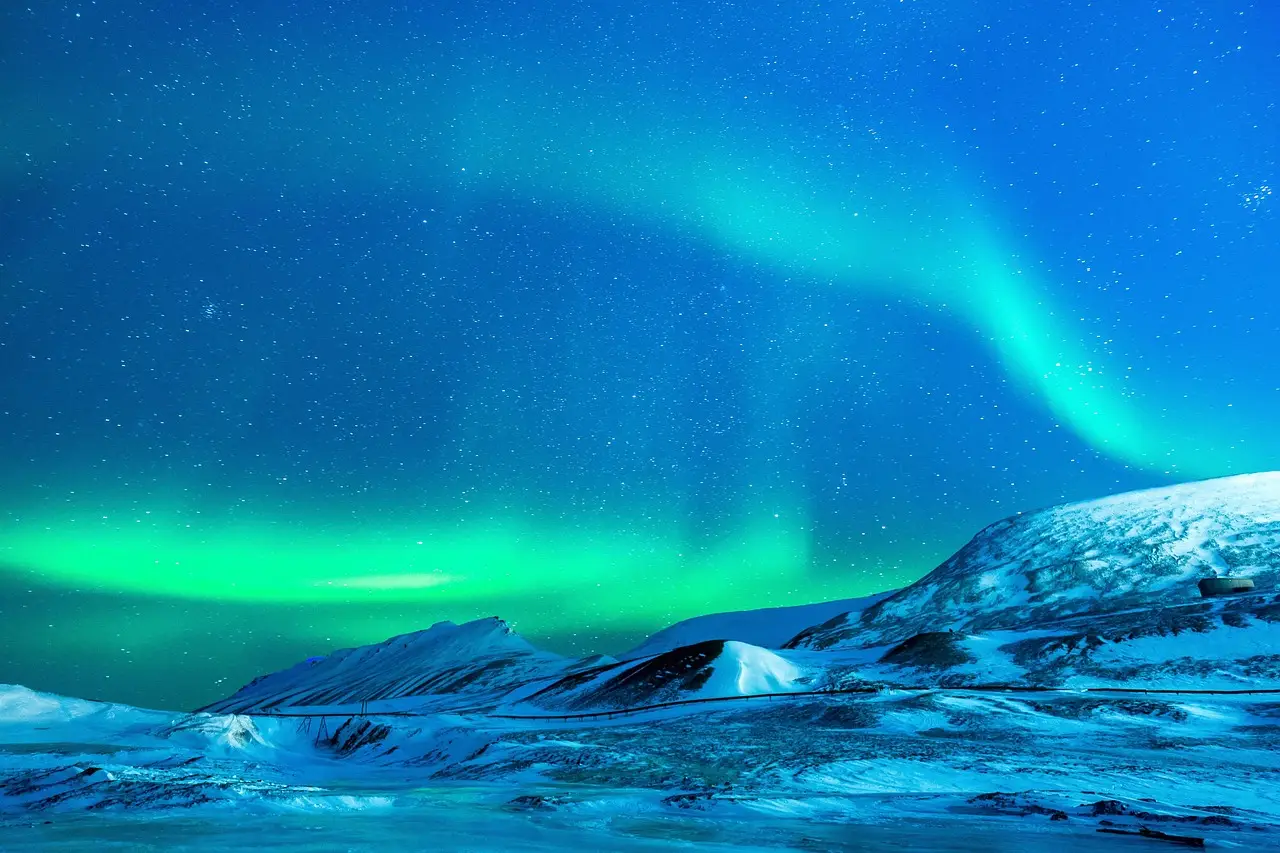
A photography expedition in East Greenland in October 2026 spent four days chasing a single moonrise image before achieving it around 8 p.m. on day three. The trip, hosted by Secret Atlas, produced two distinct night-photography projects: enormous icebergs lit by a rising moon, and the Northern Lights above the surrounding fjords and ice. Each subject posed very different problems.
The expedition's leader frames the work plainly. Spectacular scenery, the account makes clear, does not guarantee a strong photograph. The real task is recognizing what makes a moment worth capturing, reading how available light interacts with the landscape, and deciding before the moment disappears. In the Arctic, those windows can last minutes.
Why did the moonrise series take four days?
Some photographs begin long before the camera leaves the bag. The leader tracked the rising moon against the region's enormous icebergs across four days, waiting for timing and light to align. The goal was not a record shot of a moon above the horizon. It was a relationship between moonlight, the architecture of the ice, the sense of exploration, and the surrounding landscape.
Arctic twilight complicates this. The sky retains considerable ambient light even as the moon rises. That transition lets the landscape hold detail while the moon illuminates the ice from a different angle. A rising moon and a monumental iceberg are impressive separately, but combining them is not enough. Position, relative size, illumination, and separation from the background all shape how the image reads. The takeaway: anticipation matters more than access when the window is short.
How does a Zodiac change the work?
Polar bear presence in East Greenland prevents work on land during low light. Everything happens from a Zodiac, which means the shooting position is never fixed. Small movements shift the framing, especially at long focal lengths. The crew's objective was a viewpoint that separated the iceberg formations visually and incorporated the moon without losing scale. Icebergs are hard subjects because their dimensions resist communication.
Focal length carries much of that burden. A wide-angle lens emphasizes environment; a longer lens compresses the scene and pulls distant formations together. Exposure demands equal care. A brightening moon against a dark sky threatens highlights while shadows lose detail. The stated approach: retain texture on illuminated surfaces, let darkness stay in the image, and preserve highlight and shadow information rather than brightening everything equally.
What made the aurora operation unusual?
The moon's position can be anticipated and planned around, though it becomes a distraction when it enters the frame. The aurora behaves otherwise. Its brightness, shape, color, and movement can change rapidly. From the main vessel, the crew navigated the fjord searching for a photogenic iceberg, then positioned the ship for maximum stability while keeping freedom to reorient toward the expected aurora. When the lights appeared, coordination ran over VHF radio with the bridge. The ship was brought to a complete standstill — zero speed over ground — allowing exposures of around half a second from the outer deck.
Aurora exposure is a series of compromises between shutter speed, aperture, and ISO. Longer exposures collect more light for faint displays but blur a fast-moving aurora's fine structures. Shorter exposures preserve detail in the curtains and patterns but need enough light to work. The account is explicit: there is no universal exposure. Settings depend on the display's brightness and speed, ambient light, the lens, and the detail to be retained. The photographer adjusts to the sky's behavior rather than a fixed recipe.
How did they build a stable platform in the dark?
The answer was newly formed sea ice, roughly one centimeter thick. Before sunset, the crew ran a reconnaissance ride in Zodiacs to identify one or two striking icebergs and select the setting. After dark, they launched again through freezing waters to find the young ice near a chosen iceberg. Wedging the Zodiac's bow against the ice's edge created the stability needed for long exposures of half a second up to six seconds. A sufficiently wide area of new ice also allowed repositioning as the auroras shifted across the sky.
By 11 p.m., the night mission began. The leader, with teammates Signe-Maria and Myriam, guided the photographers toward the giant icebergs while the ship's searchlight illuminated the chosen iceberg as a beacon. Setups had been assembled, adjusted, and practiced during daylight, so no time was wasted in the dark. Tripods were secured against the Zodiac's pontoon and tilted forward to keep the boat out of frame. The leader then radioed the bridge and asked for all lights to be switched off.
The scene that followed: a half-moon revealing the iceberg's shapes and textures, auroras dancing overhead, and what the account calls twenty billion stars filling the sky. Cameras clicked through long exposures while the group floated between ocean and ice. The account concedes that nature always has the final word, and that the experience went beyond photography itself.
Does luck decide Arctic images?
The account rejects the simple version. Luck plays a role — the moon must rise favorably, weather must clear, the aurora must compose well. None of it is guaranteed. But presence is only part of the process. The photographer must recognize the scene's potential, choose position and focal length, balance exposure, and decide what belongs in the frame. Preparation does not control nature. It makes it possible to respond when an opportunity appears.
The expedition model points to where this kind of work is heading: vessel-based operations, radio coordination with bridges, and daylight rehearsal of night setups, all designed to convert an unpredictable Arctic sky into workable photographic time.
Key points
- The moonrise series took four days and succeeded around 8 p.m. on day three of the October 2026 expedition.
- Aurora exposures ran from half a second to six seconds, with the ship stopped at zero speed over ground.
- Newly formed sea ice about one centimeter thick served as the anchor for stable long exposures from Zodiacs.
- The night operation began at 11 p.m., guided by teammates Signe-Maria and Myriam.
- Polar bear presence prevented work on land during low-light conditions, forcing vessel-based shooting.
Source: PetaPixel
Grace Kim
Show full bio
Senior reporter covering companies, deals and strategy in Photography exhibitions, photographers, photo books, festivals and awards at Lens Gazette.