Third Leica 0-Series Prototype Sells for €4.25 Million at Wetzlar
A 1923 Leica 0-Series prototype — the third ever built — sold at Wetzlar Camera Auctions for €4,250,000, or roughly $4.75 million. The price puts the Barnack-era camera in record territory for a single camera lot.
Updated
A 1923 Leica 0-Series prototype sold over the weekend for €4,250,000 — roughly $4.75 million at current rates. The camera, the third of the 0-Series prototypes ever built, hammered at Wetzlar Camera Auctions on 12 October, per PetaPixel.
One sentence verdict: that is a lot of money for a 103-year-old box with a string-tethered lens cap.
What is the 0-Series, exactly?
The 0-Series names a small run of pre-production cameras Oskar Barnack developed at Ernst Leitz in Wetzlar between 1922 and 1924. They were the immediate precursors to the Leica I, which launched in 1925 and effectively defined the 35mm still camera as a commercial category.
Production totals are usually cited in the low dozens — closer to twenty-five than two hundred — and most survivors sit in museums or major private collections. The "third ever made" tag is, in this context, not collector marketing. It's a literal serial-position claim.
What was actually on the block?
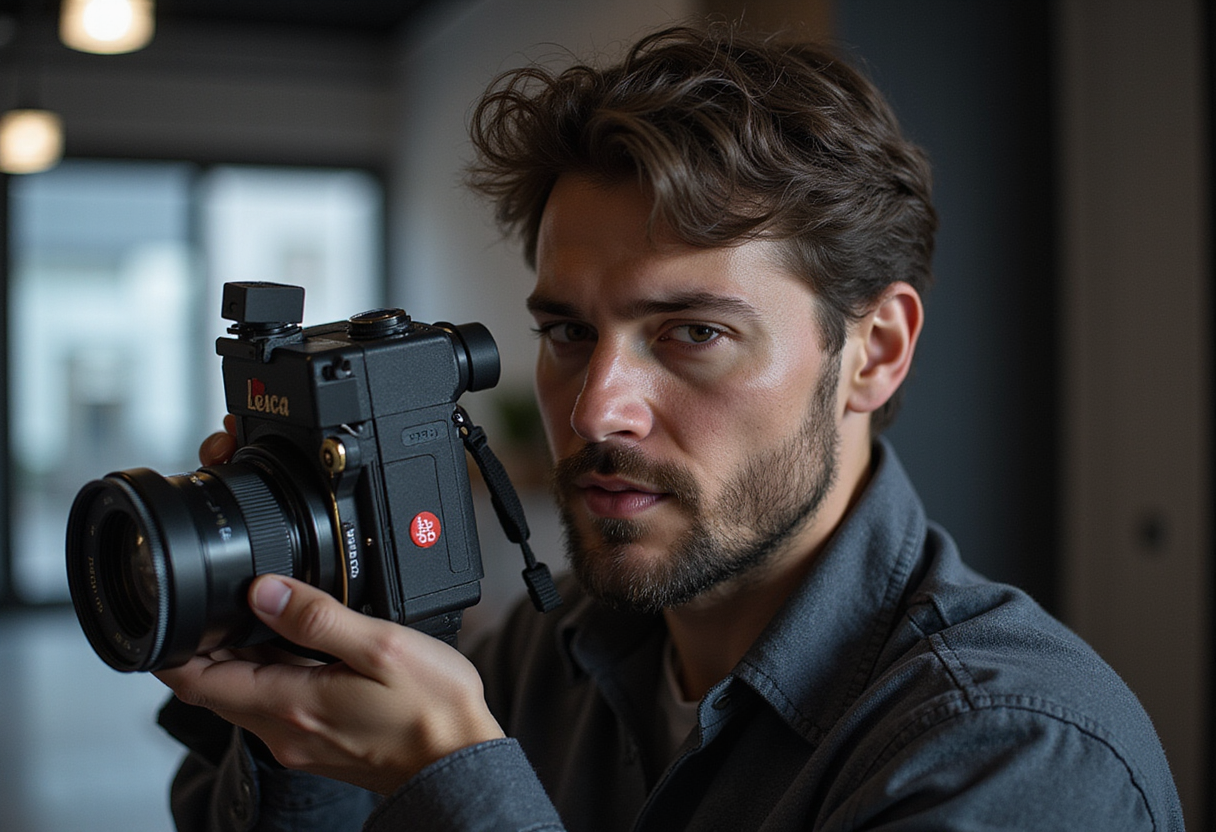
PetaPixel's listing image shows a black-bodied prototype carrying a Leitz Anastigmat 1:3.5 f=50mm lens, capped and tethered to the body by its original string. The textured vulcanite finish and the proportions are recognisably Leitz.
The same hands that built this camera would shape the screw-mount rangefinder lineage for the next century. The lens is a useful period marker: a 50mm Anastigmat at f/3.5 is the optical formula Barnack's colleagues were confident enough in to put on a prototype that historians now treat as a founding document of small-format photography.
What does the price actually mean?
€4.25 million converts to roughly $4.75 million at the exchange rate PetaPixel used in its reporting. For a single camera lot, that is unusual territory.
It sits above what most postwar Leitz reflex hardware fetches and well into the range typically reserved for the most aggressively contested industrial-design objects. The figure is a useful proxy for how the secondary market now treats early Leitz: not as old cameras, but as scarce, datable artefacts with continuous provenance.
Why do collectors keep bidding?
Auction houses have spent the better part of a decade positioning early Leitz prototypes as blue-chip collectibles. A 0-Series tied to a specific 1923 production decision — before the Leica name existed in commerce — has, in collector parlance, both provenance and scarcity.
Most 0-Series cameras that have changed hands in the past fifteen years have done so at Wetzlar, Leitz's home town and the spiritual centre of the brand's archive. The third-off-the-line tag, if the auction house's serial-number work holds, is exactly the kind of provenance detail that justifies a four-million-euro bid.
What to watch next
Wetzlar has been steadily investing in its photographic-heritage infrastructure. The Leitz Park complex, anchored by the Leica Museum, has spent the last several years expanding the public-facing side of the archive.
Expect more high-end prototype material to filter through European auction rooms as those institutional collections continue to be catalogued, contested, and occasionally deaccessioned. The market, in other words, is unlikely to cool off soon — the objects, after all, are not getting any less scarce.
Key points
- Sold on 12 October 2026 at Wetzlar Camera Auctions for €4,250,000, or about $4.75 million at current exchange rates.
- The camera is the third of Leica's 0-Series prototypes, all of which were built in 1923.
- It carries a Leitz Anastigmat 1:3.5 f=50mm lens, capped and tethered to the body by its original string.
- The 0-Series preceded the Leica I, which launched commercially in 1925 and defined the 35mm still camera as a category.
- Roughly two dozen 0-Series cameras were made in total, with most survivors now held in institutional collections.
Original: wetzlarcameraauctions.com
Olivia Hart
Show full bio
Staff writer covering people, launches and day-to-day practice in Photography exhibitions, photographers, photo books, festivals and awards at Lens Gazette.