No AI in Blue Planet III: Murky Frames Become the Proof
The BBC confirms no AI generated any frame of Blue Planet III, with producers deliberately keeping murky, imperfect underwater footage as proof of authenticity.
By Grace Kim
The BBC has confirmed that not a single frame of Blue Planet III was generated by AI. Jack Bootle, the corporation's head of specialist factual commissioning, made the pledge directly at a press screening, according to The Guardian. "No gen AI was used in this series. Not a single frame. It's all real photography," Bootle said.
The statement matters because the series arrives amid public doubt. Viewers increasingly question whether the images on their screens are real or machine-made. Bootle acknowledged that this climate shaped how the crew approached the underwater shoot.
The series also carries a remarkable human anchor. David Attenborough, now 100 years old, returns to narrate the third installment of the BBC's long-running nature franchise.
Why would producers keep murky footage?
The answer lies in a deliberate shift in editorial judgment. Executive producer Elizabeth White explained that the team now welcomes shots that are not perfectly clean, because the rise of AI "makes us want to be even more authentic."
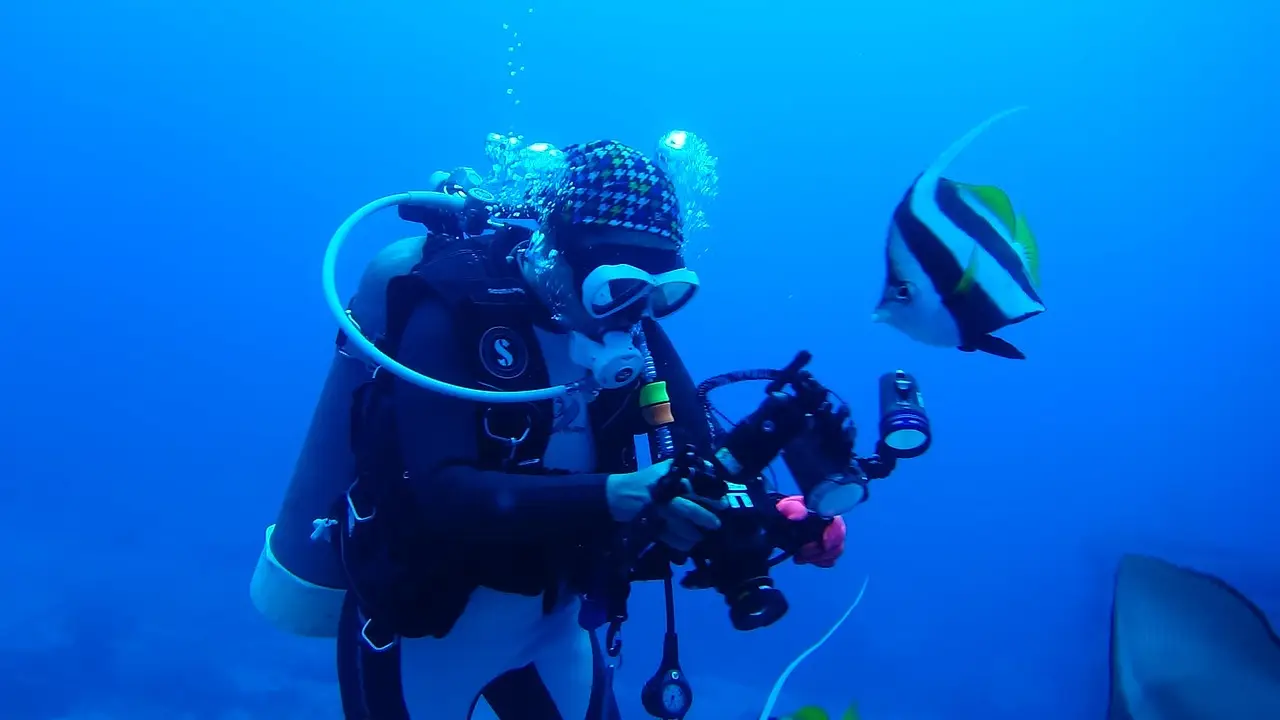
White described how the calculus worked on earlier underwater shoots. Heavy plankton in the water, poor visibility, a stray boat or buoy in frame — any of these flaws could disqualify a shot. "[Previously], we might have framed out a boat or a buoy or gone: 'Oh, actually … the water conditions are not really good enough for this,'" she said.
That standard has now been reversed. Imperfect conditions stay in the cut. White said the team is "really leaning into that authenticity." The logic is simple: clouded water and visible human apparatus read as evidence that a camera, not a model, recorded the scene.
The takeaway: imperfection has become a credential in documentary photography.
What did four years of filming capture?
Blue Planet III was filmed over four years across five oceans. Bootle said the result is "bursting with novel behavior," partly because the current quality of wildlife filmmaking makes "people feel like they've seen it all before." The series must now show audiences something genuinely new.
The equipment list shows how far the craft has advanced:
- A mini-dome camera built to follow octopuses
- A selfie stick adapted for deep-sea filming
- Lasers used to illuminate creatures in darkness
- Leg-mounted scooters that let camera operators move quickly underwater
- Splash drones and remote cameras designed for extended sub-surface use
The most significant innovation is the "stonefish" camera, which the BBC describes as the world's first underwater CCTV camera. Producer-director Yoland Bosiger developed it. The device recorded dolphins using sea sponges to block holes in coral, trapping fish hiding inside — a behavior sequence the series presents as a first.
Which animal moments anchor the series?
The confirmed sequences extend beyond the dolphins. One shows a grouper communicating with a fish of another species. Another documents roughly 200,000 crabs gathering in formation to feed. A further sequence captures sea urchins using shells to shield themselves from sunlight.
The series also features penguin behavior that the production itself compares to the famous iguana-and-snake chase from Planet Earth II — an acknowledgment of the franchise's own high-water marks and a signal of the tone the new series aims for.
The takeaway: the technological toolkit exists to serve behavioral revelation, not spectacle for its own sake.
What does this mean for documentary photography?
The Blue Planet III position marks a turning point in how factual imaging establishes trust. Where flawless footage once signified professional mastery, it now invites suspicion; murk, plankton bloom and visible rigging do the opposite. White's remarks suggest the aesthetic of restraint — keeping the frame honest rather than ideal — will spread through natural history production as AI-generated imagery becomes more common.
For photographers and filmmakers, the lesson is institutional rather than technical. Authenticity is now something a production must actively demonstrate, and Blue Planet III has chosen visible imperfection as its method of proof — a standard other documentary makers are likely to adopt as audiences grow more skeptical of what their screens show them.
Key points
- Blue Planet III was filmed over four years across five oceans
- Commissioning head Jack Bootle stated no generative AI produced a single frame
- David Attenborough, aged 100, narrates the series
- The 'stonefish' camera is described by the BBC as the world's first underwater CCTV camera
- Sequences include around 200,000 crabs gathering to feed
Original: theguardian.com
Grace Kim
Show full bio
Senior reporter covering companies, deals and strategy in Photography exhibitions, photographers, photo books, festivals and awards at Lens Gazette.