'We Are All Marine Animals, We Just Forgot': Enzo Barracco's Ocean Call
Enzo Barracco tells the Ocean&Climate Village 'we are all marine animals, we just forgot' — polar expedition photography as climate argument.
Updated
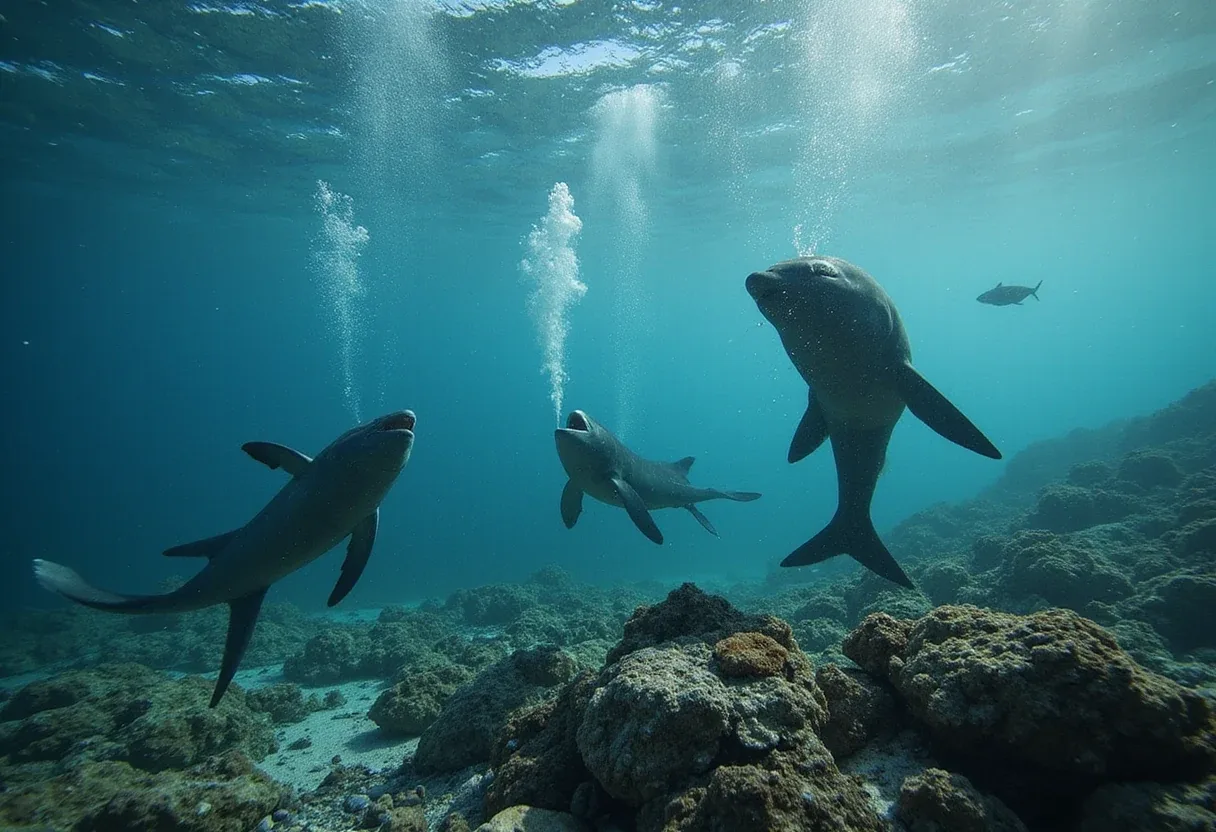
Enzo Barracco has one line that does the heavy lifting for an entire career spent pointed at the sea: "we are all marine animals, we just forgot." The Argentine-born, London-based photographer brought that thesis to the Ocean&Climate Village, where his work on the world's oceans stood as both document and provocation.
The venue matters here. The Ocean&Climate Village gathers institutions, scientists and image-makers around a single premise — that the ocean's fate and the climate's fate are one story, told twice. Barracco's photography sits inside that argument rather than beside it. His frames of polar water, ice and open sea are not scenery. They're evidence, and he talks about them that way.
What does the work actually show?
Barracco has built his reputation on expedition photography in the planet's most hostile marine environments. The polar regions feature heavily. Icebergs, black water, weather systems that swallow horizons — the images run cold and vast, and that's the point. You can't look at them and stay neutral about what's melting.
His guiding claim, the one he repeats and the one that gave the Ocean&Climate Village presentation its title, reframes the audience itself. "We are all marine animals, we just forgot." Not visitors to the ocean. Not observers of it. Participants in it, biologically and historically, who've drifted into amnesia. It's a rhetorical move more photographers should make — the camera turns around and points at you.
Why a photographer at a climate venue?
The Ocean&Climate Village puts artists next to researchers deliberately. Data moves policy; images move people. Barracco occupies the second job.
His method is expedition-first. He travels to where the ocean is changing fastest, shoots in conditions that would end most shoots, and publishes the results with the urgency of a man who watched the subject disappear while he photographed it. The craft serves the argument. Long lenses, brutal light, patience in freezing spray — none of it is the story. The retreat of the ice is the story, and the pictures carry it into rooms that graphs can't reach.
There's an art-historical lineage here worth naming. The tradition runs from early polar expedition photography through the large-format sublime of contemporary environmental work — images that borrow landscape painting's scale to make an ethical demand. Barracco works in that register. Big subject, hard travel, moral stakes stated plainly.
What does this change for climate storytelling?
The practical question: does one photographer's slogan move anything? On its own, no. As a device attached to a body of polar work circulating at institutional events like this one, yes — it gives audiences a handle. People forget statistics. They remember a sentence like "we are all marine animals," and then they remember the iceberg that came with it.
That's the exchange the Ocean&Climate Village is engineering. Science supplies the findings. Barracco supplies the memory. The pairing is the message.
Where it heads next
Barracco's trajectory points toward more of this — more institutions pairing his marine work with climate programming, more expeditions, more platforms where the photography and the science share a stage. The forgetting he accuses us of is, in his framing, curable. The pictures are the cure.
Key points
- Photographer Enzo Barracco presented work at the Ocean&Climate Village.
- His stated thesis: "we are all marine animals, we just forgot."
- Barracco's practice centers on expedition photography in polar and marine environments.
- The Ocean&Climate Village places artists alongside scientists in a shared climate program.
Source: Google News: photography exhibition
Marcus Bennett
Show full bio
Correspondent covering companies, deals and strategy in Photography exhibitions, photographers, photo books, festivals and awards at Lens Gazette.