Marshall To Photographs the Ghosts He Grew Up Fearing in Blank Notes
Marshall To's Charcoal Press debut Blank Notes turns a Taoist childhood in rural Alberta into a night-soaked photobook of spirits, hungry ghosts and burning paper money.
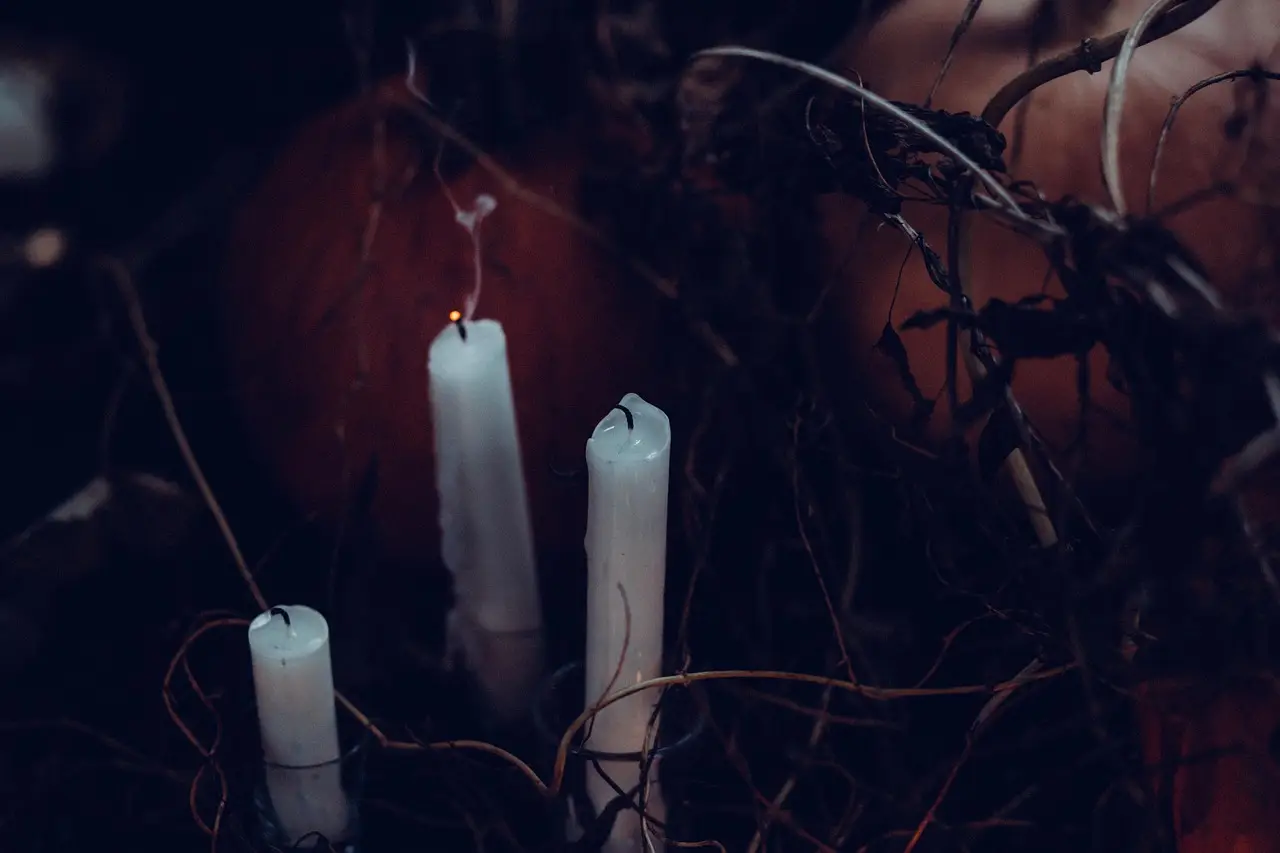
Marshall To's first photobook, Blank Notes, published by Charcoal Press, turns a Taoist childhood in one of Alberta's least Chinese towns into a night-soaked meditation on spirits, fear and reconciliation. The book was featured by Lenscratch on November 1, 2026, and it is unlike almost anything else on the photobook shelf this year — a ghost story told in grain, matte black paper and the glare of a flashlight.
The title is not a metaphor. It is literal. In Taoist funerals, festivals and days of remembrance, families burn blank paper notes resembling money, so the dead can spend it on the other side. "I remember how fun it was as a child throwing this fake money up in the air or putting it into a metal bucket to burn and it stuck with me," To said in the interview accompanying the book's release.
What's actually in the pictures?
Animals, mostly nocturnal ones. Incense burning. Forlorn landscapes. People who often look like they are dreaming. Nearly everything was shot at night — which matters, because To is intensely afraid of the dark. That tension runs through every page. The black matte paper, the heavy grain, the flashlight glare illuminating some frames: all of it builds an anxiety that pulls the reader deeper into what the accompanying text calls To's "spectacular ghost story."
His animal choices were not random. To researched which animals carry weight in Asian cultures — spirits, he grew up believing, can take many forms: birds, snakes, foxes, tigers, even a beautiful man or woman.
Where does the fear come from?
To grew up in Red Deer, Alberta, in a Taoist household. His mother came from China during the Cultural Revolution; his father arrived from Hong Kong in the 1970s. They brought the old stories with them. His family was one of two or three Chinese families in the city.
That isolation shaped everything. "As a kid I very much kept those worlds separate, perhaps because of fear or embarrassment. I'm not really sure," To admits. "But that's why this book is so important to me now. It gave me an opportunity to reconcile and embrace where and what I came from."
The family marked the Hungry Ghosts Festival on the 15th day of the seventh lunar month, when the gates of Hell open and hungry ghosts roam the earth in search of food. It is a festival of veneration — and of danger. As a child, To was warned not to do anything disrespectful on festival nights, because wandering spirits without families might follow you home. He still obeys that rule. "I'm definitely not trying to find spirits, because there's a part of me that believes that they might be everywhere and it makes me truly afraid," he said.
His artist statement anchors the book in a single childhood memory: a fever after visiting his grandmother's grave, incense smoke, frantic repeating prayers, and then a deafening crack from inside the ceiling, loud as thunder. "It seemed only natural that the veil separating the living and the dead might be as thin as the line between life and death," he writes.
How did a chef end up here?
To is a multidisciplinary artist working in photography, painting and illustration, currently based in Vancouver and employed as a chef. In a Chinese immigrant household, food was a language — a way to communicate. Unsatisfied with cooking alone, he began photographing food, then shooting and styling for local magazines and websites, before pushing further into art photography.
The book found its shape at Chico Review, where, by his account, exposure to countless books, artists and films gave him the imagination to build something of his own. What began as an attempt to conquer his fear of the dark — wandering parks at night photographing animals — became something quieter. "Once I stayed in the dark long enough for the fear to pass, it became so peaceful," he said. "The anxieties of the day don't seem as primal as the anxieties of the night."
His family's reaction is warm, with an honest caveat. "I'm not sure they necessarily understand it, but I'm not sure if I completely understand it," he said. "They've given me every opportunity to make this work, and that's all I can ever ask for."
To's advice to other artists is brief: "Pursue openness, pursue grace and pursue failure." Whether Blank Notes marks a one-off reckoning or the first chapter of a longer body of work remains to be seen — but with a debut this distinct, the veil between chef and artist has clearly already been crossed.
Blank Notes is available through Charcoal Press. To's work can be seen at marshalljamesto.com.
Key points
- Marshall To's photobook Blank Notes is published by Charcoal Press and was featured by Lenscratch on November 1, 2026.
- To grew up in Red Deer, Alberta, in one of two or three Chinese families in the city, in a Taoist household.
- The title refers to blank paper money burned in Taoist rituals so the dead can spend it.
- Most images were shot at night, despite To's intense fear of the dark.
- To is a Vancouver-based chef whose photography began with food work for local magazines.
Original: marshalljamesto.com
Daniel Okafor
Show full bio
News editor covering companies, deals and strategy in Photography exhibitions, photographers, photo books, festivals and awards at Lens Gazette.