100 Photographs Put 30 Vietnamese Heritages on Display
A ministry-directed Hanoi show pairs 100 colour and monochrome photographs with 30 Vietnamese heritage sites and practices, seven preservation categories and a case for community-led continuity.
By Olivia Hart
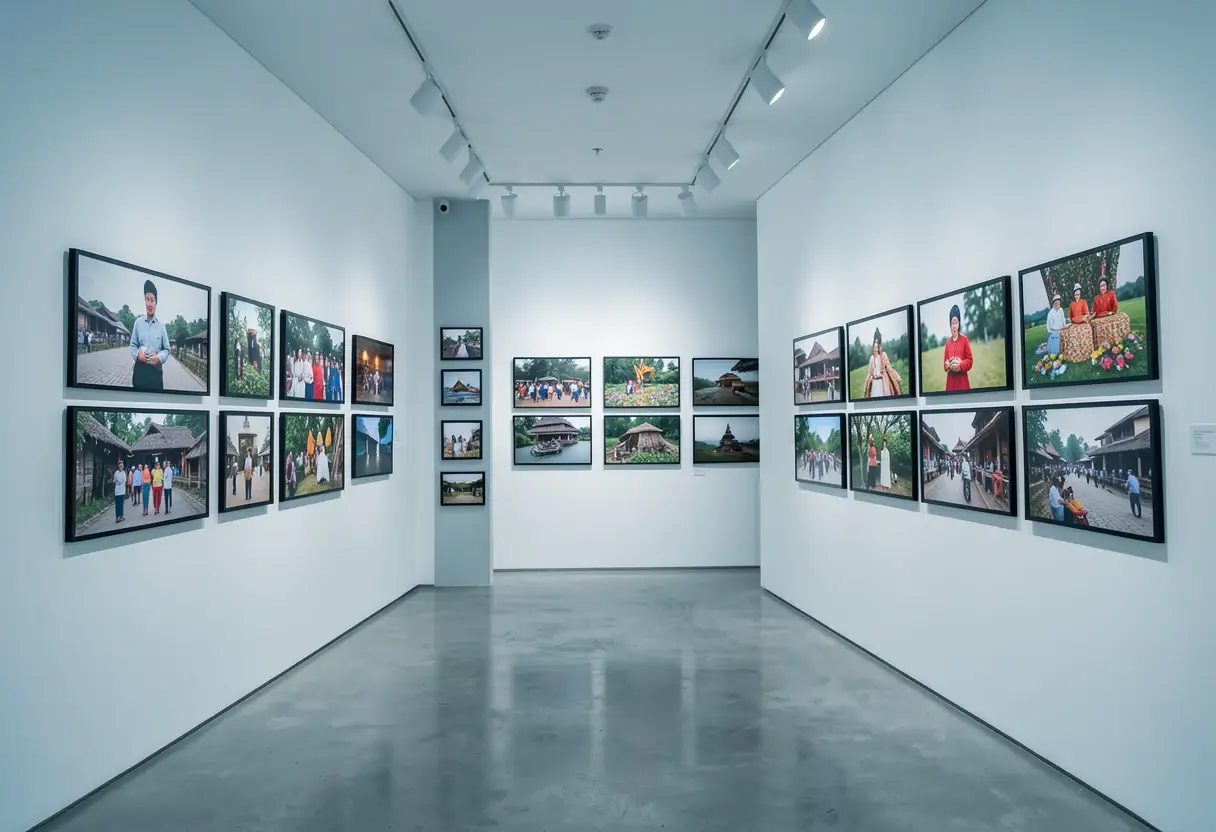
“World Heritages of Vietnam” opened with 100 colour and black-and-white photographs of 30 Vietnamese heritages on 26 October 2016 at Exhibition House 29 Hang Bai, Cua Nam ward, Hanoi; the scheduled close was 3 November.
Directed by the Ministry of Culture, Sports and Tourism and hosted by the Department of Fine Arts, Photography and Exhibition, the show brought together relic complexes, scenic spots, performing arts, festivals, beliefs, traditional handicrafts and historical documents. Many of its subjects are recognised by UNESCO, but the exhibition does not confine itself to that familiar roster.
A broad brief, to put it mildly. The programme moves between material heritage and practices sustained by people, while the 100 images share a stated 60 × 80 cm format. That scale gives architecture, performance and craft comparable physical presence in the room.
What do the seven heritage categories cover?
The display is divided into seven groups:
- World cultural heritage
- World natural heritage
- World cultural and natural heritage
- Oral and intangible heritage
- Representative intangible cultural heritage of humanity
- Heritage in need of urgent protection
- World documentary heritage
The seven-part taxonomy is the exhibition’s clearest curatorial device. It does not reveal, in the announcement, how the photographers were selected or how the 100 images were distributed among the headings, but it does locate the show within a preservation framework rather than a picturesque survey.
One displayed photograph is “Living Humanity Treasure”, identified as the work of Viet Van (Lao Dong Newspaper). The announcement offers no further captions, so the exhibition itself must supply the distinctions between landscape, practice, belief and archive.
The exhibition rationale says each work tells “a story about memories, identity and the continuation of traditional values through many generations”. That claim places the photographs beyond picturesque record. They are meant to document continuity, not merely freeze a view for visitors to admire.
A common format can make a 100-image sequence coherent, but it cannot by itself establish a visual argument. Without caption-level detail on sequencing or print choices, the wall must carry more of the argument than the photographs alone.
Why does preservation sit at the exhibition’s centre?
Rather than treating heritage as completed scenery, the exhibition text links it to contemporary responsibility, especially for intangible practices at risk of disappearing. Preservation, it argues, must connect to the environments in which skills survive, the role of artisans and communities’ active participation.
A photograph can document the visible form of a ritual or technique, but it cannot guarantee that practitioners retain the space, authority and community support needed to sustain it. The show therefore joins celebration to obligation, a less romantic combination than the standard tourism pitch.
Its programme also connects heritage preservation with cultural development and cultural industries. In practical terms, the exhibition presents Vietnam’s inherited places and practices as part of contemporary cultural and economic life rather than as relics kept apart from it.
How does the show use photography as public advocacy?
The announcement calls photography a “bridge” between heritage and the public. Fine, if the bridge also has somewhere to go: the images should prompt familiarity, attachment and support for conservation rather than passive admiration.
It also asks those images to arouse love for homeland and country, an unmistakably civic brief. The show is thus advocacy as much as photography, with conservation framed as a contemporary social responsibility.
Organised towards Vietnam Cultural Heritage Day on 23 November and Vietnam Culture Day on 24 November, the exhibition sought to raise awareness of heritage’s role and encourage younger people to value cultural preservation. The timing gives the institutional campaign a national calendar.
From 26 October to 3 November, the show makes a compact case for that campaign rather than a long-term programme. Its forward-looking claim is nonetheless consequential: photography can connect public memory with the practical work of preservation and with Vietnam’s cultural development and industries.
The exhibition’s larger direction is clear: photography should carry heritage beyond 3 November, linking public awareness with preservation and with Vietnam’s cultural development and industries.
Key points
- The exhibition presented 100 photographs about 30 Vietnamese heritages at Exhibition House 29 Hang Bai in Hanoi.
- Its run was given as 26 October to 3 November 2016.
- The works were presented in colour and black and white at a stated 60 × 80 cm size.
- The display used seven heritage groupings, from world cultural heritage to world documentary heritage.
- The Ministry of Culture, Sports and Tourism directed the exhibition; the Department of Fine Arts, Photography and Exhibition hosted it.
Source: Google News: photography exhibition
Olivia Hart
Show full bio
Staff writer covering people, launches and day-to-day practice in Photography exhibitions, photographers, photo books, festivals and awards at Lens Gazette.