Squint brings Michael Wilson’s music photography to Cincinnati
Cincinnati Public Library’s “Squint” assembles Michael Wilson’s album covers, working material and photographs of David Byrne, Randy Newman and Lyle Lovett, with a talk on 9 November.
By James Calloway
Michael Wilson has probably worked on 400 or 500 album projects, and Cincinnati Public Library’s main branch now presents his new exhibition, “Squint: The Music Photography of Michael Wilson.” The Cincinnati-born photographer’s selection centres on work featuring David Byrne, Randy Newman and Lyle Lovett.
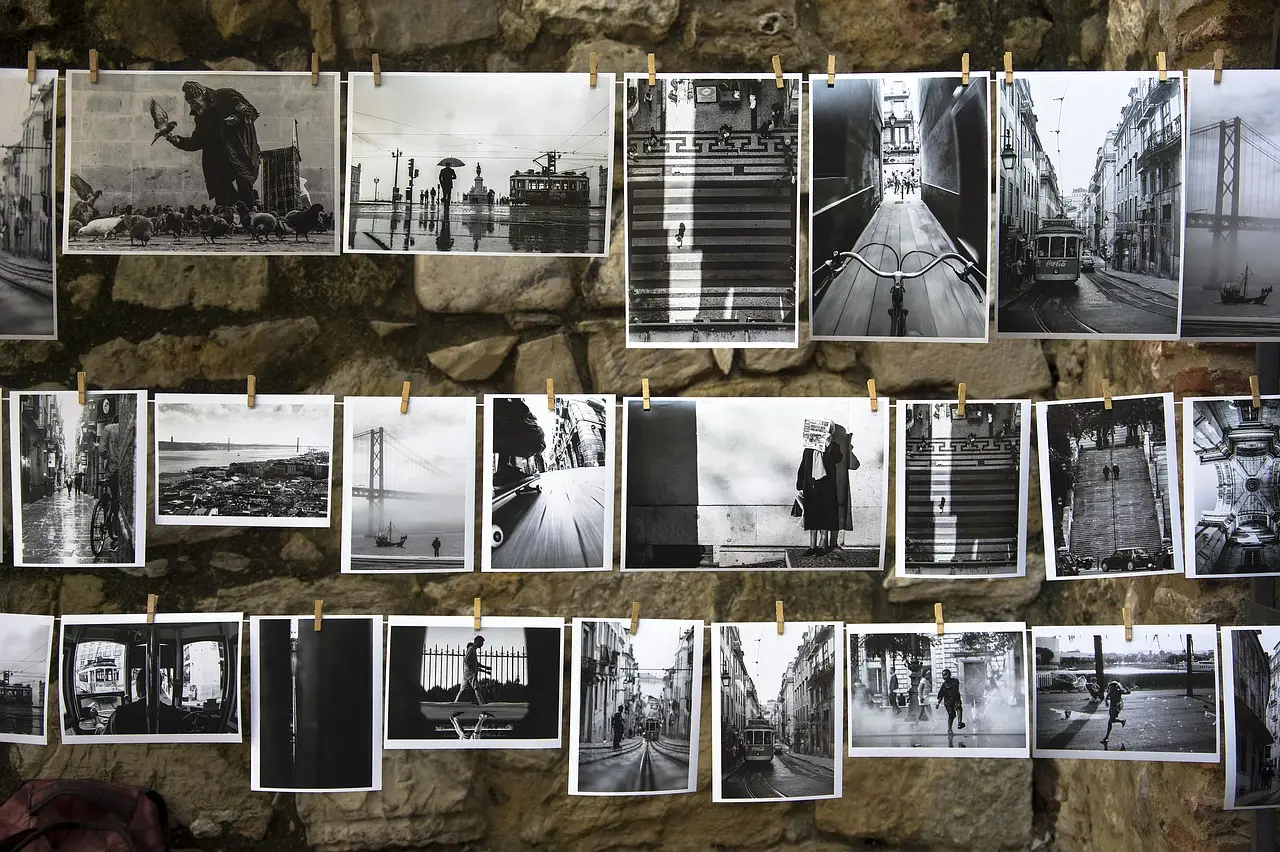
The display gathers the material around record production: visitors will encounter album covers, record displays, CD cases, promotional material, camera equipment and behind-the-scenes work. Brian Powers, the library’s community content coordinator and curator, proposed the collaboration earlier that summer; he has long admired Wilson’s work.
Wilson stresses that the show is not a retrospective and says much of it is aimed at music enthusiasts. His plain self-description is that he makes photographs.
What does “Squint” actually show?
Wilson’s route into photography began by accident while he attended Northern Kentucky University. He has worked with a camera since the 1970s and became a full-time freelancer in 1987. Those dates establish the long working practice behind a portfolio that Powers and Wilson deliberately present as a selection.
Powers first approached Wilson at his Price Hill home, where they looked through old project prints and contact sheets. Wilson joked that calling the space a studio would glorify his basement and garden; the consequential result was Powers’s proposal to show the work behind the finished record.
Wilson said: “It was his idea to show off the work behind the scenes, what you don’t see when you pick up a record at the store. And especially with the resurgence of vinyl, it feels like a great time for this.” The vinyl resurgence gives the exhibition a public rationale, placing photographic process beside renewed interest in physical media.
That rationale makes the show more than a display of finished images: sleeves become evidence of photography’s role in authorship, promotion and record design. The objects preserve both outcome and procedure, allowing visitors to read the commercial object alongside the working process.
How did Wilson build such a varied practice?
Wilson became a regular photographer for B.B. King and Lyle Lovett, and the Lovett relationship supplies the exhibition’s clearest narrative. After the two met in 1991, Wilson shot every Lovett album cover, working with the singer when new music was on the way. That continuity offers a concrete counterweight to an archive Wilson estimates at 400 or 500 projects.
Wilson described his roster as all over the board and cited a partial list: “I went from like classical musicians like Philip Glass to opera singers like Dawn Upshaw, country singers like Emmylou Harris, bluegrass musicians like Ralph Stanley … Waylon Jennings … Randy Newman … David Byrne.” It spans classical, opera, country and bluegrass.
Why does the library setting matter?
The timing was unplanned. Powers and Wilson did not coordinate “Squint” with the FotoFocus Biennial, which opened in the middle of the previous month; nevertheless, the library show became part of Cincinnati’s celebration of photography. Wilson considers the overlap fitting, although he remains unsure why Powers chose that moment, and is glad it happened.
Another third-floor display at the library presents Cincinnati record labels and the city’s best-known musicians. Wilson values the adjacency because it associates his work with the history of Cincinnati’s music and makes him feel part of that company, a connection he describes as special and for which he is grateful.
He also finds it gratifying that the exhibition can connect visitors with musicians who lived and worked in Cincinnati, or whose work has an association with the city. The placement gives the library a way to connect photographic authorship with a locally grounded music history, while Wilson’s portfolio extends well beyond city-based subjects.
What happens on 9 November?
On 9 November at 6.30 p.m., Wilson and Powers will hold a public talk at the library. They will discuss Wilson’s career in photography and his most memorable moments, with Wilson favouring questions and a back-and-forth dialogue over a formal presentation.
Wilson hopes the exchange will encourage people to see “Squint,” describing its story of musicians’ Cincinnati connections as an intriguing narrative. The library’s official event page carries further information about the discussion.
That institutional pairing is especially timely as vinyl’s resurgence brings physical records back into wider attention. “Squint” will test whether the library can make photographic process visible where record culture is renewing public appetite.
Key points
- “Squint” is on display at Cincinnati Public Library’s main branch; Wilson estimates his career at 400 or 500 album projects.
- Wilson has photographed since the 1970s and became a full-time freelancer in 1987.
- After meeting Lyle Lovett in 1991, Wilson shot every Lovett album cover that followed.
- Wilson and curator Brian Powers will give a public talk on 9 November at 6.30 p.m.
Source: Google News: photography exhibition
James Calloway
Show full bio
Market editor covering people, launches and day-to-day practice in Photography exhibitions, photographers, photo books, festivals and awards at Lens Gazette.