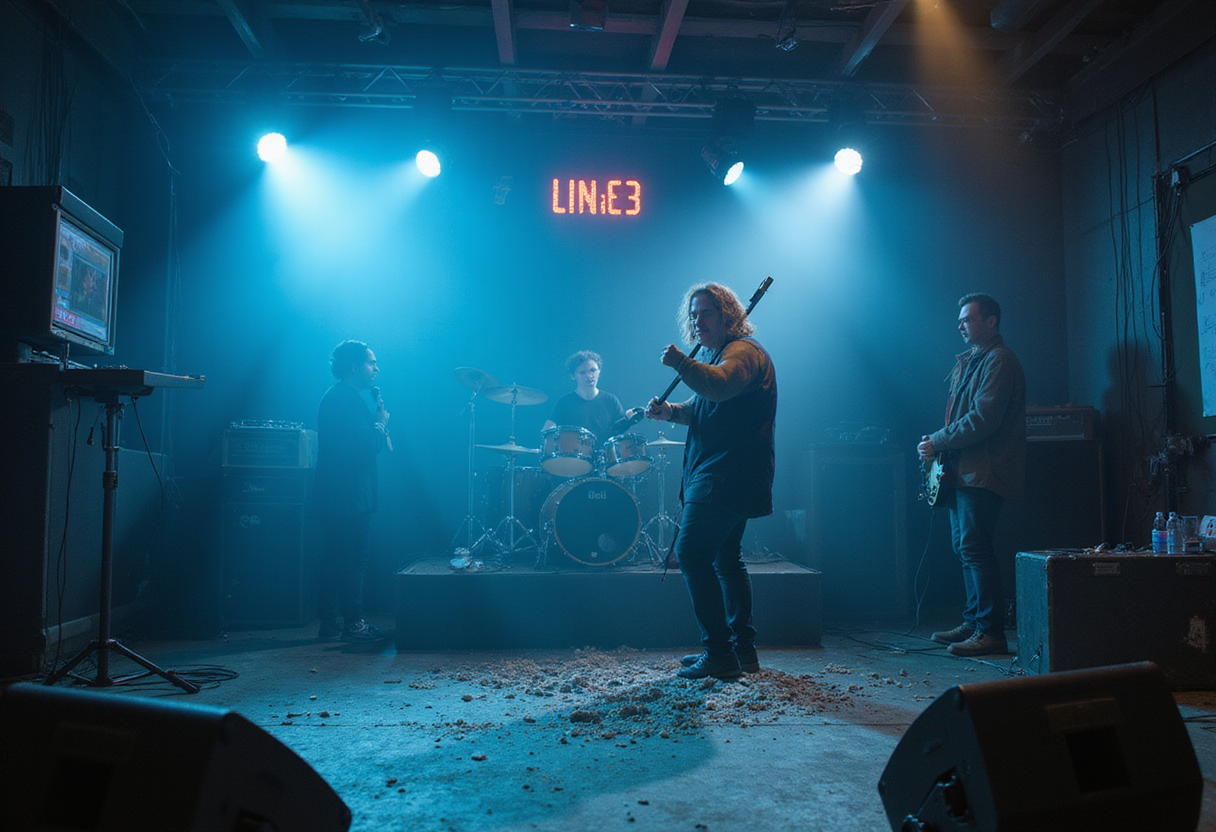
Tim Walker's Fairyland reframes fifty years of queer activism
Tim Walker's Fairyland traces five decades of queer activism through portraiture. The exhibition gathers activists, performers, and cultural figures into a sequence spanning fifty years of LGBTQ+ public life and image-making.
Updated
British photographer Tim Walker has assembled a new exhibition titled "Fairyland," tracing five decades of queer activism through portraiture. The project appeared in Designboom's coverage this week. It enters a wider institutional conversation about LGBTQ+ visual history.
What does the exhibition set out to show?
"Fairyland" gathers portraits of activists, performers, and cultural figures into one sustained sequence. The selection draws on Walker's archive and on new sittings. The frame reaches across roughly fifty years of queer public life and image-making.
Walker treats portraiture as a record of community rather than a catalogue of celebrity. Each picture pairs a sitter with a place of significance. A march, a club, a stage, or a kitchen all carry equal weight inside the composition. The pictures use staging to expose interior life rather than to obscure it, and the body of work extends a method he has practised for two decades into a more political register.
The takeaway: the frame holds a community, not a costume.
Where does Walker sit within the photographic tradition?
Walker trained in editorial fashion before turning to personal projects. His early portraits for major publications established a vocabulary of theatrical staging, soft light, and deliberate artifice. That mode placed him close to the lineage of Cecil Beaton and Angus McBean, two earlier imagemakers who understood fashion photography as performance.
Walker's queer subjects push that form toward documentary ends. The activist and the studio sitter share the same picture inside a carefully constructed set. The exhibition collapses a familiar gap between editorial image and historical document, and the result asks viewers to read fashion photography as social record rather than consumer product.
The takeaway: editorial staging meets activist record in one sequence.
Why does the timing matter?
Museums across Europe have spent the past decade acquiring queer photography from the second half of the twentieth century. Major institutions now treat LGBTQ+ image-makers as central rather than peripheral to twentieth-century visual culture. Walker's archive carries the weight of a careful printing practice and a generous access to subjects across several decades of work.
The work also arrives as debates over public memory sharpen. Activists who built the modern gay rights movement are aging out of interviews. A photographer with Walker's reach can fix those records in print before the historical record thins, and the exhibition reads in part as a deliberate act of preservation rather than a stylistic exercise.
The takeaway: a fashion-trained eye enters the museum's queer holdings.
What craft choices shape the project?
Walker builds pictures on production. He selects location, costume, and light with the rigour of a theatre director. The technique serves the sitter rather than the photographer's signature. The strongest frames preserve both artifice and interiority across many sittings and locations.
The risk runs the other direction. Heavy staging can flatten a sitter into a costume or a tableau, and Walker has negotiated that risk across two decades of work. The strongest pictures in "Fairyland" hold the sitter's presence against the production design, and that balance defines the project's success.
The takeaway: staging must serve the subject, never the other way around.
Where does the project go from here?
"Fairyland" positions Walker for a phase of institutional exhibition-making rather than editorial assignment. A body of this scale invites museum touring, scholarly catalogues, and permanent collection placement. Walker has selected thematic depth over magazine turnaround in recent years, and this exhibition confirms that direction of work.
The takeaway: the camera steps from the studio into the archive, and the gallery steps in for the magazine.
Key points
- Tim Walker's exhibition "Fairyland" traces five decades of queer activism through portraiture.
- Designboom covered the project in its recent reporting.
- Walker trained in editorial fashion before turning to personal projects.
- Major European museums have spent the past decade acquiring twentieth-century queer photography.
- "Fairyland" positions Walker for institutional exhibition-making rather than editorial assignment.
Source: Google News: photography exhibition
Grace Kim
Show full bio
Senior reporter covering companies, deals and strategy in Photography exhibitions, photographers, photo books, festivals and awards at Lens Gazette.