Qatar Museums unveils Gerhard Richter’s Doha Pavilion of 8,192 strips
Qatar Museums unveiled Gerhard Richter’s six-sided, permanent pavilion at Doha’s MIA Park on 20 November 2026, with 8,192 strips cut from a digital image of his 1990s Abstract Painting (724-4) supplying the model for its exterior walls.
Qatar Museums commissioned the work for MIA Park, the large public space outside the Museum of Islamic Art, and partnered with Selldorf Architects to realise it.
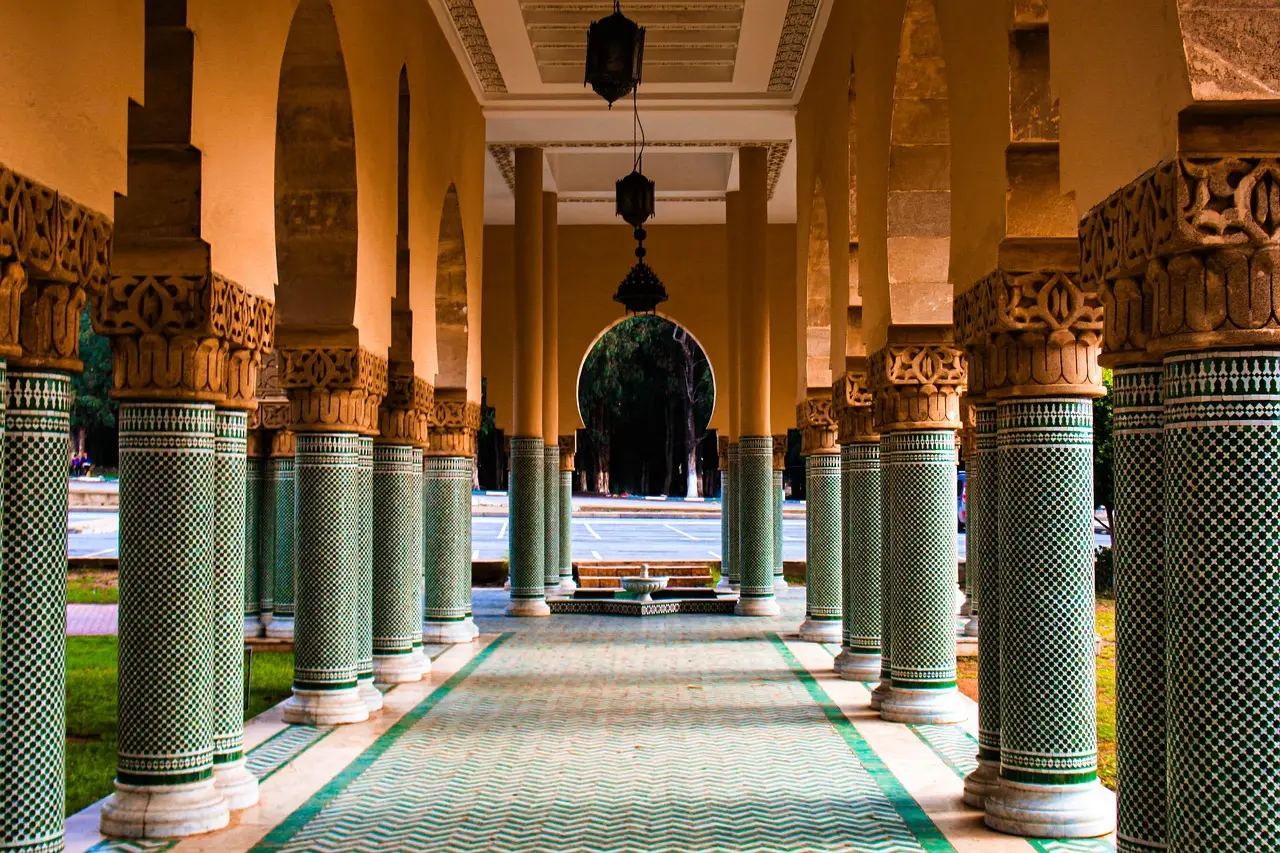
Its six-sided geometry reflects Richter’s analytical approach to painting. The walls carry mirrored and repeated strips, forming dense horizontal lines that evoke the geometric patterns of Islamic art. The result sits neatly between painting and architecture, which is rather the point.
At 90, Richter has long moved between photorealistic painting, photography and abstraction; one of his photorealistic paintings landed on a Sonic Youth album cover, and large-scale sculptural works include his Strip-Tower at Serpentine South. The Doha commission brings that hybrid practice into civic space at architectural scale.
What turns a digital image into a building?
In 2010, Richter looked at a digital image of Abstract Painting (724-4), a work from the 1990s, and cut it into two vertical strips. He subdivided those into four, then eight, and continued until he had produced 8,192.
What began as an experiment in creativity became the visual reference for all six exterior walls: repetition, reflection and serial order doing the work of a brushstroke.
Richter said: “My trip to Doha in 2013 came two years into developing my Strip paintings, and the city’s architecture and history sparked an idea for a pavilion that could unite the thematic threads of that body of work … Doha is the right place and the only place for my Pavilion.”
His design also specifies decorative tiles based on the Patterns that first led him to the Strips, with the Strip paintings, Mirrors and Strip Tower arranged inside. The sequence is exact: a 2010 image operation, a Strip series begun in 2011, a 2013 visit to Doha and a 2026 building.
What does the interior make visible?
The Strip series, begun in 2011, appears inside in three new large-scale paintings. Two floor-to-ceiling mirrors multiply both the paintings and their observers, producing the endless environment Richter’s design intends. The arrangement turns looking into a feedback loop: art reflects art, reflection reflects the viewer, and architecture starts to behave like an optical instrument.
- Strip Tower: A new freestanding sculpture designed specifically for the pavilion and installed at its centre.
- Brunnen (Well): A stone sculpture positioned outside.
The repeated geometry is coherent, if not entirely new: the pavilion recycles the logic of the Strip series that began in 2011 and pairs it with the serial method behind a 2010 digital experiment. Its achievement is less a break with Richter’s practice than a
Source: wallpaper.com
Olivia Hart
Show full bio
Staff writer covering people, launches and day-to-day practice in Photography exhibitions, photographers, photo books, festivals and awards at Lens Gazette.