Museum of London Reopens in Smithfield After £437m Makeover
The Museum of London has reopened inside Smithfield's Victorian market halls after a £437m, ten-year transformation, pairing Tudor jewels with a Whitechapel sewer fatberg.
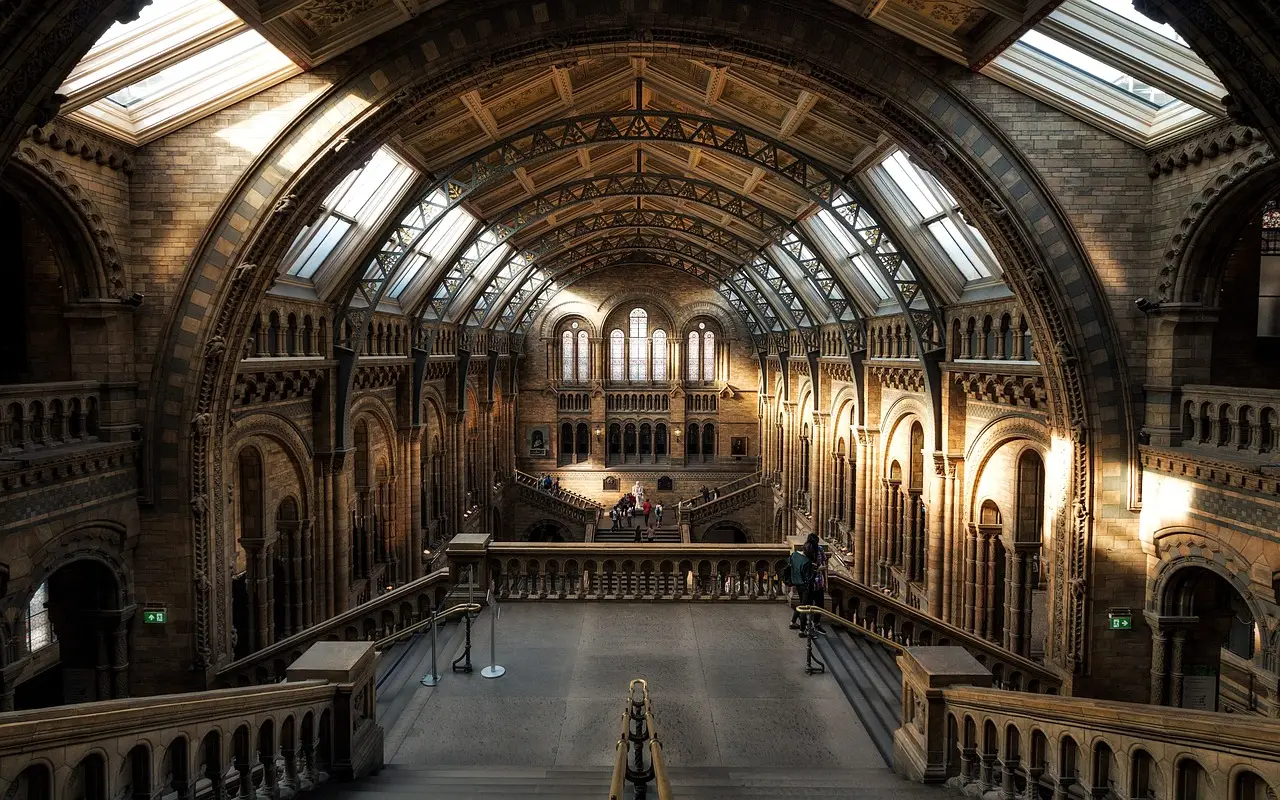
The new Museum of London has opened its doors inside the former Smithfield general market, capping a £437 million, decade-long transformation of one of the capital's most storied Victorian buildings.
The institution has moved from a site its critics compared to a roundabout in an armpit of the City — its former home near the Barbican — to the prime market complex at Smithfield, where butchery defined the district for 800 years. An architecture critic's verdict on the finished building: it is an astonishing sight.
What does the move change for visitors?
The galleries now span a space described as cathedral-like, and the collection ranges from the sublime to the unsalvageable. Priceless Tudor jewels hang in the same institution as a lump of congealed fat and rags dredged from a Whitechapel sewer — the notorious London fatberg, scraped from the depths of the city's drainage system and preserved as an artifact of modern urban life.
An illuminated sign on the roof of the old general market hall announces the museum's ethos: "All the grit and the glitter." It beams out over the city, its showbiz cadence more burlesque marquee than municipal plaque. That tagline fits a museum that treats a sewer blockage and royal jewellery as equally legible evidence of how the capital lives.
The curatorial sweep, as previewed, reaches across jewels, axes, DJs and dog races — a deliberately wide net for a city whose history refuses to stay polite. Even the coffee keeps faith with the site's working-class past: unposh cups are served from Syd's, the century-old stall that survived the market's working years.
A building scoured like its own exhibits
The parallel is hard to miss. Just as the fatberg was hauled from the murk of a Whitechapel sewer, the former market hall and its extensive warren of basement vaults have been meticulously scoured and scrubbed. The conservation effort went deep beneath the trading floor, reclaiming vaulted undercrofts that had accumulated grime across centuries of use.
Smithfield's past was never clean. Charles Dickens described the market as "all asmear with filth and fat and blood and foam" — a line that now reads as an unintentional curatorial brief. The £437m project, a full ten years in the making, set out to honour that grit rather than sand it away, and the critic's judgment suggests the architects succeeded.
The move also resolves a long-standing institutional embarrassment. The museum's previous building sat marooned on a traffic island, disconnected from the streets whose stories it told. Smithfield puts the collection back inside a working fragment of the city's own history — a market hall where that history was, quite literally, made and bled.
Why the timing matters
The reopening marks one of the most significant museum reinventions London has undertaken this decade, and it does so in a building many had feared for. The general market's future was uncertain for years; its rebirth as the capital's storytelling chamber secures a landmark that might otherwise have decayed.
Whether the fatberg proves a durable draw or a novelty remains to be seen, but the museum has staked its identity on the pairing of grit and glitter from day one. On the evidence of the transformation itself, the institution seems set to keep digging — and dredging — for what the city leaves behind.
Key points
- The Museum of London's new Smithfield home cost £437 million and took 10 years to complete.
- The collection spans Tudor jewels, axes, DJ culture, dog races and a Whitechapel sewer fatberg.
- Smithfield served as London's centre of butchery for 800 years.
- The market hall and its basement vaults were extensively scoured and restored during the project.
Source: theguardian.com
Marcus Bennett
Show full bio
Correspondent covering companies, deals and strategy in Photography exhibitions, photographers, photo books, festivals and awards at Lens Gazette.