Post-War Japanese Women Photographers Get Their Radical Due
Wallpaper* argues post-war Japanese women photographers 'offered a radical aesthetic' — a corrective to a male-dominated canon now being rewritten.
Updated
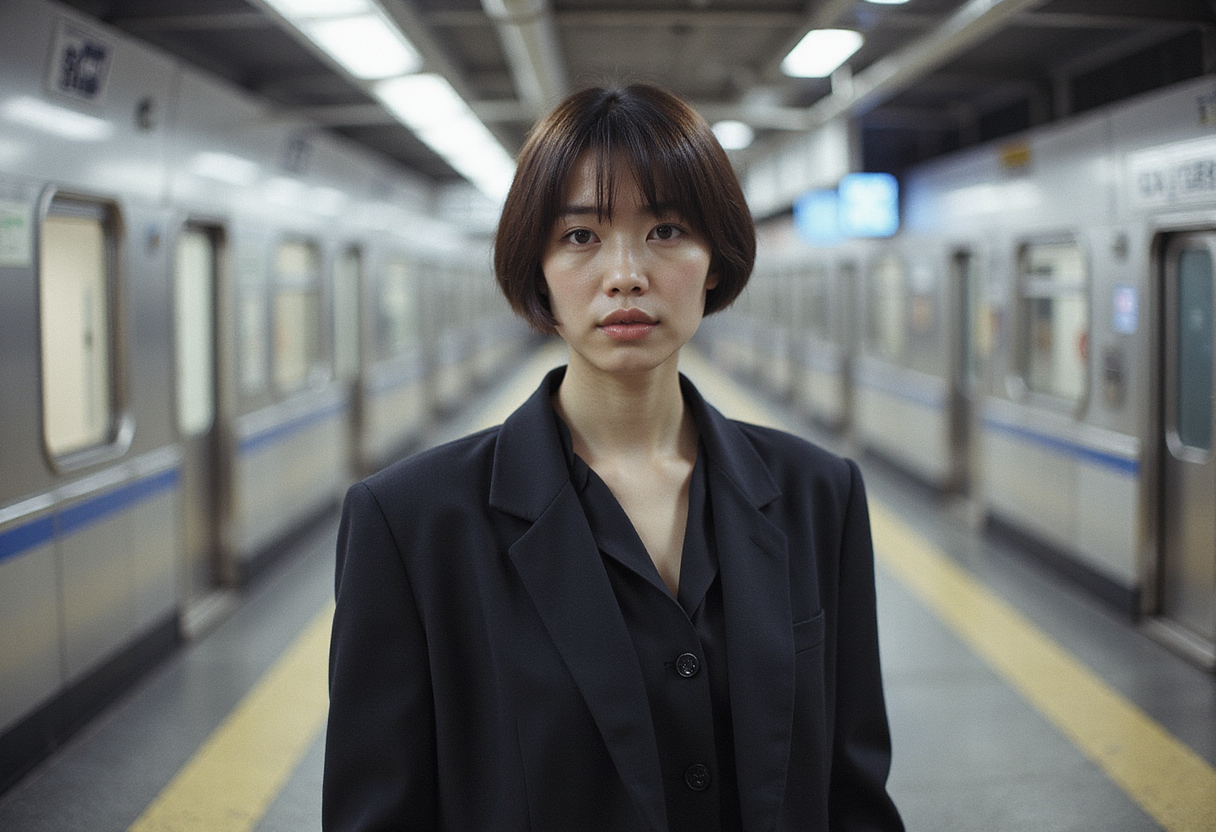
Wallpaper* has turned its critical lens on the women photographers of post-war Japan, arguing in a newly published feature that they "offered a radical aesthetic" — a corrective to a canon that has long credited the era's upheaval almost exclusively to men.
The timing matters. For decades, the standard account of Japanese photography after 1945 has centred on a familiar roster of male practitioners — the provocation journals, the rough-grain street work, the anti-establishment collectives of the 1960s and 1970s. Women working in the same period, often with equal formal ambition and sharper conceptual edges, remained footnotes at best. The Wallpaper* piece joins a growing institutional effort to rebalance that record.
Why does this reassessment matter now?
Museums and publishers outside Japan have spent recent years recovering this generation. Major surveys in Tokyo, New York and elsewhere have begun placing women's post-war photographic practice alongside — and sometimes against — the male-dominated narrative of the era. Each rediscovery shifts the art-historical ground: what looked like a unified, masculine "Japanese school" of photography fragments into a far more varied field once women's work enters the frame.
The Wallpaper* feature positions these photographers not as a supplement to the established story but as authors of an alternative one. Their radicalism, the piece suggests, lay in aesthetic choices as much as subject matter: approaches to the body, the domestic sphere, the street and the frame that diverged from the confrontational styles their male contemporaries made famous.
What made the aesthetic radical?
The piece's central claim — that post-war Japanese women photographers "offered a radical aesthetic" — rests on the substance of the work itself rather than on biography alone. Where much celebrated Japanese photography of the period pursued grain, blur and confrontation, women practitioners of the same decades frequently pursued other registers: intimacy, performance, staged narrative, and a searching interrogation of how women appear — and are made to appear — in images.
That divergence was not timidity. It was a different critique, aimed at a society rebuilding itself after 1945 with sharply reasserted gender expectations. To photograph from that position, and to bend the medium's conventions to do so, was itself a formal act of dissent. The Wallpaper* feature frames these choices as the core of the radicalism rather than a sidebar to it.
How has the canon kept them out?
Institutional history explains much of the omission. Post-war Japanese photography reached Western audiences through a narrow channel: a handful of touring exhibitions, a few translated monographs, and dealer enthusiasm for the era's loudest male voices. Women without equivalent institutional backing simply did not circulate. Scholarship lagged in both Japanese and English.
The result was a self-reinforcing loop. Museums collected what critics validated; critics wrote about what museums collected. Features like the Wallpaper* piece — published to an international design and art readership — help break that loop by giving the work editorial weight at scale, directing attention toward photographers whose names deserve to sit in the same sentences as their celebrated male peers.
Where does the reassessment go next?
The piece arrives amid visible momentum: publishers are issuing new monographs of rediscovered figures, curators are rehanging permanent collections to reflect the expanded field, and younger photographers in Japan and abroad are citing this generation as precedent rather than footnote. Wallpaper*'s feature signals that the recovery has moved from scholarly argument to mainstream critical recognition — and with institutional attention now compounding, the coming exhibition seasons should decide whether these photographers finally hold their place in the retold history of post-war photography.
Key points
- Wallpaper* published a feature stating post-war Japanese women photographers 'offered a radical aesthetic'
- The reassessment concerns Japanese photographic practice after 1945
- The feature challenges a canon long dominated by male practitioners of the 1960s–1970s
- Museums in Tokyo, New York and elsewhere have recently surveyed this generation
Source: Google News: photography exhibition
James Calloway
Show full bio
Market editor covering industry trends and analytics at Lens Gazette.