Kyoto Photography Festival Brings Marginalised Artists Together
A photography festival in Kyoto gathers artists working on society's fringes, using the historic city as a stage for image-makers focused on the overlooked.
Updated
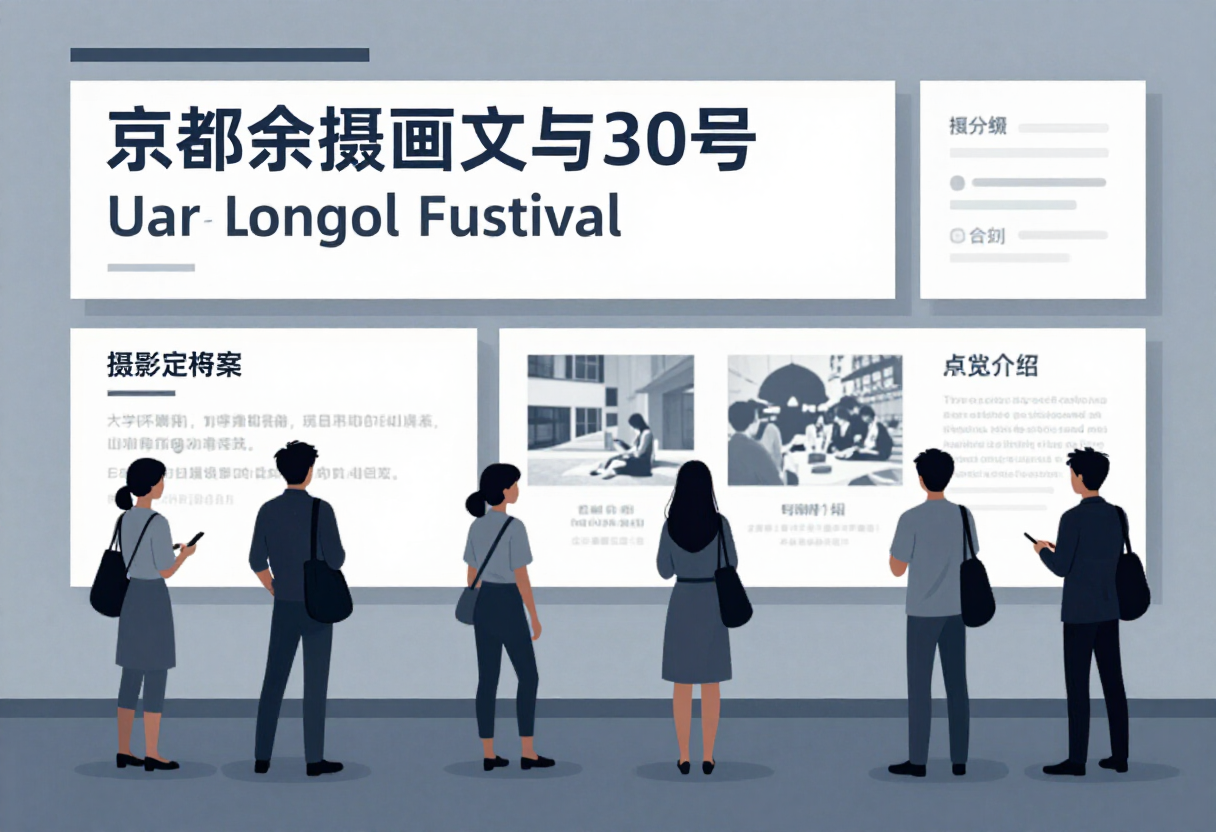
A photography festival in Kyoto has set itself an unusual curatorial task: gathering artists who work on society's fringes and placing them, and their audiences, in a single shared frame.
The festival, reported by Wallpaper*, frames its mission around inclusion. Rather than building a programme around established names or market-friendly prints, the event unites photographers whose subjects and perspectives sit at the margins of mainstream Japanese society.
Kyoto, a city better known for temples, traditional crafts and a carefully polished cultural image, makes an apt and pointed host. A festival devoted to those on the social periphery cuts against the city's — and the country's — more familiar self-presentation.
The organisers' underlying argument is a simple one. Photography, as a medium, has long drawn its energy from the edges: from documentarians, outsiders and image-makers who look where most people do not. A festival that deliberately gathers such practitioners in one place turns that tradition into an institutional statement.
For visitors, the appeal lies in range. A unifying thematic thread — life and work at the fringes — allows the programme to move between documentary, portrauary and more personal, subjective image-making, without fragmenting into a loose collection of solo shows.
Japan's contemporary photography scene already carries a strong tradition of work focused on the overlooked and the unconventional, from postwar street photography to more recent explorations of subcultures and isolation. A festival in Kyoto that names the margins as its organising principle places itself squarely within that lineage while giving it a collective, public platform.
The format also matters. Festivals, unlike single-gallery exhibitions, create density: multiple bodies of work encountered in quick succession, audiences crossing between them, and photographers brought into the same physical space. For artists who often work in isolation or outside institutional structures, that convergence may be as significant as the exhibitions themselves.
Wallpaper*'s report positions the event as a gathering point rather than a competition or trade fair — a distinction that shapes its tone. The festival is not primarily about selling prints or launching careers; it is about assembling a community of image-makers concerned with who gets photographed, and who gets seen.
Whether the Kyoto festival becomes a recurring fixture capable of sustaining that ambition remains the open question facing any young event of this kind. Its first outings will test whether a theme as urgent as social marginalisation can hold an audience — and hold together a diverse roster of artists — over successive editions.
Key points
- A photography festival in Kyoto unites artists working on society's fringes
- The festival's programme is organised around marginalised subjects and perspectives rather than established names
- Wallpaper* reported the event as a community-focused gathering rather than a commercial photography fair
Source: Google News: photography festival
Grace Kim
Show full bio
Senior reporter covering consumer brands and retail at Lens Gazette.