Kyotographie Turns Its Lens Toward Social Justice
Kyotographie's current edition takes social justice as its theme, putting Kyoto's temple-and-machiya festival at the center of photography's institutional turn toward witness.
Updated
The Kyotographie International Photography Festival has chosen ideas of social justice as the animating concern of this year's edition, a shift that places one of Asia's most distinctive photography events squarely within the urgent conversations now reshaping the international festival circuit.
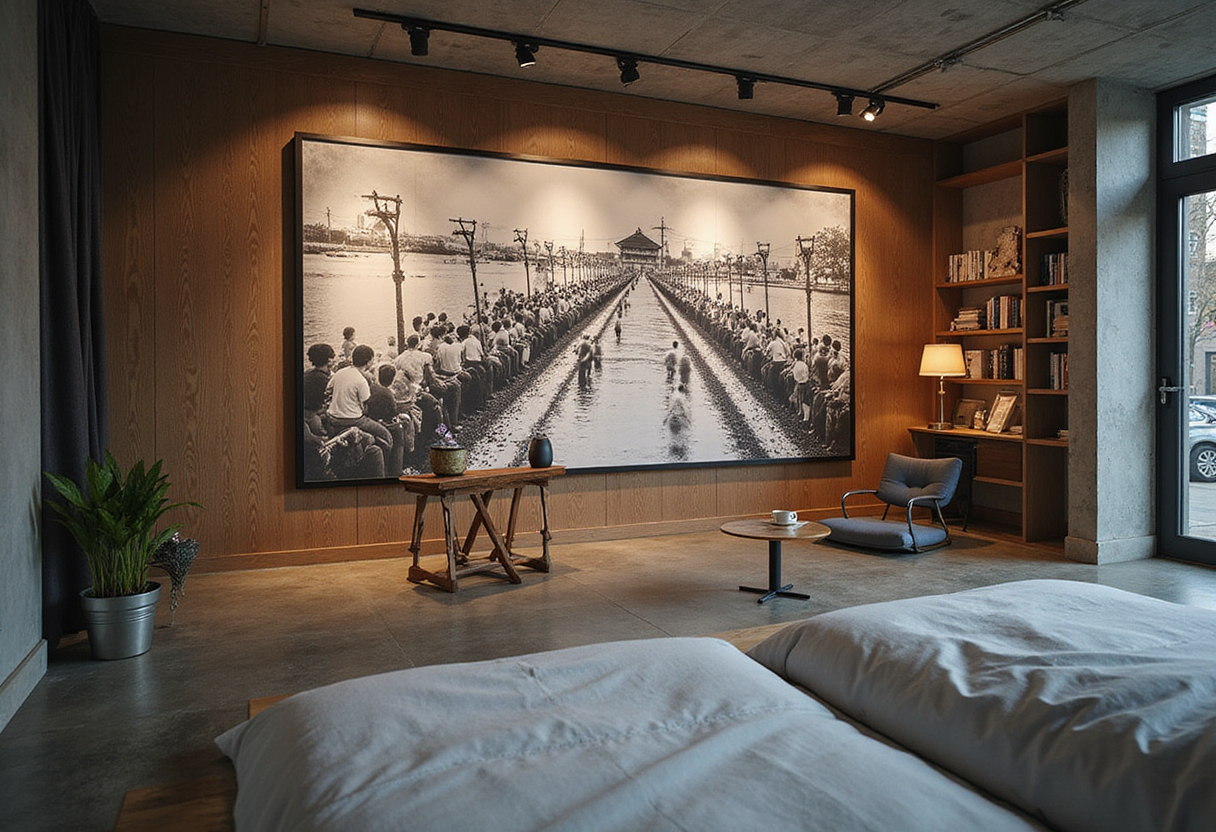
The festival, held annually in Kyoto, has long distinguished itself from the white-cube model favored elsewhere. Its exhibitions unfold across the city's temples, machiya townhouses, gardens and heritage buildings, so that photography enters into dialogue with architecture and place rather than sitting neutrally on gallery walls. That site-specific approach gives the festival's thematic turn particular weight: when the subject is justice, the venues themselves — layered with history, memory and civic life — become part of the argument.
This year's framing signals that the programmers see photography not as a neutral record but as an instrument of witness and accountability. Festivals that take social justice as their organizing principle tend to foreground work addressing inequality, displacement, labor, migration, discrimination and the structures that perpetuate them. At Kyotographie, such themes arrive in a city whose own histories of craft, hierarchy and community give the subject local resonance as well as global urgency.
The choice also reflects a broader movement within photographic institutions. Over the past several editions of the major festivals and biennales, curators have moved decisively away from the collector- and market-oriented programming of the 2000s toward projects that treat photographers as documentarians of social conditions and agents of change. A festival of Kyotographie's standing adopting this direction confirms how fully that reorientation has become the mainstream of institutional photography rather than a corrective at its margins.
For audiences, the promise of such a program lies in friction. Work devoted to social justice succeeds when it resists easy sentiment and asks the viewer to sit with difficult material — and when the festival's unusual venues are made to complicate, rather than soften, what hangs within them. A temple hall carrying images of displacement does something different than a commercial gallery does; whether that difference produces genuine critical force or merely atmosphere is the question each exhibition will have to answer on its own terms.
There is a risk, too, that any festival-wide theme flattens the range of the photography on view into a single message. The strongest editions of Kyotographie have historically thrived on juxtaposition — historical material against contemporary work, Japanese photographers against international voices, intimate series against large-scale installation. A commitment to social justice need not narrow that breadth; photographers working on the theme span photojournalism, portraiture, conceptual documentary and archival reappraisal, and the festival's distributed format can hold those approaches in productive tension.
What remains to be seen is how the theme translates into specific commissions, exhibitions and public programs once the full lineup meets its audiences in Kyoto. If the programmers hold the theme to the same standard of rigor that built the festival's reputation — demanding work with substance behind its convictions — this edition could mark a significant chapter in Kyotographie's history and in the wider turn of photography institutions toward the social fabric they document.
Key points
- This year's Kyotographie International Photography Festival takes ideas of social justice as its theme
- The festival is held annually in Kyoto, using temples, machiya and heritage buildings as exhibition venues
- The thematic choice aligns Kyotographie with the broader turn of international photography festivals toward socially engaged programming
Source: Google News: photography festival
Grace Kim
Show full bio
Senior reporter covering consumer brands and retail at Lens Gazette.