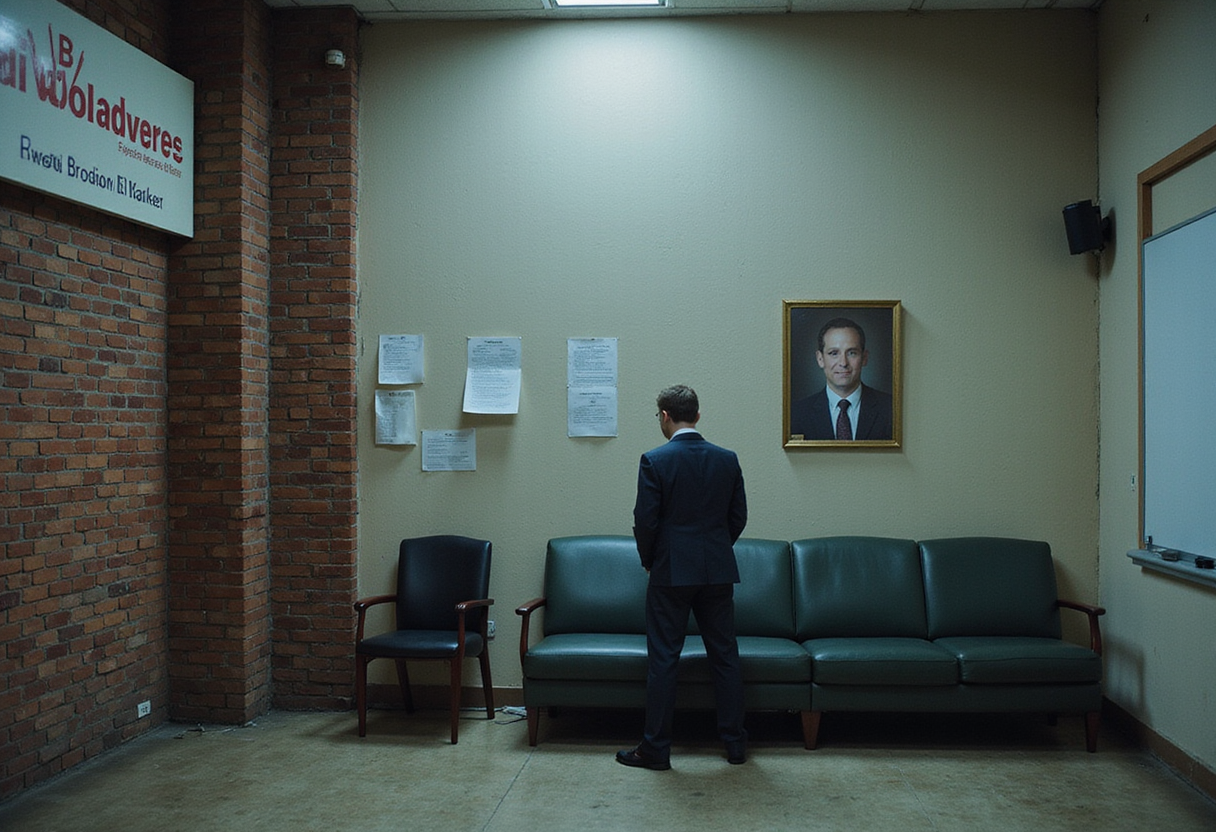
Erik Schmidt's Blue Zone: New Step or the Flow of Life?
Juliet Art Magazine asks whether Erik Schmidt's Blue Zone marks a genuine new step for the photographer or continues the flow of his life's work.
Updated
Juliet Art Magazine has published an essay asking a pointed question about Erik Schmidt's series Blue Zone: is it a new step forward for the German photographer, or simply part of the flow of life — one more current in the stream of work he has been producing for years?
The framing matters. Critics of contemporary photography increasingly resist the temptation to declare every new series a rupture. A headline that withholds its verdict — as Juliet Art Magazine's does — signals a review willing to weigh continuity against innovation rather than default to novelty.
The magazine's title alone gives readers two competing readings of Schmidt's project.
- A new step forward: Blue Zone represents a formal or conceptual departure, a deliberate evolution in Schmidt's practice.
- Part of the flow of life: the series belongs to the organic, cumulative development of an artist's oeuvre, inseparable from the life that produced it.
That second reading carries its own weight. To call a body of work part of the flow of life is not to diminish it; it is to place it within a tradition that treats photography as a sustained engagement with the world rather than a sequence of career moves.
Who is Erik Schmidt?
Schmidt is a Berlin-based photographer known for work that moves between documentary observation and staged construction. Readers of Juliet Art Magazine will encounter Blue Zone against the backdrop of his earlier series, which have consistently examined how people occupy, use and perform within social spaces — beaches, suburbs, leisure sites, the choreographed rituals of everyday life.
The magazine does not answer its own question in the headline. Its interrogation — "a new step forward or part of the flow of life?" — is left open, an invitation to look at the work before deciding what kind of event it is.
What does the question imply?
The tension the article identifies is a familiar one in contemporary photography criticism. Institutions and markets reward the "new step": the pivot, the breakthrough, the reinvention. Artists themselves often describe their work differently — as continuous, driven by long-running obsessions that resurface in changed form.
A title like Blue Zone invites both readings. The phrase evokes the regions of the world where people reportedly live longest, but also, more plainly, a chromatic and psychological territory — a state of mind rendered in color. Whether Schmidt treats it as territory to conquer or terrain to inhabit is precisely the question a critic must answer by looking at the pictures.
Why the framing counts
Juliet Art Magazine, an Italian publication covering contemporary art with an international lens, has built its reputation on essays that take a position. Its decision to frame Schmidt's series as an open question suggests a body of work resistant to easy verdicts — strong enough to demand serious attention, ambiguous enough to resist a label.
For photographers and critics alike, the piece poses a productive challenge: when does an artist's new series constitute a genuine departure, and when is the perception of departure just the latest visible stretch of a longer river?
The full essay is available on Juliet Art Magazine's website, and readers who want to judge whether Blue Zone breaks new ground — or flows where Schmidt's work has always flowed — will find the question worth pursuing there.
Key points
- Juliet Art Magazine published a review of Erik Schmidt's series Blue Zone.
- The article's central question is whether the series is a new step forward or part of the flow of life.
- Schmidt is a Berlin-based photographer.
- The headline leaves the verdict open rather than declaring the series a breakthrough.
Source: Google News: photography exhibition
James Calloway
Show full bio
Market editor covering industry trends and analytics at Lens Gazette.