Pera Museum Shows the Frames Turkish Newspapers Never Printed
Istanbul's Pera Museum opens a show built from discarded press negatives — 90,000 images spanning the 1910s to the 1970s — revealing the city newspapers never printed.
Updated
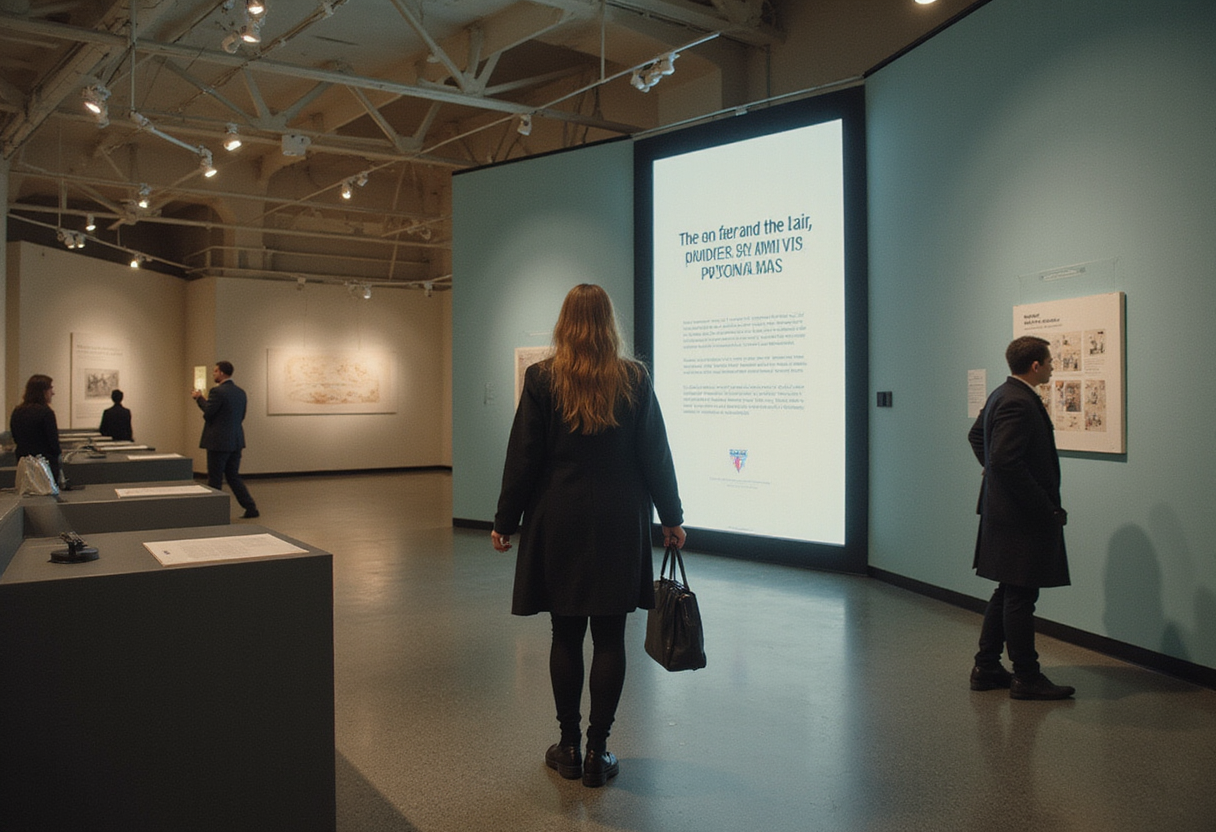
Pera Museum opens "The Republic Behind the Scenes" on Sept. 29, an exhibition built almost entirely from photographs that newspapers threw away. Curators Idil Cetin and Ahmet Ersoy have mined the Press Photography Archive of the Suna and Inan Kirac Foundation — more than 90,000 negatives spanning roughly the 1910s to the 1970s — to reconstruct Istanbul's early republican decades through the frames editors rejected.
The show runs from Sept. 29, 2026, through March 28, 2027. It was organized by the Istanbul Research Institute (IAE) to mark its 20th anniversary, and it draws on a collection the foundation acquired in 2011.
What did the editors leave out?
Discarded frames. Damaged negatives. Images judged technically unsuitable. That is the raw material here, and Cetin and Ersoy argue its value lies precisely in that character as an "archive of refuse" — photographs that might otherwise have been destroyed.
They said the archive "reflects lived reality with its aspirations, tensions, uncertainties and dead ends," opening perspectives beyond the familiar memory of Türkiye's early republican period.
The curatorial method is forensic. Sequences surrounding published photographs show what happened in the moments immediately before and after a familiar image was taken. Marks left directly on negatives — cropping, scraping, masking — reveal how pictures were physically shaped before they reached the newspaper page.
Blurred images, shifting light, overlapping exposures and the physical scars of age all stay in. Material that conventional archives and exhibitions exclude comes back into view.
Istanbul through the streets
The photographs build a portrait of the city across neighborhood streets, crowded avenues, sports grounds, entertainment venues and workplaces. One surviving image shows a crowd waiting outside the Darulfunun Conference Hall in Beyazit for an Aviation Lottery draw in the 1930s. Another captures a runner crossing the finish line at a track and field competition in the same decade.
Children playing, people working, spectators at public events. Athletes and residents at leisure. People whose identities were never recorded. The exhibition also foregrounds marginalized figures who were part of the social landscape but stayed outside official historical narratives.
A darker register runs through accident scenes, fires, crime scenes, prisoners, the injured and those waiting in courthouse corridors. Notably, many images turn toward the crowds gathering around an incident — people looking back at the photographer, making the press itself part of the scene.
Family gatherings, trips and groups of friends add another layer, showing how professional photography and private life could overlap within a single archive.
Who made the pictures?
One famous frame dates from Feb. 12, 1929: photojournalists Faik Senol, Ali Ersan, Namik Gorguc and Hilmi Sahenk waiting at Galata Quay for Leon Trotsky's arrival in Istanbul. Gorguc himself appears elsewhere, photographing at Haydarpasa in the late 1930s.
Gorguc established the photography department of Cumhuriyet newspaper with Benli Kemal in 1924, the year the paper was founded. After Gorguc died in 1947, photographer Selahattin Giz is believed to have preserved and expanded the archive. Giz's decision to keep negatives regardless of perceived quality made it possible for hundreds of images to be studied together today. Work by Cemal Goral and Faik Senol is also represented.
The exhibition, designed by Pattu, draws from the first section of the archive: more than 20,000 glass and acetate negatives. Shared negatives and the same photographs appearing in different publications point to a professional culture of exchange as press photography developed in Türkiye.
Conservation, protective storage and digitization were completed in 2013. Cataloging continues as new information about the people, places and events in the photographs comes to light.
A catalog to match
A companion publication examines the archive through photographic history, press culture, archival practice and visual memory, with contributions from Gulru Tanman, Kerim Suner, Mehmet Erken, Cengiz Kahraman, Geoffrey Batchen, Wolfgang Ernst, Ahmet A. Ersoy, Ozge Baykan Calafato, Idil Cetin and Sidar Bayram.
What does this change for how we read press photography? It suggests the rejected frame can tell us as much as the printed one — and as cataloging of the 90,000-negative archive continues, more of that buried Istanbul will surface.
Key points
- "The Republic Behind the Scenes" runs at Pera Museum, Istanbul, from Sept. 29, 2026, to March 28, 2027.
- The Press Photography Archive holds more than 90,000 negatives, dating roughly from the 1910s to the 1970s.
- The exhibition draws on a first section of more than 20,000 glass and acetate negatives.
- The Suna and Inan Kirac Foundation acquired the archive in 2011; digitization was completed in 2013.
- The show marks the 20th anniversary of the Istanbul Research Institute.
Original: turkiyetoday.com
Marcus Bennett
Show full bio
Correspondent covering companies, deals and strategy in Photography exhibitions, photographers, photo books, festivals and awards at Lens Gazette.