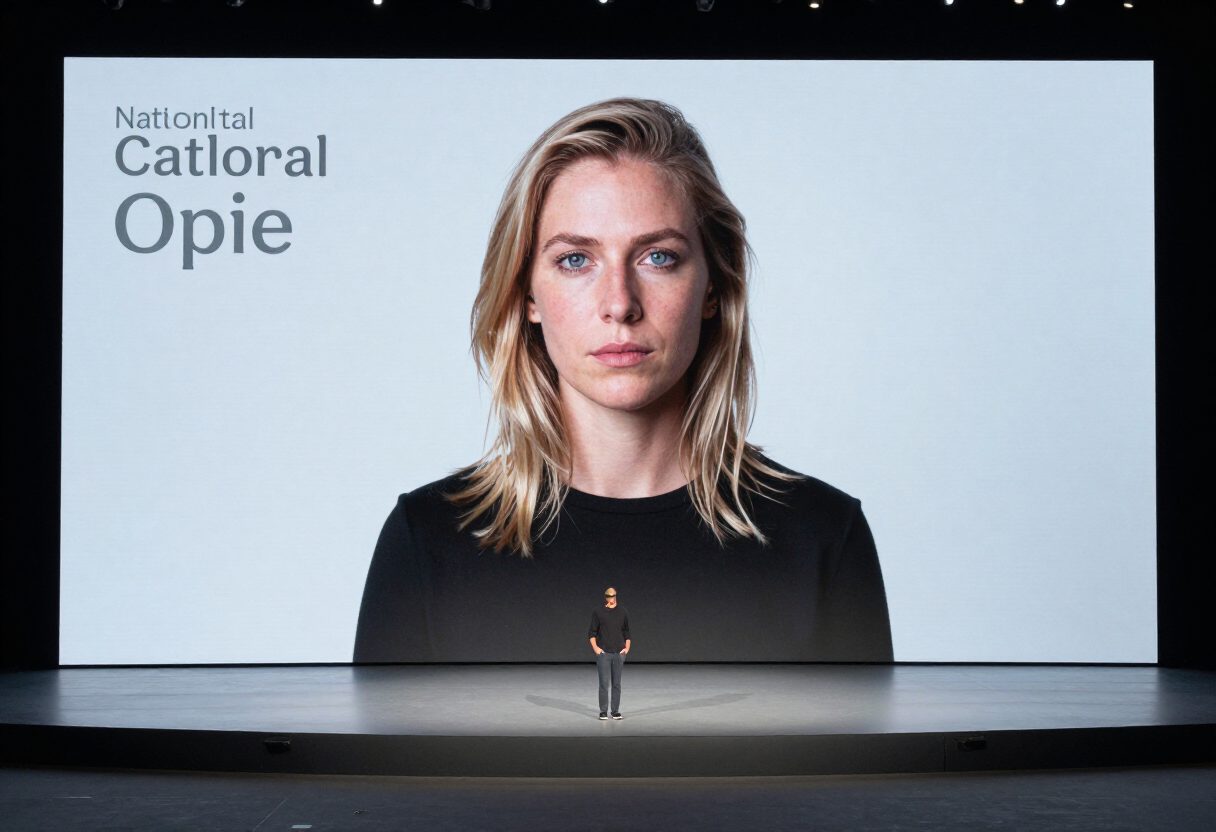
Tim Walker Stages Queer Icons at the National Portrait Gallery
Tim Walker turns the National Portrait Gallery into a fantastical stage for queer icons, reframing what a national portrait collection can be.
Updated
Tim Walker has taken over the National Portrait Gallery in London with a show that turns portraiture into theatre, staging queer cultural icons inside his unmistakably fantastical world.
The exhibition's premise is right there in its framing: Walker's lens as a stage. Known for elaborately constructed sets, saturated colour and a storytelling instinct closer to cinema than to conventional portraiture, Walker applies that language here to sitters drawn from queer public life. The result, on the evidence of the show's billing, is less a row of faces than a sequence of worlds built around each subject.
The venue matters. The National Portrait Gallery, fresh from its recent reopening after a major multi-year closure and redevelopment, has been working to loosen the moulds of official British portraiture. Hosting Walker — a photographer whose work has long occupied the border between fashion imagery and fine art — signals which direction the institution wants to push. Not dust and oil paint alone. Living photographers, living icons, living arguments about who deserves a national portrait.
What does this change for portraiture?
Plenty, potentially. Walker's approach refuses the neutral studio backdrop that has historically sanitised how queer sitters enter national collections. His sets are assertions: every prop, colour and constructed environment is a claim about the sitter's inner world rather than their public résumé. A portrait stops being a record and becomes a collaboration — photographer and subject inventing a mythology together.
That's not a new move for Walker. Across a career built on editorial work for the biggest fashion titles and monographs with major publishers, he has consistently treated the portrait sitting as a production, with handmade props, painted backdrops and stagecraft borrowed as much from theatre as from photography's own history. What shifts at the National Portrait Gallery is the institutional frame. The same fantastical method that filled magazine pages now hangs in a gallery whose collections define the British canon of the portrait.
Why the queer framing lands harder here
There's a sharp historical irony in the setting. For generations, national portrait collections acknowledged queer subjects only obliquely, if at all — coded, closeted or simply omitted. Walker's exhibition does the opposite. It puts queer icons at the centre of the frame and gives them the most lavish stage the photographer can build. Visibility isn't the subtext. It's the subject.
Walker's own position in this conversation is well established. He has spent years photographing the figures and aesthetics of queer culture with an affection that never tips into anthropology — his sitters are collaborators in the fantasy, not specimens of it. The National Portrait Gallery show extends that ethic into a public institution, where the stakes for representation are different and, arguably, higher.
The craft behind the fantasy
It would be easy to file Walker under spectacle and move on. That would misread the work. His fantasy is engineered with old-fashioned photographic discipline: large-format planning, physical sets built rather than composited, lighting that serves narrative rather than novelty. The fantastical stage exists because the photograph demands it. Craft in service of the sitter, not the other way round.
That's what separates this from fashion-page excess. Every constructed element answers a question about the subject — who they are, how they want to be seen, what the official portrait genre has historically refused to give them.
Where this leaves the NPG
For the gallery, the bet is clear. Contemporary photographers with mass audiences and unapologetic visual signatures can carry the institution's relevance in a way traditional hangs struggle to. For Walker, the show consolidates a shift already underway in his career: from image-maker for print to author of exhibition-scale worlds.
Whether the National Portrait Gallery continues down this path — more living photographers, more contested ideas of who counts as an icon — will say a great deal about how Britain's national portrait collection defines itself in the decade ahead.
Key points
- Tim Walker is showing an exhibition of queer icons at the National Portrait Gallery, London
- The show stages sitters inside Walker's fantastical, theatre-like constructed sets
- Walker is known for elaborate productions bridging fashion photography and fine art
- The exhibition places queer subjects at the centre of a national portrait institution
Source: Google News: photography exhibition
Marcus Bennett
Show full bio
Correspondent covering companies, deals and strategy in Photography exhibitions, photographers, photo books, festivals and awards at Lens Gazette.