Peabody Museum Mounts Visual Testimony of Iran's Undocumented History
Harvard's Peabody Museum stages an exhibition of photographs serving as testimony to Iran's undocumented history, treating images as primary evidence where written archives fall silent.
Updated
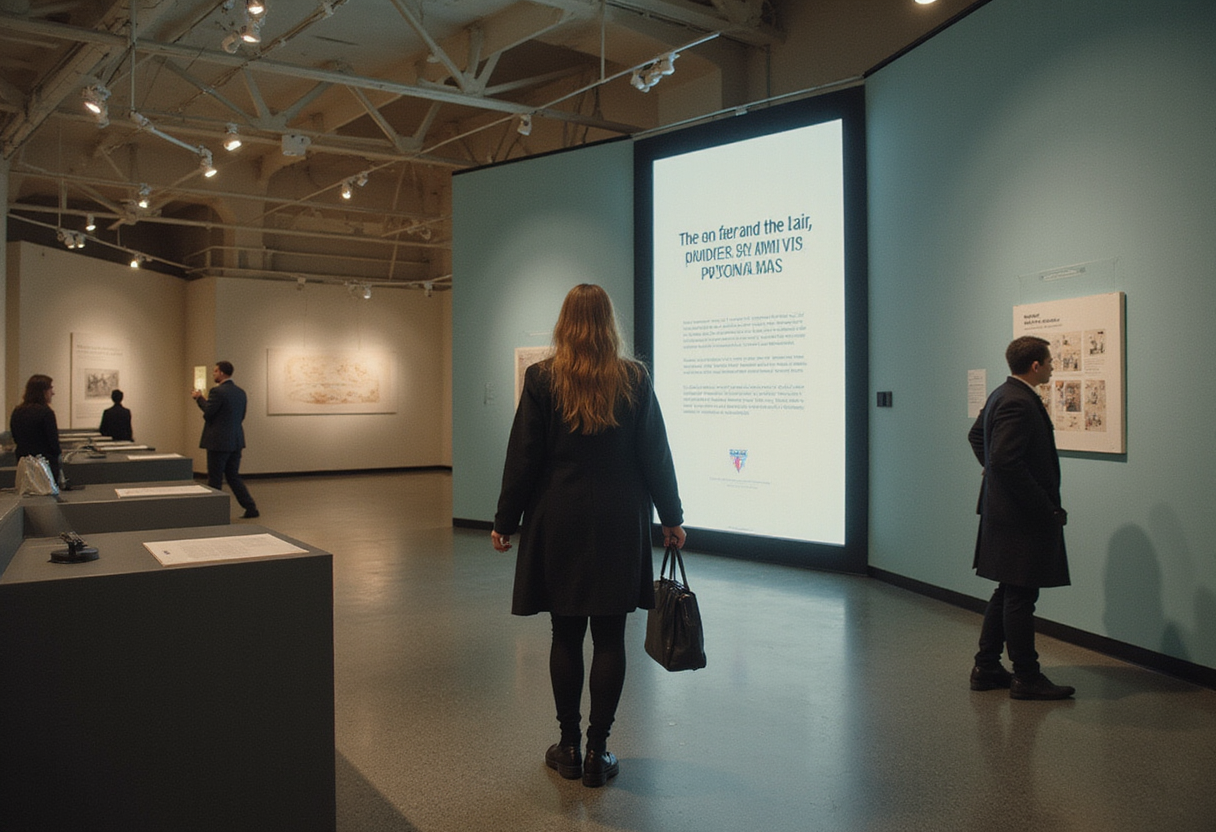
Harvard's Peabody Museum of Archaeology and Ethnology has opened an exhibition billed as a visual testimony of Iran's undocumented history, placing photographs in the role that written records cannot fill.
The Cambridge, Massachusetts institution, one of the oldest anthropology museums in the United States, frames the show around a straightforward premise: for stretches of Iran's past, the camera preserves what the archive does not. The exhibition's title and framing — "a visual testimony of Iran's undocumented history" — position photography not as illustration but as primary evidence, a record assembled by witnesses rather than by clerks.
That framing carries weight at the Peabody specifically. The museum holds extensive photographic collections tied to its archaeological and ethnographic expeditions, and images made in the field have long sat within its holdings alongside excavated objects. An exhibition that foregrounds photographs of Iran suggests the institution is drawing on this material to reconstruct narratives that conventional documentation omitted or never captured.
For a museum of archaeology and ethnology, the move matters institutionally as much as artistically. It treats the photographic print as an artifact in its own right — an object with a maker, a moment and a point of view — rather than as a neutral window onto the past. Where official histories of Iran rest on state papers, chronicles and published accounts, the camera recorded the everyday, the marginal and the unofficial: precisely the material most likely to vanish.
The exhibition arrives amid broader efforts across American museums to reconsider how photographic collections built during earlier eras of expedition and empire are displayed, contextualized and credited. Harvard's Peabody, with its deep holdings from the late nineteenth and early twentieth centuries, sits squarely within that reckoning. A show that frames photographs as testimony — documents whose authority derives from presence rather than from institutional sanction — participates in that reassessment.
The Peabody's exhibition signals where such institutions are heading: toward photographic collections read as historical actors, with Iran's undocumented past as a test case for what images alone can establish.
Key points
- Harvard's Peabody Museum of Archaeology and Ethnology is presenting an exhibition described as a visual testimony of Iran's undocumented history.
- The exhibition frames photographs as primary historical evidence where written records of Iran's past do not exist.
- The Peabody is among the oldest anthropology museums in the United States, located in Cambridge, Massachusetts.
Source: Google News: photography museum
Grace Kim
Show full bio
Senior reporter covering consumer brands and retail at Lens Gazette.