Naohiro Ninomiya turns daily negatives into tender studies of memory
Naohiro Ninomiya’s 2025 series Ephemeral Moments turns daily negatives into gelatin silver prints on textured Mino-washi, linking childhood memory with life in France and Japan.

By James Calloway
Japanese photographer Naohiro Ninomiya’s 2025 series Ephemeral Moments comprises gelatin silver prints on Japanese Mino-washi paper, each measuring 24 × 16 cm. Every work comes in an edition of eight, while its frame measures 34 × 26 cm, establishing a physical boundary around an image that remains modest in scale.
Ninomiya works from the negatives he produces every day. The resulting photographs evoke sadness, nostalgia, tenderness and mystery, establishing his stated aim of finding a poetry within everyday life. He selects images for the feelings they awaken rather than assembling them around a single predetermined narrative. That method makes subjective recognition the work’s organising principle, while the photographic negative retains its factual basis in an ordinary view.
What does a childhood memory change?
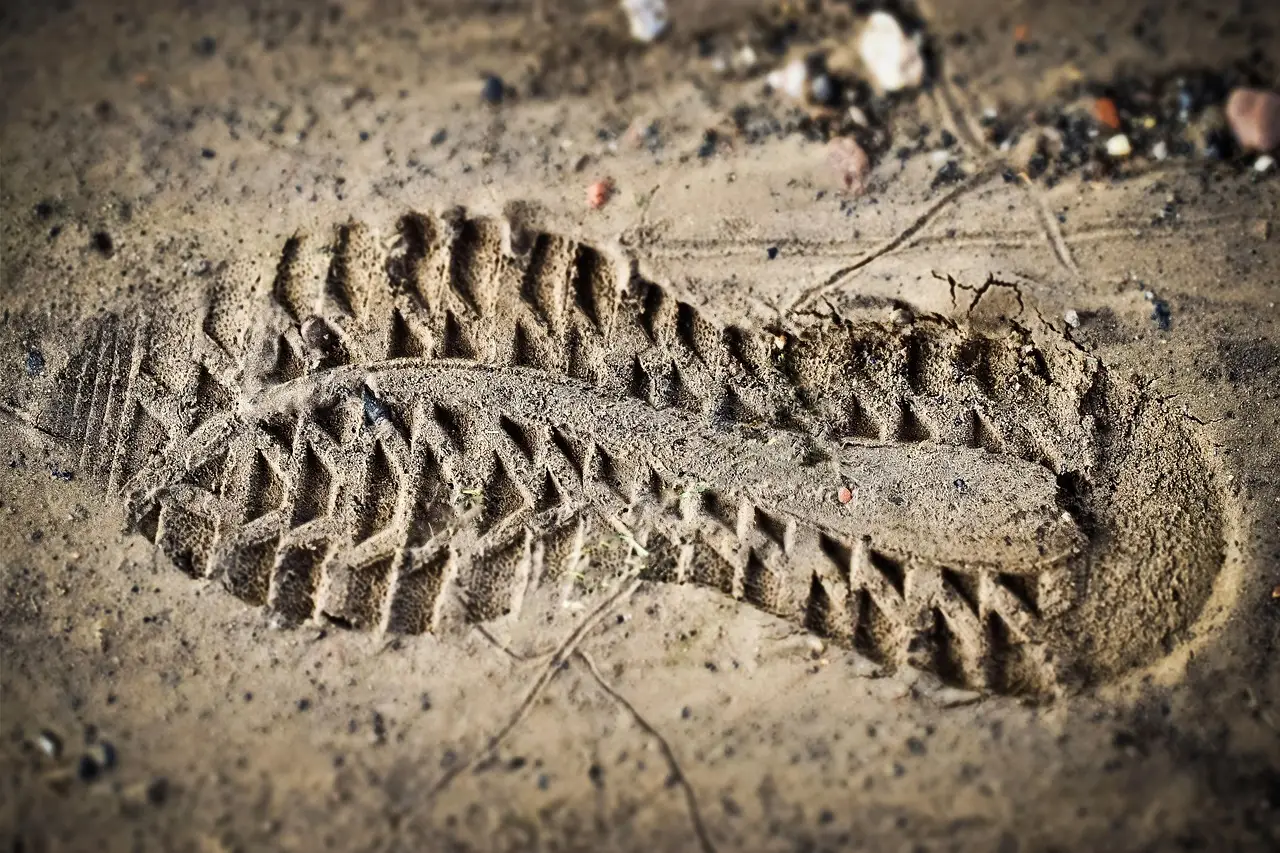
For Ninomiya, a view that awakens a childhood memory serves as the starting point. He then selects photographs for the feelings they evoke and considers how Mino-washi contributes to the representation of those memories. The Japanese paper does more than support the gelatin silver image; its irregular texture becomes part of how recollection appears.
According to Ninomiya, the paper’s irregular texture makes the images appear to “emerge from his indistinct memories.” That formulation explains the photographs’ refusal of polished certainty. Their roughness makes looking feel tentative, as though a recollection surfaces through a material field rather than arriving as a fully articulated statement.
This sequence also clarifies how technique operates in the series. Ninomiya does not begin with a finished visual idea and search for an illustration. Feeling comes first, followed by the choice of photograph and the search for a surface that can register it. Material decisions serve recollection here, rather than becoming a display of surface or process detached from the photographs’ emotional work.
How does the print resist disposable looking?
Ninomiya compares his process to that of an archaeologist, describing how his movements with the developer resemble “the motion of a brush across objects from the past.” The comparison casts the negative and print as finds rather than simple records. His daily camera registers what routine life deposits, and development becomes the careful act of bringing that material into view.
Through the physical presence of his prints, Ninomiya seeks to restore value to memories in response to images consumed too quickly. The edition of eight reinforces that proposition by limiting circulation. The small gelatin silver image, textured Japanese paper and defined frame favour prolonged attention over immediate visual satisfaction.
This argument places Ephemeral Moments within photography’s durable concern with the print as a material carrier of recollection, not merely information. It also gives the series a critical edge beyond nostalgia. Ninomiya names four emotional registers without ranking them or forcing resolution, and the uneven support allows those responses to coexist. The photograph operates less as evidence of a fixed event than as a surface on which memory can become visible.
What does Ninomiya’s biography contribute?
Ninomiya was born in Nagoya in 1969. In 1996, he left his job as a sales representative to work on a farm in Hokkaido. He subsequently left Japan and settled in France, where he has lived since 1998, according to the artist’s official biography.
That history gives the work two concrete coordinates: emotional ties to family and a home in Japan, and everyday life in France. Ninomiya identifies those ties as the series’ inspiration. His daily negatives therefore gather meaning from both lived relationships and recurrent observation, without requiring a literal map of either country.
The shift from sales work to a farm in 1996, followed by relocation to France in 1998, also marks two decisive changes in working routine. The photographs draw on that later attention without turning the biography into a fixed explanation for every frame. Their method remains open: a view prompts a childhood memory, the memory prompts a feeling, and the feeling determines selection.
What can the material format accomplish?
The artist’s official specifications fix the series within a precise format. Gelatin silver prints measure 24 × 16 cm, Japanese Mino-washi supports them, frames reach 34 × 26 cm, and editions stop at eight. These numbers matter because the work’s argument depends on the encounter between image and object, not on unrestricted reproduction.
His archaeologist analogy links making to uncovering. Development becomes a gesture of retrieval, while the paper’s texture affects what can appear as memory. For practitioners, this sequence matters: the camera’s daily accumulation, the developer’s movement and the support’s surface form one continuous craft, rather than separate stages of capture, development and display.
The series’ strongest proposition is therefore temporal as well as material. It asks viewers to look long enough for an ordinary image to loosen an indistinct memory, then to recognise how paper and gelatin silver mediate that return. That is neither a denial of photography’s documentary role nor an exercise in surface for its own sake. It uses the print’s physical presence to recover duration from images habitually consumed at speed.
With its 2025 series structured around editions of eight, the work points toward a photography of slower access, in which Mino-washi texture and the print’s physical presence counter disposable image consumption. Its next test is whether that material encounter can change how viewers attend.
Key points
- Naohiro Ninomiya was born in Nagoya in 1969.
- He left his sales job for farm work in Hokkaido in 1996.
- He has lived in France since 1998.
- The 2025 series uses gelatin silver prints on Mino-washi paper measuring 24 × 16 cm.
- Each work has a 34 × 26 cm frame and an edition of eight.
Source: Dodho Magazine
James Calloway
Show full bio
Market editor covering people, launches and day-to-day practice in Photography exhibitions, photographers, photo books, festivals and awards at Lens Gazette.