Removing the Dead: William Josephs Radford's Transparent Closes a Grief Cycle
Over six months, William Josephs Radford erased his father from family photos and made shifting lenticular prints, closing a five-project series on grief at acceptance.
William Josephs Radford spent six months removing his dead father from the family photographs, then printed the altered images as lenticulars that shift as the viewer moves. The resulting project, Transparent, published on Lenscratch on November 2, 2026, is the fifth and final chapter in a series mapping the stages of grief — and it closes the sequence at acceptance.
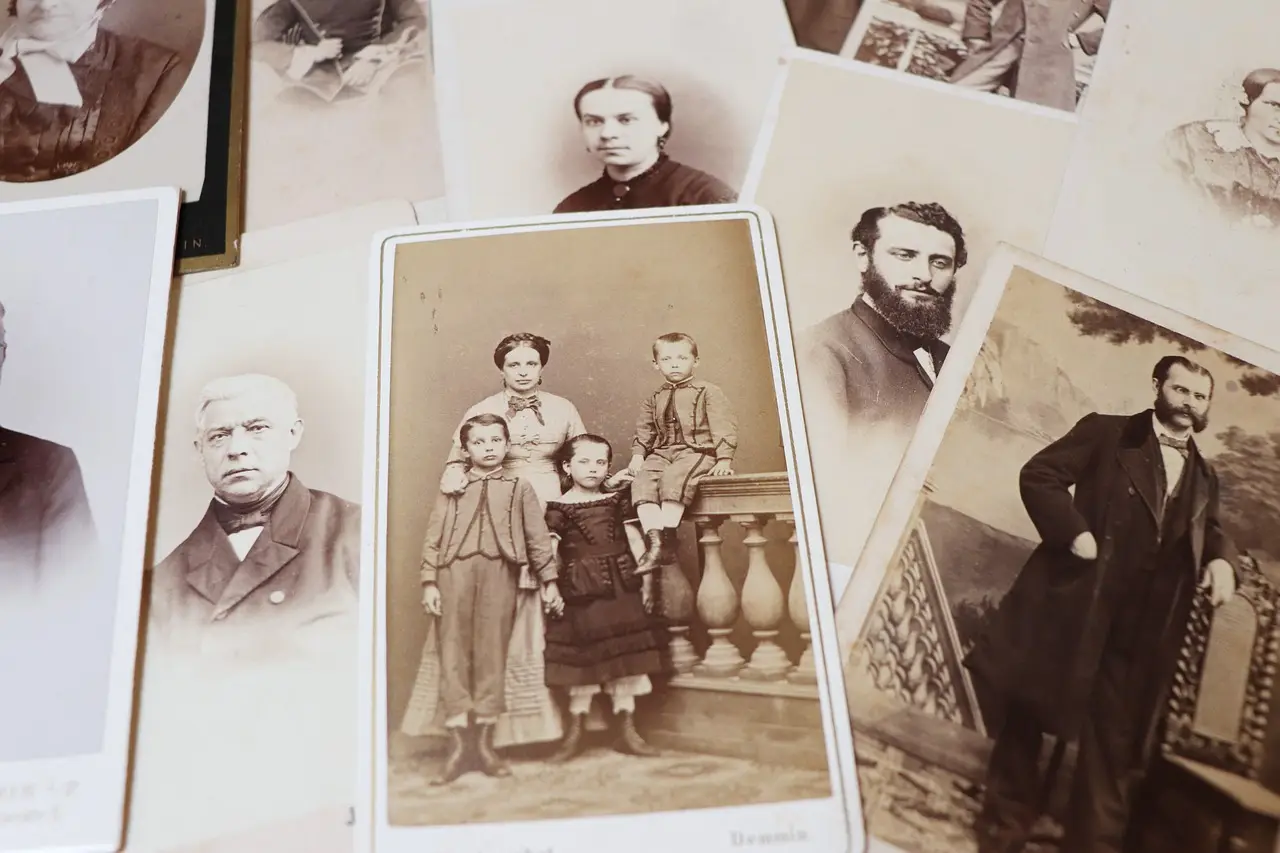
The work began with an absence. After his father died, Radford returned to the family albums and found that out of thousands of family photographs, his father appeared in only a small number, mostly taken on birthdays and holidays. "This made me question how present he really was during my childhood," he said. That gap became the project's engine: an inquiry into how photographs decide who stays visible in a family's history, and what happens to the memory of someone the archive barely recorded.
How do the prints work?
Radford, a British-Spanish fine art photographer born in Marbella and now based in Cheltenham, transformed his digitally altered family pictures into lenticular prints — images that change depending on the viewer's position. The shifting surface does double duty: it registers that his father is no longer present, and it physicalises the malleability of memory itself. As he puts it, the work is less about one photograph becoming more significant than another, and more about the realisation that "these are all the photographs of him that will ever exist."
The conceptual stakes are broader than one family's archive. Transparent asks whether we remember an experience or only the photograph that stands in for it. A family photo, Radford argues, is already an idealised performance — the gathered group, the automatic smile. He had probed this before in Strangely Familiar, where he placed stockings over his relatives' heads to estrange the conventional album.
What came before Transparent?
The five-project sequence on grief began with White Knight, which Radford calls the most technically rigorous work of his career, using lens masking and Vaseline to address heaven, hell and his father's memory loss. Gradient Loss followed — his first sustained black-and-white work, built on experimental self-portraiture that maps his psychological terrain at the time. He then pushed the camera's ISO to its maximum setting, letting noise stand in for the haze of recollection.
The fourth chapter, Mourning Routine, emerged as penance: Radford, who had avoided Photoshop his whole career, felt guilty about using it to erase his father for Transparent. To reconcile that, he restricted himself to the windows of his apartment and tested how much variety he could extract from a single viewpoint.
What did the archive teach him about preservation?
Visiting his aunt after finishing the project, Radford discovered family albums dating back to the late 1800s, alongside a booklet his grandmother wrote identifying every relative and their role in the family. He frames this as a rare privilege and a lesson in generational wealth — families needed both the means to have photographs taken and the means to preserve them. "Not many people will be able to say they've seen a photograph of their great-great-grandmother," he said.
His response has been practical: he bought a Polaroid camera and now documents his own family on instant film, deliberately stepping away from digitised albums. The format's fixed shots impose authenticity — you cannot retake them — even as the pressure adds a staged quality of its own.
Radford cites a line from Stephi Wagner that anchors his current thinking: "Pain travels through families until someone is ready to feel it." As artists, he believes, "it's our responsibility to feel it, to find a place for it to live." With the grief cycle closed at acceptance, his attention now shifts to the physical, tactile archive he is building for the generations who come after him.
Key points
- Transparent is the fifth and final project in a series on the stages of grief, representing acceptance
- Radford spent six months removing his father from family photographs, out of which only a small number featured him among thousands
- The altered images became lenticular prints that shift as the viewer moves
- The series began with White Knight and included Gradient Loss and Mourning Routine, made from a single apartment window
- His aunt's family albums date back to the late 1800s; Radford has since taken up a Polaroid camera
Original: josephsradford.com
James Calloway
Show full bio
Market editor covering people, launches and day-to-day practice in Photography exhibitions, photographers, photo books, festivals and awards at Lens Gazette.