Kodak T-Max P3200: The Resurrected Film That Loves the Dark
Kodak T-Max P3200, killed in 2012 and revived in 2018, is one of only two ISO 3200 films left on the market — and one photographer pushed it to ISO 102,400.
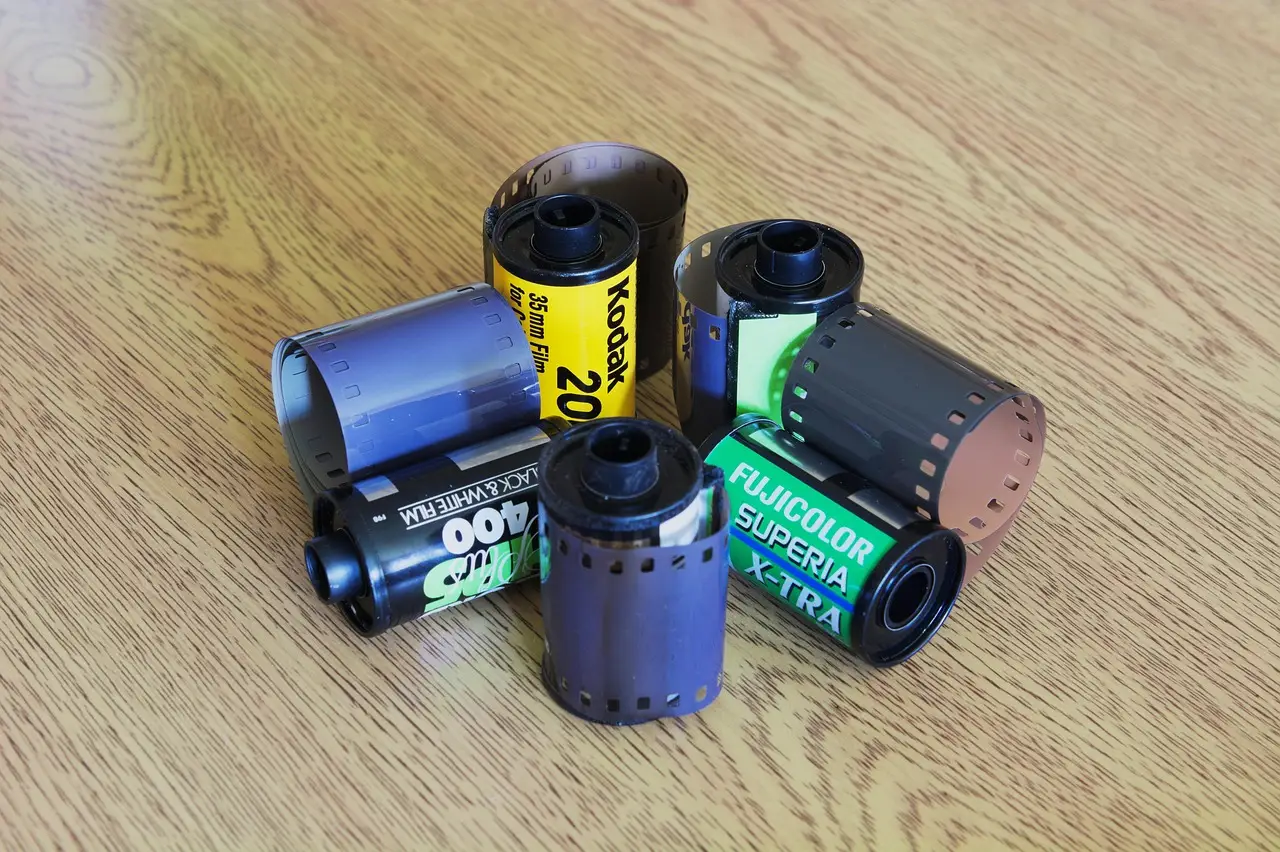
Kodak brought T-Max P3200 back from the dead in 2018, six years after discontinuing it, and it remains one of only two ISO 3200-class black-and-white films you can buy today. That scarcity alone makes it newsworthy. Ilford's Delta 3200 is the only rival; below that, shooters drop to ISO 800 in color and ISO 400 for the next fastest monochrome emulsion.
What's the history?
Kodak introduced T-Max P3200 in 1988 as the third member of the T-Max family, joining T-Max 100 (TMX) and T-Max 400 (TMY). The T-Max line is built on Kodak's T-grain technology — tabular silver crystals designed to produce smoother, less gritty grain that prints and scans more cleanly, a philosophy Ilford shares with its Delta films.
Nobody, though, will ever mistake P3200 for a fine-grained film. Its grain is coarse, visible, and unapologetic. The photographers at Blue Moon Camera and Machine in Portland, Oregon, who tested the emulsion for their Film Friday series, argue that's the point: grain is the building block of the analog image, an integral part of how the photograph is made, not a defect to apologize for.
Is it really an ISO 3200 film?
Here's the technical wrinkle. Despite the box speed, P3200 is nominally an ISO 800–1000 emulsion depending on development. The "P" stands for "push" — shooting it at 3200 means pushing the film two to three stops in processing.
Blue Moon's advice is blunt: forget the labelling debate. The film exposes reliably at ISO 3200, so rate it at box speed, head into the dark, and the odds of decent exposures are good. That reliability is the film's core strength.
The contrast with Ilford Delta 3200 is instructive. Blue Moon's staff almost never shoots Delta 3200 at its box speed, preferring ISO 1600 or even 1000. Delta 3200, they found, needs pairing with Ilford developers to hold its speed. P3200, by contrast, isn't picky — it tolerates high ratings across developers without falling apart.
How far can you push it?
Considerably further than the box suggests. One Blue Moon staff member ran P3200 up to ISO 102,400 before the process — the film's sensitivity or his developing, he couldn't be sure which — broke down. The results at that speed are, predictably, grainy beyond belief with crunched shadows. But the exercise demonstrates real headroom. For practical purposes, ISO 6400 and 12800 are comfortably within the film's range.
Contrast is the third leg of the appeal. P3200 renders dramatically, with shadows going crunchy and highlights sliding toward bleached white. Paired with hard, atmospheric light, it produces eye-catching frames. The caveat: if highlight or shadow detail matters, meter for it deliberately.
Why was there never a 120 version?
Kodak actually tried. The company developed P3200 in 120 roll film but hit a technical wall it couldn't fix. The emulsion is so sensitive that the slight lip where the tape attaches the film to the backing paper left a pressure mark on the first frame of every roll. Kodak couldn't eliminate the flaw and couldn't market an "11-exposure" roll, so the medium-format version was axed. Blue Moon's staff admits the thought of P3200 in 120 still keeps them up at night.
What does this change for film shooters?
Practically: the fastest usable black-and-white film on the market is also the most forgiving at its rated speed. The market for extreme-speed emulsions has thinned drastically — Fujifilm's Neopan 1600, Provia 1600 and Natura 1600 are all long gone — leaving P3200 and Delta 3200 to fill the role alone.
Blue Moon is running a one-day Film Friday discount on the stock through its website and its Portland shop. With the film's 2012 discontinuation still fresh in memory for many photographers, its continued availability after the 2018 revival looks less like nostalgia and more like a genuine working tool for low-light monochrome work.
Key points
- Kodak introduced T-Max P3200 in 1988, discontinued it in 2012 and reintroduced it in 2018.
- P3200 is nominally an ISO 800–1000 emulsion pushed to 3200; the 'P' stands for 'push'.
- A Blue Moon staff member pushed P3200 to ISO 102,400 before the process broke down.
- Kodak scrapped a 120 version because tape-lip pressure marks ruined the first frame of each roll.
- Only two ISO 3200 films remain on the market: Kodak T-Max P3200 and Ilford Delta 3200.
Original: bluemooncamera.com
Marcus Bennett
Show full bio
Correspondent covering companies, deals and strategy in Photography exhibitions, photographers, photo books, festivals and awards at Lens Gazette.