Psychedelic Blues Turns Chance Into a Controlled Film Effect
Dustin Adams’s 2016 pre-exposed film line turns fogging, grain and colour casts into seven numbered variants, a 120 edition and a combined batch for photographers.
By Olivia Hart
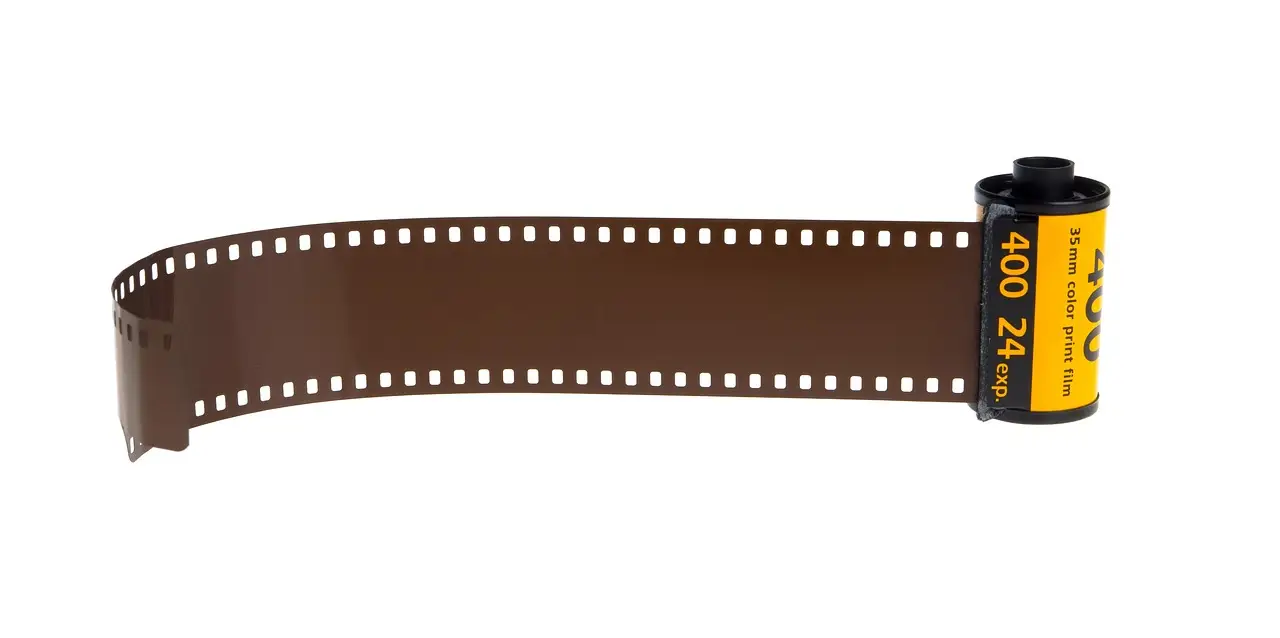
Producer Dustin Adams launched the first Psychedelic Blues film in 2016 after privately testing the process for several years. The small-batch, pre-exposed range now includes Blues #2, #3, #4, #5, #6, #7 and #8, a 120-format Blues A and a combined Blues #5/6 batch.
The line turns accidental-looking exposure effects into planned, repeatable products. The source review proposes the motto “expect the unexpected”; its cheerful alternative is to loosen up and have some fun.
Adams keeps the exact recipe close, but starts with Kodak film: generally Gold or Ultramax for 35mm, and Gold or Portra 400 for 120. He fogs or exposes it under controlled conditions, then repackages and sells it; methods differ by edition.
What does each film put in the frame?
Blues #2, apparently the first edition offered regularly, is hand-fogged with red and orange descending from the top and green rising from the bottom. The colour usually occupies the outer thirds, but varies by frame, roll and batch and can reach the centre.
The result resembles a traditional light leak, especially loose 120 film spooled in a Holga or Diana, which gives the experiment a nostalgic register. The review finds it adaptable to landscapes, cityscapes, portraits and multiple exposures.
Blues #3 abandons #2’s structure. Red, blue, purple and orange splashes gather mostly at the edges but often cross the centre. In the review’s best examples, organic shapes read cleanly against simple compositions and deep shadow; complicated scenes turn the colour noisy.
Blues #4 appears to be among Adams’s longest-running experiments and became consistent only after #2 and #3. Light reflected from holographic paper during pre-exposure produces rainbow fogging in unpredictable, frame-to-frame positions. The review recommends repeated exposures, because negative space and a strong central subject give the colour room.
Which subjects suit the fogging?
Blues #5 reworks #2. Its edge bleed can blow out the borders before fading toward a clean centre, with occasional green speckles producing the review’s galaxy or radioactive-firefly effect. Because the fog stays near the edges, it handles busier subjects better; the flecks look strongest at twilight, at night or in dim interiors.
Blues #6 sends circles and windows of colour through the middle, sometimes centred, sometimes clipped by the left or right edge, with occasional extra splashes. Since placement changes, the review advises two or three redundant exposures of an important composition, offering a menu rather than one predictable result.
Blues #7 runs squiggly, sine-like waves down the centre, shifting from sharp peaks to softer rolls and through red-to-blue hues. The review pairs it with graphic scenes or simple photographs built around negative space and a strong central element.
Psychedelic Blues A extends the line into 120 format as its first and only medium-format edition. Mellow red and blue fogging runs from the edges to the middle, with hints of pink and green. The review calls the catalogue non-exhaustive: it has not tested Blues #8 or the combined Blues #5/6 batch.
How does the exposure change?
Psychedelic Blues comes in ISO 200 and ISO 400. The 200 speed is Kodak Gold 200; the 400 speed uses Kodak Ultramax in 35mm and Portra 400 in 120. Consumer emulsions leave visible grain in 35mm, which the fogging accentuates. The Portra-based ISO 400 version in 120 looks finer-grained.
Fogging lowers effective sensitivity despite the nominal ISO rating, so the stock tends to underexpose. The review says deeper shadow can make colour more vivid, then recommends rating the film a stop slower or using a strong flash for contrast.
That aims at a legible photograph beneath the chemical interference, not less exposure for its own sake.
Here, bracketing means repeating a composition, not making a standard exposure series. As the fogging shifts between frames, redundant exposures offer several placements before development. The source concedes this wastes film and costs money because Psychedelic Blues is relatively expensive; it also improves the odds of a keeper.
Why do scans need human intervention?
Fogging disrupts scanners’ automatic corrections. A prescan may respond to heavy red fog by adding a pronounced cyan cast, leaving a lab scan off-colour. Home scanning exposes the problem immediately and allows adjustment; a laboratory’s attention and willingness to intervene determine the standard route’s result.
More professional labs review scanner settings or correct the finished scan to remove unintended casts. The source links heavy automation to lower labour costs and retail prices; its verdict is characteristically terse: “your mileage can really vary.”
Automation cannot reliably distinguish intended red fog from exposure error; the technician can matter as much as the enlarger.
What does the range leave open?
The line joins an analog tradition of light leaks, multiple exposures and loose 120 spools in Holga and Diana cameras, but gives those accidents a numbered taxonomy. Its institutional complication is simple: the photographer buys the effect, then asks a laboratory to preserve it. Experimental practice now has a retail counter.
Blue Moon Camera and Machine in St. Johns, Portland, Oregon, has put every Psychedelic Blues roll on sale for the Halloween weekend through its online shop and physical store. The sponsor also sells film, development, printing and an ever-changing selection of cameras and lenses.
PetaPixel members receive 10% off all lab services, and the sponsored article carries an affiliate disclosure.
The larger proposition is method, not novelty. The review concedes that the look will not suit every photographer, but argues for occasionally loosening conventions imposed by habit, teachers, peers or social media. At worst, an experiment costs one roll; at best, it yields an unexpected image or lesson. The line makes uncertainty repeatable without pretending accident has vanished.
The next test is specific: the review will add Blues #8 and Blues #5/6 to its list after testing them, and those editions will show whether the catalogue adds visual syntax or merely another attractive skin.
Key points
- Producer Dustin Adams launched the first Psychedelic Blues film in 2016 after several years of private testing.
- The range contains Blues #2 through #8, a 120-format Blues A and a combined Blues #5/6 batch.
- Blues #4 uses reflected holographic light for unpredictable rainbow fogging; Blues #6 creates shifting circles and windows.
- ISO 200 is Kodak Gold 200, while ISO 400 uses Ultramax in 35mm and Portra 400 in 120.
- Blue Moon in St. Johns, Portland, sells all variants for Halloween weekend; PetaPixel members receive 10% off all lab services.
Original: bluemooncamera.com
Olivia Hart
Show full bio
Staff writer covering people, launches and day-to-day practice in Photography exhibitions, photographers, photo books, festivals and awards at Lens Gazette.