Stanya Kahn Turns the Mangione Tweet Storm Into a 30-Minute Film
Stanya Kahn's Deny Defend Depose, a 30-minute film of tweets reacting to Brian Thompson's killing, screens at Participant Inc, New York, on 13 November.
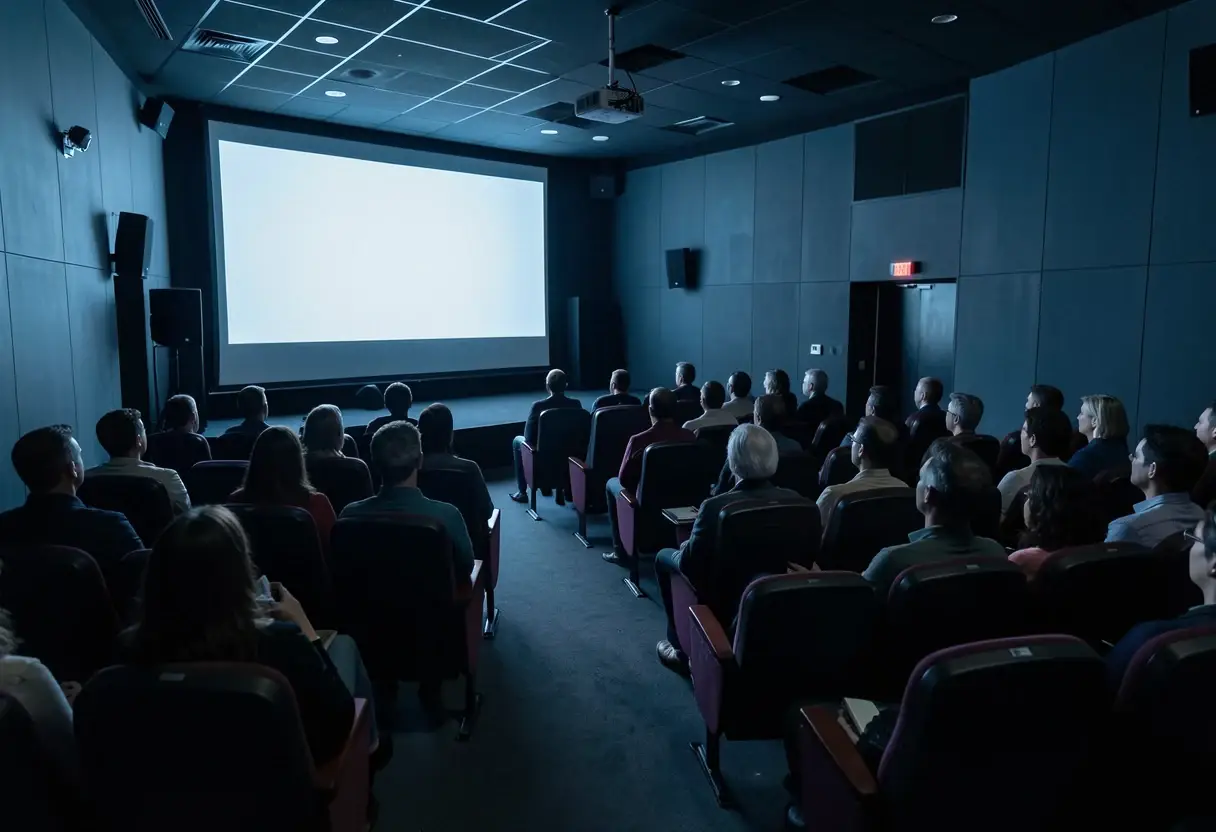
Los Angeles artist Stanya Kahn's 30-minute film Deny Defend Depose (2026), built entirely from screenshots of public tweets about the killing of UnitedHealthcare CEO Brian Thompson, screens at Participant Inc in New York on 13 November, with a further showing at Slash Art in San Francisco on 12 December.
Kahn began the archive on the morning of 4 December 2024, the day Thompson was shot dead in Manhattan. She opened X for her daily news digest and found a torrent of reactions ranging, as she describes it, from celebratory snark to unbridled vitriol. "The compression of anger and joy that I was seeing people write that day was astonishing," Kahn tells The Art Newspaper. "At first I was bookmarking them, and then screenshotting them, and fairly quickly my thought was to gather these up because the algorithm might start shutting them down."
Why a film and not a book?
The Trump administration announced that celebration of the killing could be criminalised, which gave the archive urgency. Kahn, a time-based media artist by practice, initially considered a coffee-table book — a funny inversion of X's short-form quips. She chose film instead, her primary medium, for a specific reason: in-person screenings turn a solitary online experience into a collective one.
The title plays on the words found on three shell casings fired in the shooting, words that mirror the strategy Kahn says major healthcare providers invoke to reduce payouts and increase profits. Set to an acid and jungle soundtrack, the film runs the tweets in chronological order. Audiences hold their breath as anticipation builds toward the suspect's reveal as Luigi Mangione, laugh at jokes about his attractiveness and the Monopoly money reportedly in his backpack, and fall quiet when statistics on industry salaries and investment patterns, or personal anecdotes about life-threatening denials, surface in the feed.
What does the timeline change for the work?
Kahn originally planned to release the film ahead of 9 September, when Mangione's state trial in New York was due to begin. His 14 August guilty plea — an attempt to avoid double jeopardy — pushed the state hearing to 10 December, with a federal hearing to follow on 18 December. She now plans to keep updating the film with new public responses as the legal saga continues. The work is deliberately unfinished.
A rupture across party lines
For Kahn, the reaction was politically anomalous. "The poignancy of such a broad spectrum of the American public responding in kind to what was basically a public political assassination felt like a rupture, especially in party-based politics," she says. "It cut across the entire political spectrum and the common ground that suddenly emerged in this flashpoint seemed like a new beacon for potential mass movement, because it was a unity that emerged spontaneously and instantaneously, it wasn't something that got hammered out in time."
The affection for Mangione has been staggering, she adds. "Without blinking, people were in full-throat applause of [an alleged] murderer."
Media attention has held steady since the manhunt, the arrest and the trial — with Robin Hood comparisons, lookalike contests and wanted posters for other healthcare executives. Kahn reads the outpouring as evidence of "how deep the pain and anger and frustration is in this country about the evilness of the healthcare system and its inaccessibility". Per capita US healthcare spending runs double the average of other wealthy countries and has outpaced inflation for decades.
The story resists tidy moral framing. Some early commentators cast Mangione as disaffected and radicalised; his Ivy League education and privileged upbringing complicated that reading. And the voices Kahn captured weren't fringe accounts. Reviewing posters' profiles in real time, she found the responses "weren't just coming from more radical spaces". "It was literally just 'every man' — people with five followers and five million," she says. "It was regular people because they were pissed."
The film now tours artist-run spaces, cinemas and galleries nationwide, with additional dates expected as the December hearings approach.
Key points
- Stanya Kahn's 30-minute film Deny Defend Depose (2026) screens at Participant Inc, New York, on 13 November and Slash Art, San Francisco, on 12 December.
- Kahn began archiving tweets on 4 December 2024, the day Brian Thompson was killed.
- Mangione's 14 August guilty plea pushed his state hearing to 10 December, with a federal hearing on 18 December.
- US per capita healthcare spending is double the average of other wealthy countries.
Source: theartnewspaper.com
Marcus Bennett
Show full bio
Correspondent covering companies, deals and strategy in Photography exhibitions, photographers, photo books, festivals and awards at Lens Gazette.