Debora Brune’s UNCOOL presents 27 uncompromising portraits
Debora Brune’s UNCOOL gathers 27 uncompromising portraits of wheelchair users, amputees, cancer survivors and disabled people, testing who receives visibility.
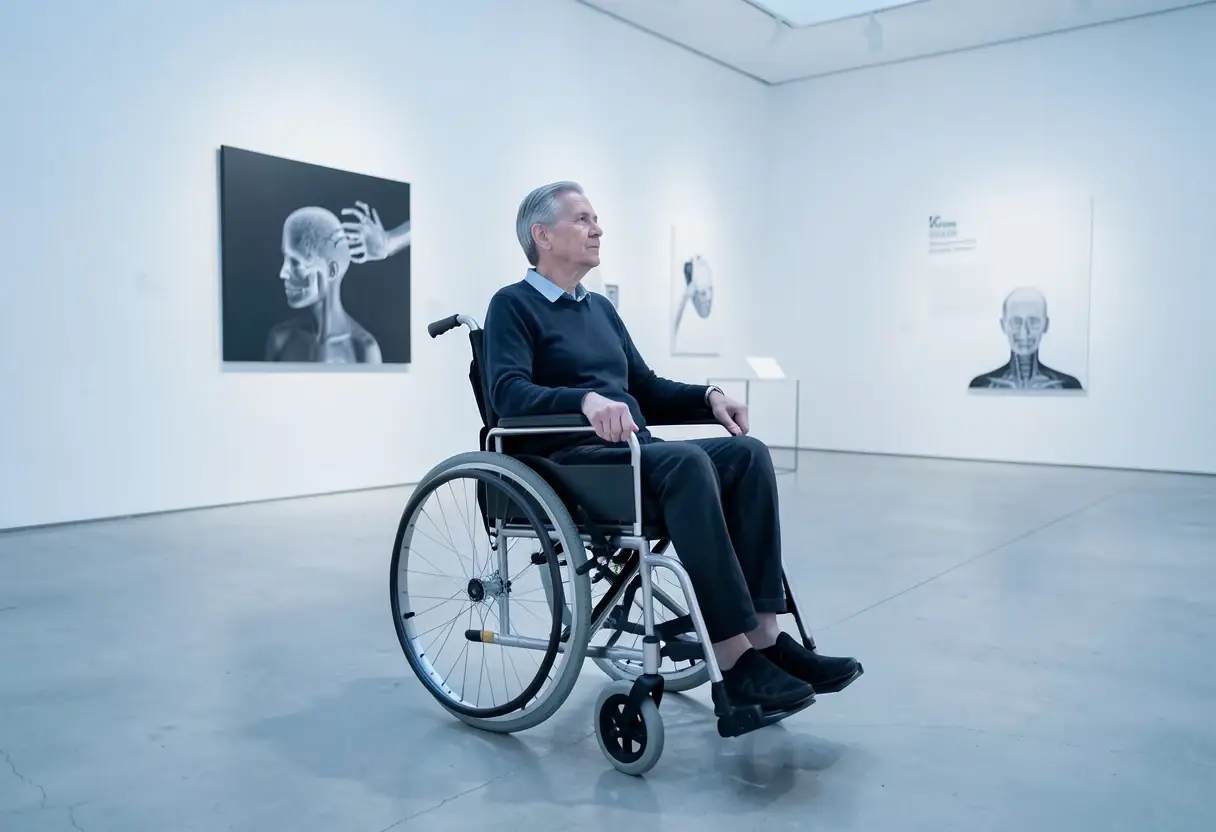
Debora Brune’s new photography book UNCOOL contains 27 uncompromising portraits, including the photographer herself, of people whose bodies fall outside conventional beauty standards.
The book, available through Brune’s own shop, enters a culture of looksmaxxing with a different proposition: bodies are individual, but they do not define identity. Kjell, a sitter featured in the presentation, states it plainly: “I no longer want to explain myself as a body.”
Brune’s project statement asks a more structural question: “Which bodies are normally granted visibility and under what conditions?” Her answer is not to manufacture sympathy or polish difference away. She photographed and interviewed the 27 people, then made their differences the starting point for each portrait.
What does UNCOOL change for disabled sitters?
It changes the terms on which they appear. Instead of asking each subject to justify a body that falls outside conventional beauty standards, the project treats difference as the portrait’s formal brief and the sitter as its subject, not an exception.
The practical gain is agency over the conditions of visibility. The book does not claim to resolve representation; it makes that hierarchy part of the picture. Its ambition is sharper than adding disabled bodies to a familiar beauty canon and expecting the old rules to change.
Brune says she brought to UNCOOL the same creative freedom and ambition she would bring to any portrait or fashion shoot. That comparison matters because her stated aim is uncompromising rather than therapeutic: no caution, no sentimentality and no exception.
Her sitters include:
- Brune herself
- Fellow wheelchair users
- Amputees and cancer survivors
- People with Down syndrome, hearing loss or vision impairment
- People with other conditions that society often labels as disabilities and disorders
The feature’s selection of 12 individual portraits is captioned “Grace,” “Natalie-Amber,” “Hannah,” “Gui,” “Apollonia,” “Lauren H,” “Sophie,” “Catrin,” “Debora,” “Kjell,” “Lauren,” and “Helene.” Their names occupy the place of explanatory labels. That editorial choice aligns the presentation with Kjell’s refusal to be reduced to a body.
How does Brune make difference the subject?
Brune’s stated method is radical in editorial terms. What convention might read as wrong or undesirable became something visually specific and fascinating, a quality on which to build the image. She did not integrate, soften or explain the difference; she began with it.
That is craft in service of a representational argument, not a claim that visible difference automatically equals truth. The announcement gives no technical account of how she achieved that visual specificity, so the photographs themselves must carry the burden of the claim.
Against the hierarchies of contemporary representation, UNCOOL poses a pointed question about photographic convention. Brune is not merely widening a familiar portrait genre by adding disabled bodies; she argues that the genre’s rules of attention can change when difference ceases to be treated as a flaw to conceal.
Her rejection of caution, sentimentality and exception locates the work within contemporary debates over who gets looked at, who gets made palatable, and whose body can stand as the picture’s organising fact.
The risks remain symmetrical. A project can turn difference into spectacle and lose the sitter behind its thesis; it can also flatten a person into an exemplary life story.
Yet the evidence here is limited. The announcement offers Kjell’s brief, emphatic statement but no extended testimony from the other sitters, even though the book’s claim rests on their presence. A fuller sequence of 27 portraits may test whether the project’s refusal of exceptional treatment can hold across different bodies without making sameness the new aesthetic.
No exhibition venue, curator or publisher is named in the announcement; UNCOOL is presented as a photobook available from Brune’s shop. The next test is the shift from a web selection of 12 named portraits to a sustained book sequence of 27 sitters.
The book’s title rejects the hierarchy implied by looksmaxxing without pretending that one word can repair representation. Its premise is plain: conventional beauty standards do not exhaust the range of bodies available to portraiture. The complete publication must now show whether that premise survives contact with every image.
Key points
- UNCOOL comprises 27 uncompromising portraits, including Debora Brune herself.
- The online selection presents 12 named sitters: Grace, Natalie-Amber, Hannah, Gui, Apollonia, Lauren H, Sophie, Catrin, Debora, Kjell, Lauren and Helene.
- Brune photographed and interviewed fellow wheelchair users, amputees, cancer survivors, people with Down syndrome, and people with hearing or vision impairment.
- The project statement rejects caution, sentimentality and exception as modes of representation.
- No exhibition venue, curator or publisher is named; the photobook is available through Brune’s shop.
Source: feeds.feedburner.com
Marcus Bennett
Show full bio
Correspondent covering companies, deals and strategy in Photography exhibitions, photographers, photo books, festivals and awards at Lens Gazette.