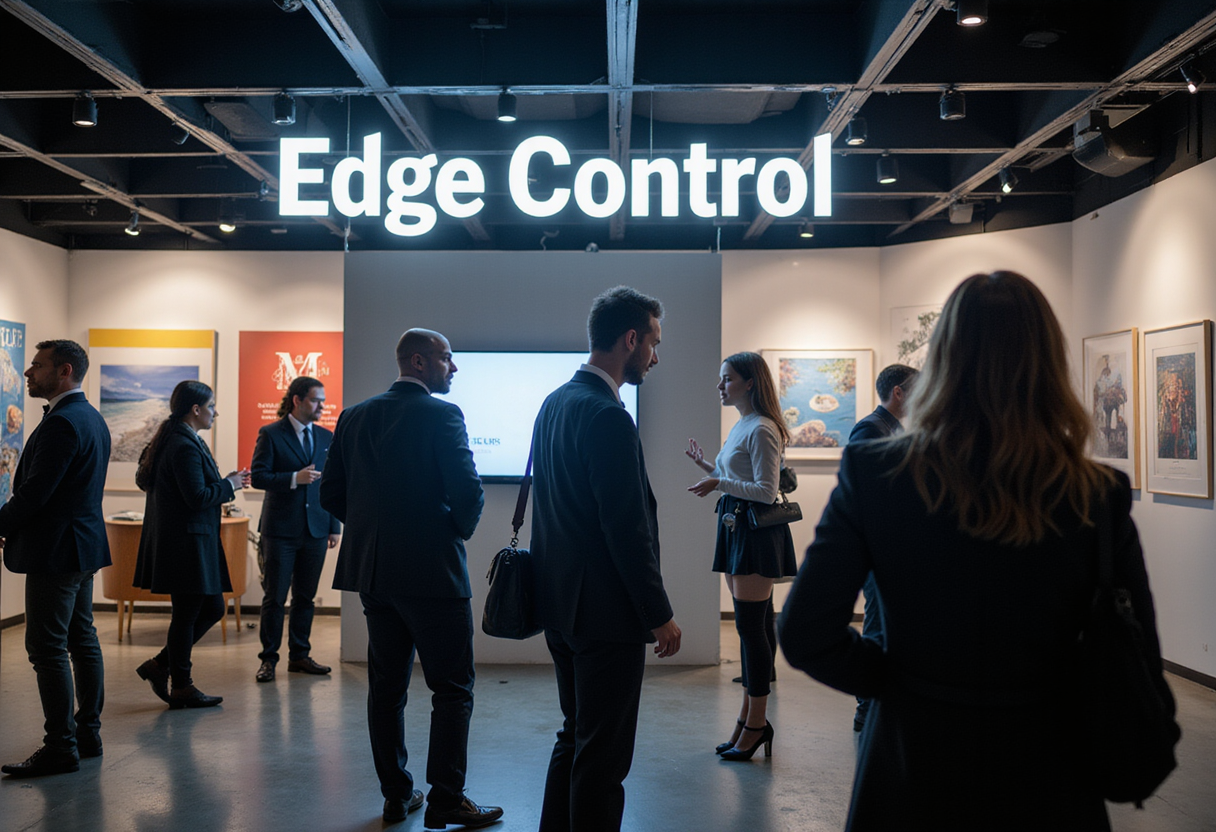
Edge Control: Hidden-Camera Images Probe Race and Beauty
Edge Control, reported by The Guardian, rehangs covert hidden-camera photographs in a gallery to interrogate how race and beauty standards shape the act of seeing itself.
Updated
A new exhibition titled Edge Control is using hidden-camera imagery to examine how race and beauty are constructed through the act of looking itself, as reported by The Guardian.
The premise is blunt. The images at the centre of the show were made without the subject's knowledge — covert photographs, the kind usually associated with surveillance rather than portraiture. Recontextualised within a gallery, they stop functioning as evidence and start functioning as a question: what do we actually see when we look at another person, and how much of that seeing is conditioned by racial assumption and by ideals of beauty?
Why hidden cameras?
The hidden camera occupies an uneasy place in photographic history. Street photographers from the mid-twentieth century onward — Walker Evans with his camera concealed in his coat on New York subways, and countless successors — have exploited the device's gift of unguarded expression while brushing against its ethical limits. The subject who does not know they are being photographed performs nothing. They offer the camera a face it has not been prepared for.
That refusal of performance is precisely what makes covert imagery so charged when race enters the frame. A hidden photograph strips away the subject's self-presentation — the way they might wish to be seen — and leaves only the observer's gaze. If that gaze is already racialised, the resulting image records not a neutral moment but an encounter structured by prejudice, desire, or both.
Edge Control, according to The Guardian's report, places this dynamic at the core of its enquiry into race and beauty. Beauty standards in photography have historically been anything but neutral: who gets framed as beautiful, who gets framed as exotic, and who simply gets framed as a type are decisions embedded in the medium's history, from pictorialism through fashion editorial to the social feed.
What does the exhibition ask viewers to confront?
By hanging hidden-camera images on gallery walls, the show inverts the usual moral arrangement of covert photography. The viewer becomes complicit. Standing before a picture taken without consent, the audience must reckon with the fact that they, too, are now looking at someone who never agreed to be looked at.
The exhibition's title points at this tension. "Edge control" is a term from Black hair care — the practice of smoothing the hairline into a polished finish — and it carries a double meaning here. It names both the labour of conforming a natural texture to a dominant aesthetic and, more broadly, the control exerted at the edges of appearance: where self-styling ends and surveillance begins.
This is fertile territory. The Guardian's framing of the show suggests the work sits at the intersection of several ongoing conversations in contemporary photography:
- The ethics of photographing strangers without consent, a debate that has intensified as street photography has migrated to online audiences
- The critique of Eurocentric beauty standards, which photographers and curators have challenged for at least two decades
- The role of surveillance aesthetics in art, as hidden cameras and facial recognition become everyday instruments of social control
Is covert imagery defensible as art?
Critics remain divided. Evans' subway portraits are now canonical, yet the unease they provoke has only grown with time. A contemporary exhibition that deliberately foregrounds the hidden camera — rather than apologising for it — forces the question of whether the aesthetic payoff justifies the breach of subjecthood, and whether that breach is different when the subjects are racialised bodies already disproportionately subjected to watching.
The Guardian's report indicates that Edge Control does not treat this question rhetorically. The show's use of hidden-camera images is presented as an inquiry into race and beauty, not as a stylistic provocation — the covert image is the argument, not the gimmick.
For a photography institution, staging such work is a statement in itself. It signals a willingness to engage photography's least comfortable power: the capacity to take an image, in both senses, without giving anything back.
Whether Edge Control resolves or merely restages that dilemma, it arrives at a moment when audiences and curators are actively renegotiating the terms under which images of others may be made and shown. The exhibition's engagement with hidden-camera material suggests the conversation is moving from apology to analysis — and that the hidden image, long photography's dirty secret, is becoming one of its most examined subjects.
Key points
- A new exhibition titled Edge Control uses hidden-camera images to explore race and beauty
- The Guardian reported the exhibition, framing covert photography as its central device
- The show turns images made without subjects' knowledge into an enquiry into racialised seeing
- The title references edge control, a Black hair-care practice, doubling as a metaphor for control over appearance
Source: Google News: photography exhibition
James Calloway
Show full bio
Market editor covering industry trends and analytics at Lens Gazette.