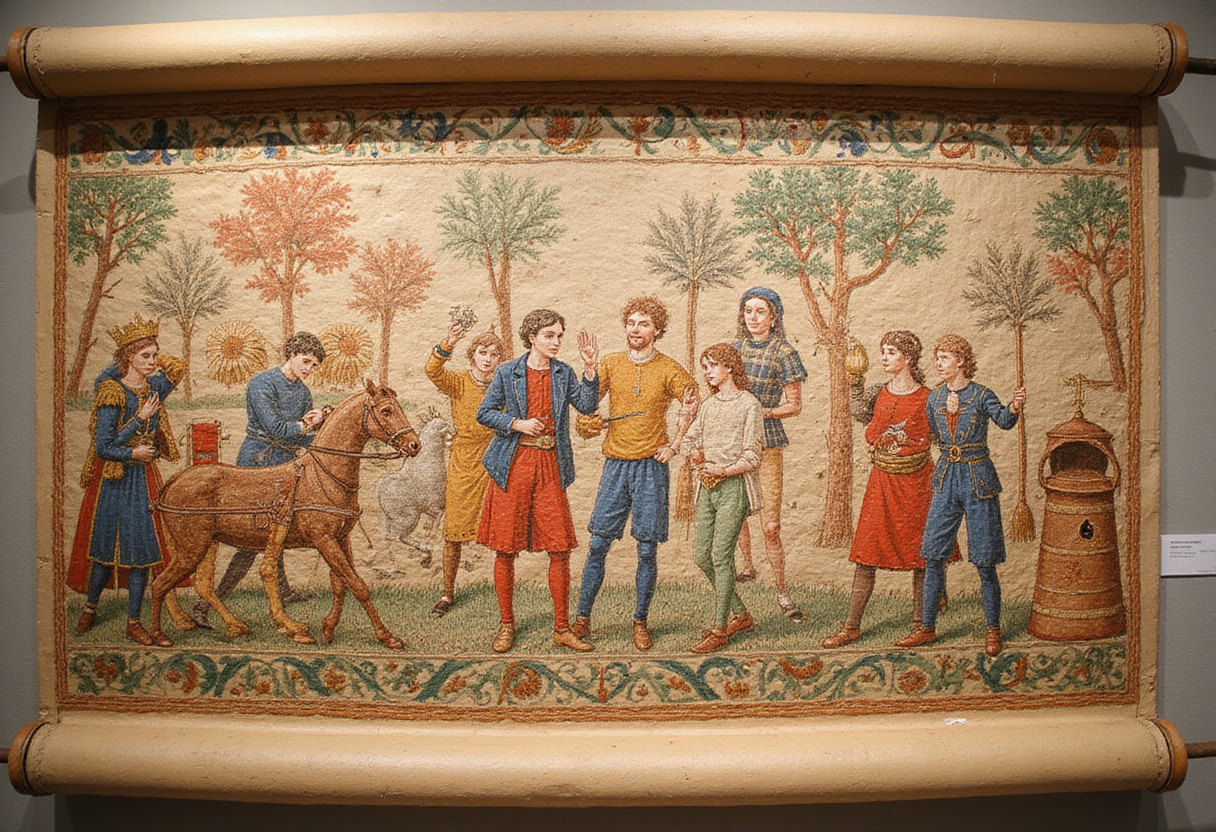
British Museum Reverses Policy, Bans Bayeux Tapestry Photography
British Museum bans Bayeux Tapestry photography in a policy reversal reported by Artforum. Visitors lose a freedom they held since the London loan began.
Updated
The British Museum has reversed course and banned photography of the Bayeux Tapestry. The 11th-century embroidered cloth now sits behind a no-camera rule during its London loan display.
The shift was reported by Artforum, which headlined its notice as an "about-face." Visitors who once raised phones and small cameras inside the gallery can no longer do so.
What is the Bayeux Tapestry?
The work stretches roughly 70 metres in length. It narrates the events leading to the Norman Conquest of England in 1066. The cloth uses wool embroidery, not woven tapestry technique. Scholars date its making to the late eleventh century, shortly after the Battle of Hastings. It includes hundreds of human and animal figures across dozens of scenes.
The object normally resides in Bayeux, in Normandy. The British Museum holds the work on long-term loan while its home museum undergoes renovation.
What changed inside the gallery?
Cameras and smartphones are now barred from the exhibition space. Artforum's headline frames the move as a reversal from earlier practice. The British Museum has not, in the report cited here, given a public reason. No quotation from museum staff accompanies the change.
The decision removes a freedom visitors enjoyed since the loan opened in London. It places the display in line with rules at other UK institutions that show fragile medieval textiles.
Why does the rule matter?
Light exposure harms old fibers. Repeated flash and screen glare add cumulative strain. Most major UK collections restrict photography in rooms that hold early textiles and illuminated manuscripts. The British Museum's earlier allowance stood apart from that norm.
The reversal signals a tighter approach to conservation standards. It also narrows how the public can document the loan during its remaining time on view. The takeaway is plain. Photography bans on fragile medieval objects are now standard practice at the British Museum.
Where does this leave the loan?
The tapestry remains in London under the existing loan terms. The Bayeux home museum has signalled plans to reopen after structural work. Franco-British discussions about the loan period have continued in recent years. No extension beyond the original schedule appears in the source material reviewed here.
The next test will be how the museum explains the rule to visitors at the door, and how it balances public access against fiber protection in future textile loans.
Key points
- British Museum banned photography of the Bayeux Tapestry in a policy reversal reported by Artforum
- The Bayeux Tapestry is roughly 70 metres long and depicts the 1066 Norman Conquest
- Artforum's headline described the move as an 'about-face' from earlier visitor policy
- The tapestry normally resides in Bayeux, Normandy, and is in London on long-term loan
Source: Google News: photography museum
Grace Kim
Show full bio
Senior reporter covering companies, deals and strategy in Photography exhibitions, photographers, photo books, festivals and awards at Lens Gazette.