British Museum Bans Photography of Bayeux Tapestry Loan
The British Museum has banned photography of the 70-metre Bayeux Tapestry during its London loan, drawing on conservation, loan-term and visitor-flow pressures around the 11th-century embroidery.
Updated
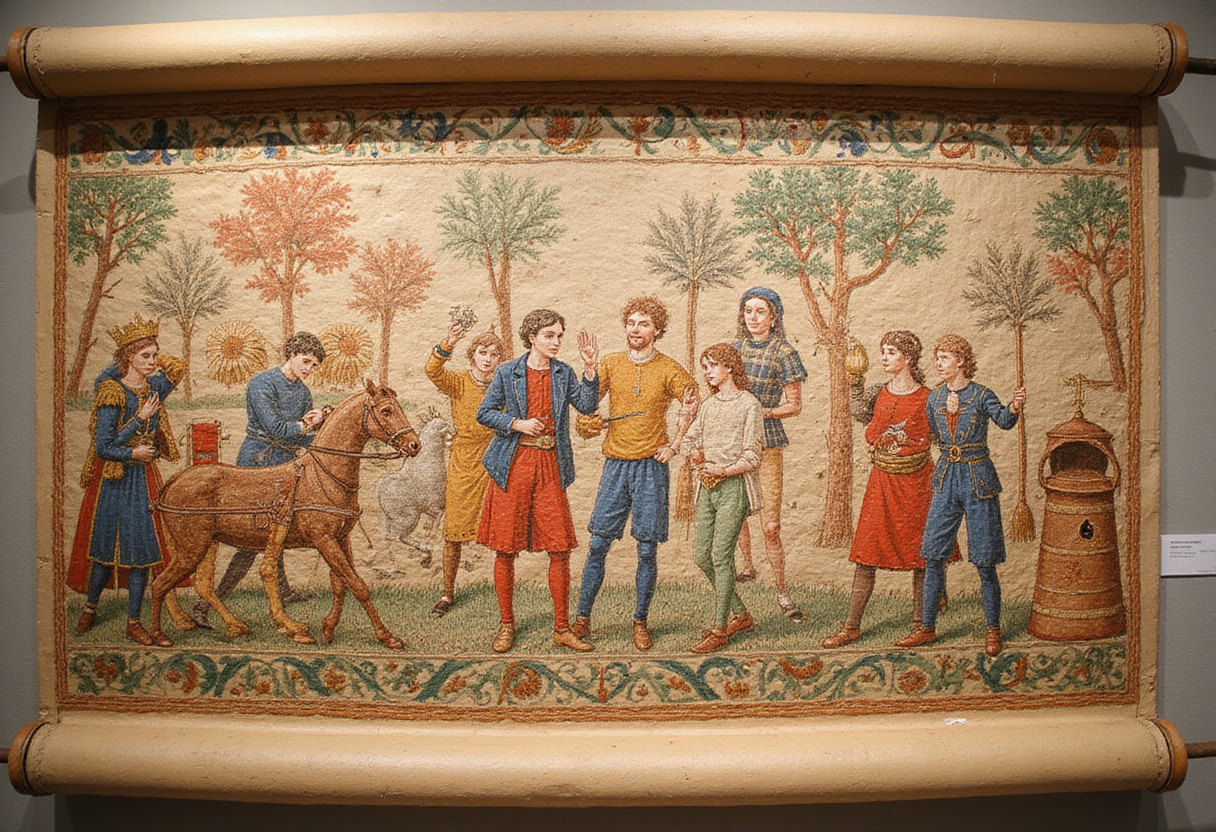
The British Museum has prohibited photography of the Bayeux Tapestry throughout its London display, Town & Country Magazine reports. The rule covers the nearly 70-metre embroidered linen on loan from the City of Bayeux and removes the option of carrying away a personal image of one of Europe's most-visited medieval objects.
The 11th-century textile, commissioned likely within a generation of the 1066 Norman conquest of England, normally resides in a purpose-built gallery in Bayeux, Normandy. Its transfer to London marks the work's first major display outside France in the modern era, and the museum has framed the loan as a once-in-a-generation opportunity for UK audiences.
Why would a museum draw such a hard line?
The report does not specify a published rationale. Standard museum practice offers three overlapping reasons that apply to almost any pre-modern textile, and that bear especially hard on this object.
First, cumulative light exposure. The embroidery uses wool yarns dyed with early-medieval pigments whose lightfastness is poor by modern standards. Museum lighting for such objects typically caps at around 50 lux, and visitor flash multiplies that figure by a factor that compounds across the exhibition's run.
Second, loan terms. Cross-Channel loans of regional treasures usually include restrictions on image circulation, negotiated with the lending municipality. A blanket gallery ban is the cleanest way to enforce such a clause at the door.
Third, visitor flow. A 70-metre narrative work demands a linear route. One stopped photographer stalls a queue in a gallery not built to accommodate it.
The British Museum's general exhibition policy already prohibits flash and selfie sticks across most ticketed displays. For the tapestry, the institution appears to have hardened that baseline into a full prohibition, with no separate press carve-out noted in available reporting.
What does this change for practitioners?
Documentary photographers lose the working file they would normally assemble on a major loan. Educators lose a teaching slide. Editorial coverage now depends on the museum's own press kit, on licensed reproductions from image libraries, or on small-format postcards at the gift-shop counter.
The shift concentrates visual framing in the institution. Where a working photographer might choose a three-quarter angle on the comet scene or a tight crop on the coronation panel, the visitor sees only what the museum's own contracted image-maker chooses to release.
Where does the work sit in craft terms?
The Bayeux Tapestry is crewel embroidery on linen, worked in approximately eight colours of wool yarn across scenes that span the conquest from Harold's oath to the Battle of Hastings. Its craft sits in service of its storytelling: the stitches do the work of early cinema, compressing time across seventy metres of fabric. Photographing it well would mean capturing both textile surface and sequence pace — a problem of patient long lens and careful staging that the new ban takes off the table for everyone except the institution's own image-maker.
What signal does the ban send forward?
The British Museum appears to be positioning the loan as a singular UK encounter rather than a viewing season. That framing — unrepeatable, in-room, no archive — is itself a curatorial statement. It treats the embroidery as event rather than exhibit and asks the visitor to value presence over reproduction.
Visitor terms, including any timed-entry system and the loan's closing date, remain to be published by the institution.
Key points
- The British Museum has prohibited photography of the Bayeux Tapestry during its London display, Town & Country Magazine reports.
- The embroidery measures approximately 70 metres and was commissioned shortly after the 1066 Norman conquest of England.
- The work normally resides in a purpose-built gallery in Bayeux, Normandy.
- The British Museum's standard policy already prohibits flash and selfie sticks across most ticketed displays.
- Museum lighting for light-sensitive textiles typically caps at around 50 lux.
Source: Google News: photography museum
James Calloway
Show full bio
Market editor covering people, launches and day-to-day practice in Photography exhibitions, photographers, photo books, festivals and awards at Lens Gazette.