Bristol Immigration Exhibit Grows Through Community Keepsakes
Bristol’s immigration exhibition runs to February 2027, pairing family keepsakes and enlarged Ellis Island photographs with a community-curated account of work, migration and change.
By Daniel Okafor
Through February 2027, the Bristol Historical & Preservation Society (BHPS) in Bristol, Rhode Island, is hosting “Bristol Immigration 1850–1940: A Complex and Beautiful Tapestry,” an exhibition built from residents’ keepsakes rather than the society’s own archive.
When curator Lisa DeCesare first went to the BHPS archives to plan an immigration show, she found nothing. For a community-curated exhibition, that absence became the point: local residents, not existing institutional holdings, would decide which objects could carry the story.
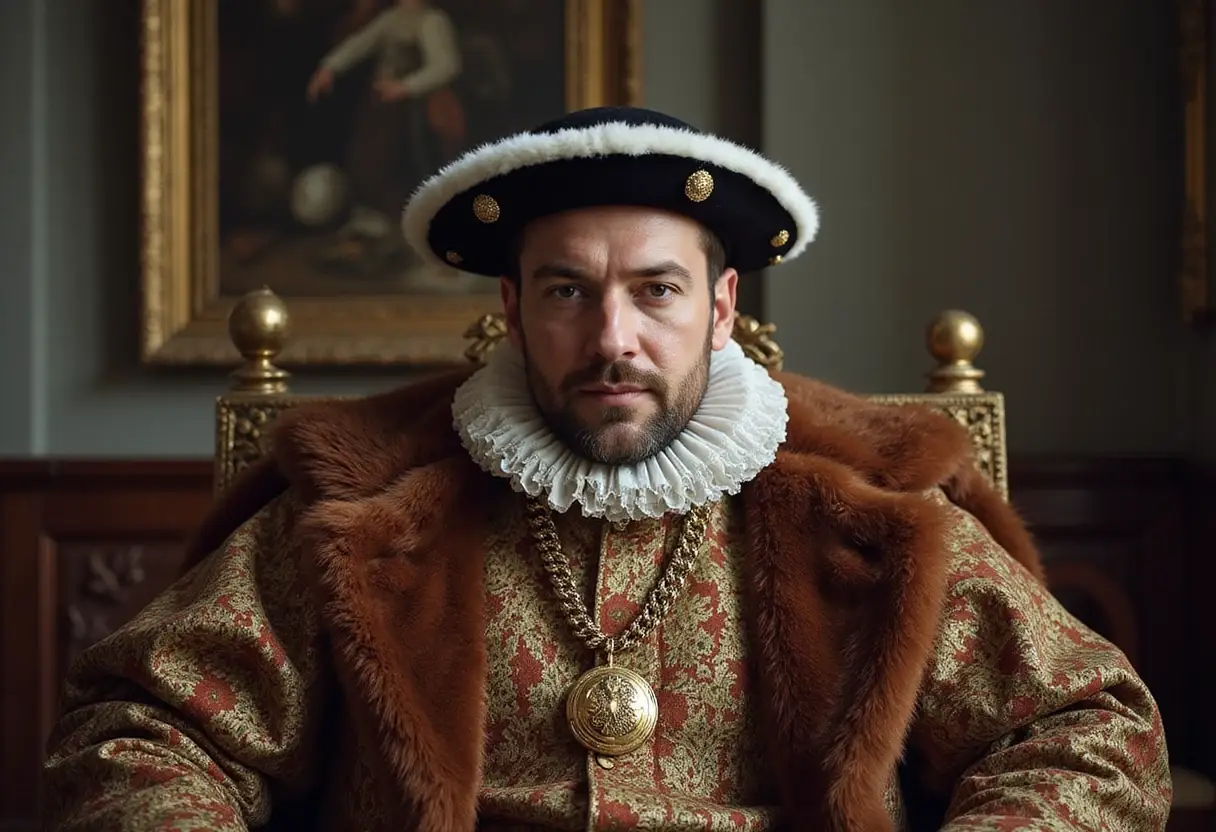
The display includes a family photo album, Grandma’s glass candy bowl, a mother’s wedding ring and an ancestor’s prayer book brought from its country of origin. Large reproductions of works by Augustus Sherman and Lewis Wickes Hine give the museum walls human faces, with the photographers presented in connection with Ellis Island.
The enlargements have a distinct curatorial function: their scale gives faces from newcomers’ stories visual prominence, while the household objects carry spoken testimony. The photographs bring the authority of documentary portraiture; the loans test how much of that authority can emerge from local memory.
No individual photograph titles, dates or sitters are listed, so the wall sequence cannot yet be judged as a coherent series. That limit should temper claims for the installation as a finished photographic history.
Those objects are specific, but the curatorial method is broader. Neighbours speak to neighbours; an heirloom found in an attic can arrive with testimony about relocation as survival, upheaval in search of a better future, and the effort to make a new country—and sometimes a continent—feel like home.
Within BHPS’s own institutional history, this is both a continuation and an expansion of its community-curated work. The exhibition resembles a family album assembled page by page: its order can change as residents contribute material, and the display treats inherited objects as evidence rather than decoration.
Chelsea Johnston, BHPS’s program coordinator, says the loaned objects are “leading to conversation and engagement and storytelling,” even while they remain still inside their cases. She also stresses that the project keeps changing, with each new item prompting another owner to share the story attached to it.
The history behind the loans begins in the latter half of the nineteenth century, when emigrants came to Bristol for work. Some took unskilled jobs in the town’s various textile mills; others found skilled employment at the Herreshoff Manufacturing Company, which built and repaired sailing yachts and other vessels.
As in many parts of Rhode Island, Italians and Portuguese were Bristol’s predominant immigrant groups. The exhibition links much of the state’s present identity to its southern European inheritance and presents the 1850–1940 years as pivotal, giving the household objects a broader civic context.
Yet the show’s reach should not be mistaken for a finished historical record. No loan count, attendance figure, authentication process or accompanying label text is given. Those omissions matter when a display depends on additions and personal testimony as much as documented chronology.
Programming beyond the cases has widened that circle of attention. BHPS has staged craft events at the library, a performance of historical music and an event on bird migration. No explanation is given for how bird migration connects to immigration, but the programme shows organisers using public events to invite questions rather than confine them to the galleries.
DeCesare’s central argument is that the exhibition is not merely about people moving from one place to another; it is about how things change. She also says viewers see familiar history again. Her formulation captures the method: “I find the beauty of doing this is that we’re teaching people, but people are teaching us.”
Catherine Zipf, BHPS’s executive director and a Bristol resident, says that viewing familiar history through the exhibition has altered her relationship to it. She describes the effect as history taking on more vibrant colour, a modest personal testimony rather than an institutional measure.
Although BHPS has held other community-curated exhibitions, organisers say participation here has exceeded anything seen before. That is a claim worth holding loosely: without attendance or participation counts, the scale cannot be tested, even though continued lending and storytelling indicate unusually strong engagement.
Organisers also believe that seeing the town through its past can renew residents’ appreciation of familiar places. The project consequently unsettles the usual hierarchy between institutional collections and private memory. In its terms, a family photo album can sometimes provide the credential that an archive record cannot.
The February 2027 end date is certain; the exhibition’s final shape is not. As loans continue, the next object to arrive may redraw the argument, while the community-curated model gives residents an active role in deciding which stories the museum will hold.
Key points
- “Bristol Immigration 1850–1940” runs through February 2027 at BHPS.
- The initial search of the BHPS archives produced no immigration material.
- From the late 19th century, migrants sought textile-mill and Herreshoff manufacturing work.
- Italians and Portuguese were Bristol’s predominant immigrant groups.
- Concurrent programming includes library craft events, historical music and bird migration.
Source: Google News: photography exhibition
Daniel Okafor
Show full bio
News editor covering companies, deals and strategy in Photography exhibitions, photographers, photo books, festivals and awards at Lens Gazette.