Getty Turns Its Galleries to a Century of Mexican Photography
The J. Paul Getty Museum in Los Angeles has opened an exhibition tracing the evolution of Mexican photography, a survey signaling the institution's deepening commitment to Latin American work.
Updated
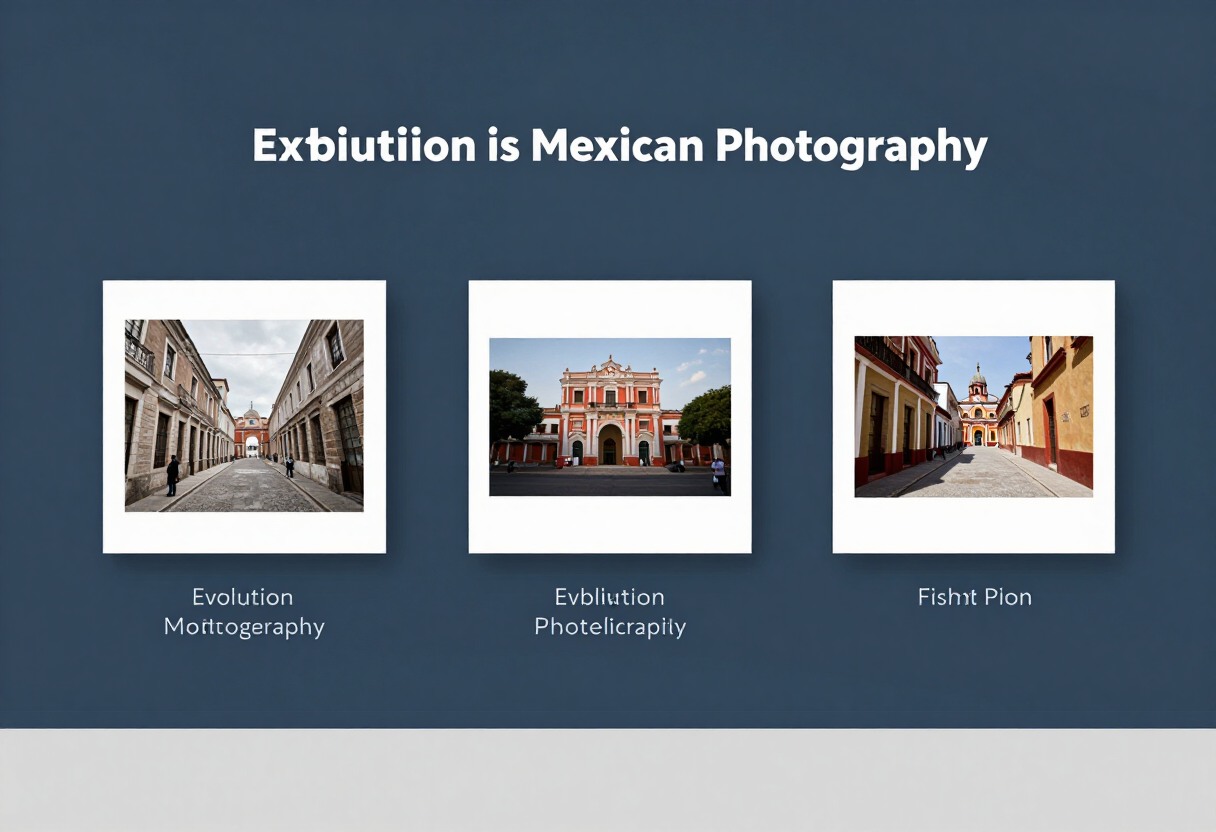
The J. Paul Getty Museum in Los Angeles has opened an exhibition devoted to the evolution of Mexican photography, marking a significant institutional commitment to a photographic tradition that has long deserved the museum's full attention.
The show's premise is historical and developmental rather than monographic. Instead of isolating a single practitioner, the exhibition sets out to trace an arc — how photographers working in and around Mexico shaped, and continually reshaped, a visual identity for their country across generations of practice.
That framing matters. Mexican photography occupies a paradoxical position in the international canon. Individual figures — most famously those associated with the post-revolutionary flowering of the 1920s and 1930s — have achieved household status, yet the broader tradition from which they emerged is too often reduced to a shortlist of iconic names. An exhibition built around evolution rather than individual genius creates room for the lesser-known practitioners, the regional currents, and the technical and institutional shifts that carried the medium forward.
The Getty is well placed to mount such a survey. Its photographs department holds substantial strength in Latin American material, and Los Angeles itself — with its deep demographic and cultural ties to Mexico — gives the institution an audience for whom this history is not foreign but familial. A show of this kind in this city reads less as outreach than as reflection.
What an "evolution" narrative necessarily foregrounds is continuity: the ways later photographers answered, contested, or extended the decisions of their predecessors. Mexican photography's great twentieth-century achievement was the fusion of formal modernism with social urgency — a camera language capable of both aesthetic rigor and political weight. Tracing that fusion across decades, and watching it fracture, revive, and transform under new pressures, is precisely the kind of art-historical work an encyclopedic museum can do better than any commercial gallery or biennial.
It is also the kind of subject that rewards slow looking. Photography in Mexico developed under conditions that European and Anglo-American histories rarely confronted: revolution, state patronage, muralism's shadow, rapid urbanization, and the persistent question of how a nation photographs itself without lapsing into stereotype. The strongest Mexican photographers met that question with formal invention rather than documentary default. An exhibition that maps those inventions in sequence lets viewers see argument and counter-argument across walls, not just isolated masterpieces.
The risk, inherent to any survey of this scope, is compression. When a century-plus of practice must share a single exhibition, nuance can flatten into a tidy progress narrative. Whether the Getty's installation resists that temptation — giving weight to ruptures, dead ends, and figures who complicate the lineage — will determine whether the show functions as genuine scholarship or as celebration.
For audiences, the timing is opportune. Institutional attention to Latin American photography has grown measurably over the past two decades, with major acquisitions, dedicated curatorial posts, and touring exhibitions gradually correcting a canon once organized almost entirely around New York, Paris, and Düsseldorf. A Getty exhibition on this scale signals that correction has reached the highest tier of American collecting institutions — and that Los Angeles intends to be its center of gravity.
The exhibition runs at the J. Paul Getty Museum, and its documentation — catalogue, installation views, and public programs — should offer scholars and photographers alike a consolidated reference point for where this tradition has been. If the show succeeds on its own terms, it also sets a precedent: expect the Getty's photography department to build on this foundation with further Latin American programming in the seasons ahead.
Key points
- The J. Paul Getty Museum in Los Angeles is staging an exhibition on the evolution of Mexican photography.
- The show takes a historical, developmental approach rather than focusing on a single photographer.
- The exhibition reflects growing institutional attention to Latin American photography at major American museums.
Source: Google News: photography exhibition
Daniel Okafor
Show full bio
News editor covering consumer brands and retail at Lens Gazette.