Bargny, the Sea and Cement: A Decade of Documenting Dispossession
Belgian duo Laurence Grun and Pierre Vanneste have spent nine years documenting Bargny, Senegal, where cement plants, a coal power station and coastal erosion are squeezing Lebou fishing communities.
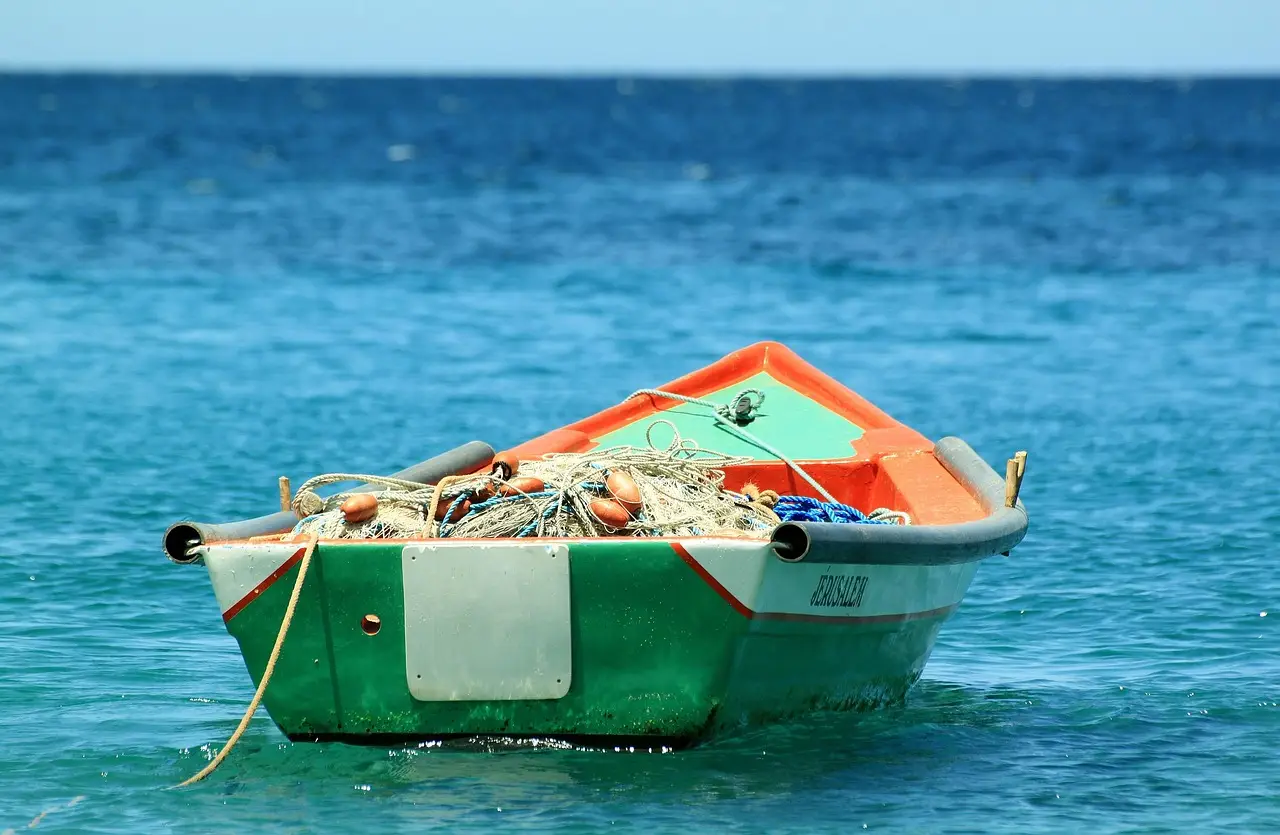
Since 2016, Belgian filmmakers Laurence Grun and Pierre Vanneste have been photographing and filming Bargny, a Senegalese fishing town 35 kilometres from Dakar that is being squeezed, quite literally, on all four sides. Their long-form documentary project Bargny, la mer et le ciment (Bargny, the Sea and Cement) records what the promise of "emergence" actually looks like on the ground: family lands declared of public interest, eroding cemeteries, and a coast advancing on homes.
The geography of the squeeze is precise. To the west, a cement plant and its quarries have redrawn the landscape. To the east, a coal-fired power plant, a mineral and bulk cargo port, and a special economic zone are taking hold. To the north sits the planned Diamniadio urban hub, a new city rising from the map. To the south, the ocean itself, swelled by climate change, is eating into homes, communal spaces and coastal burial grounds.
For the Lebou fishing communities who live there, this is not a development story. It is a slow subtraction. Ways of life and relationships with the land, passed down through generations, are being unsettled as family lands pass to industrial and real estate developers. Pollution, the destruction of marine and terrestrial ecosystems, and pressure on water resources are all deteriorating living conditions as the territory closes in around its inhabitants.
The official narrative, the duo note, sells industrialisation as a promise of development, jobs and modernity. Their work stands as the counter-audit — and the reality it documents is, in their words, "far more complex and ambivalent."
Why keep going back?
The project's method is its argument. Grun (director) and Vanneste (director and photographer) build their work on sustained, repeated presence in the field: returning, observing and reconnecting with inhabitants year after year. The point is to capture gradual transformations that a single image, however strong, cannot hold. Erosion does not photograph well in one frame. Over a decade, it becomes undeniable.
The work has been accumulating chapters. In 2018, the first produced the web documentary Bargny, ici commence l'émergence, published by Le Soir and Basta!mag and presented at the Festival des Libertés in Brussels in 2019. More recently, Bargny has become a chapter of MANDARGA, a 2026 medium-length documentary devoted to the material and social traces left by industrial processes — the pair's first feature film.
Who are Grun and Vanneste?
Both Belgians, Grun and Vanneste work across photography, transmedia documentary and augmented video — an unusually hybrid toolkit, deployed consistently toward social and environmental subjects. Their recurring theme is the impact of industrialisation on territories and living beings.
The CV backs the ambition. Together they co-directed Bargny, the Real Face of Economic Emergence, a finalist for the 2019 Visa d'Or for Digital News — one of the more credible signals in digital journalism. They also conducted the long-term investigation [P2O5], the Toxic Impact of Phosphate, and DREMMWEL, a project on overfishing. Their work has run in the press and shown in museums and at international festivals.
MANDARGA, then, is less a new direction than a consolidation: it extends field-based experiments and theoretical reflections the two have been running for nearly a decade.
What does the project add up to?
There is a quiet stubbornness to this kind of practice. Where most coverage of West African industrialisation arrives with the groundbreaking ceremony and leaves before the dispossession, Grun and Vanneste have stayed for nine years and counting, letting the images accumulate the way the cement dust does.
The verdict is not subtle, but it is earned. Bargny is what "economic emergence" looks like when you photograph it from the fishing boats rather than the investor decks.
With MANDARGA due in 2026 and the Bargny chapter inside it, the project is heading from web documentary and festival circuit toward its first feature-length form — and the transformations it tracks, presumably, will not have finished by then either.
Key points
- Laurence Grun and Pierre Vanneste have documented Bargny, Senegal, 35 km from Dakar, since 2016.
- Their web documentary Bargny, ici commence l'émergence was published by Le Soir and Basta!mag in 2018 and shown at Brussels' Festival des Libertés in 2019.
- Bargny features in MANDARGA, the duo's first feature film, a medium-length documentary due in 2026.
- Their earlier Bargny work was a finalist for the 2019 Visa d'Or for Digital News.
- The town is hemmed in by a cement plant and quarries (west), a coal power plant, cargo port and special economic zone (east), the planned Diamniadio urban hub (north) and climate-driven coastal erosion (south).
Original: bargnyproject.com
Olivia Hart
Show full bio
Staff writer covering people, launches and day-to-day practice in Photography exhibitions, photographers, photo books, festivals and awards at Lens Gazette.