Sebastião Salgado's Posthumous Retrospective Opens in Germany
A posthumous retrospective of Sebastião Salgado's photography has opened in Germany, inviting a full reckoning with five decades of work.
Updated
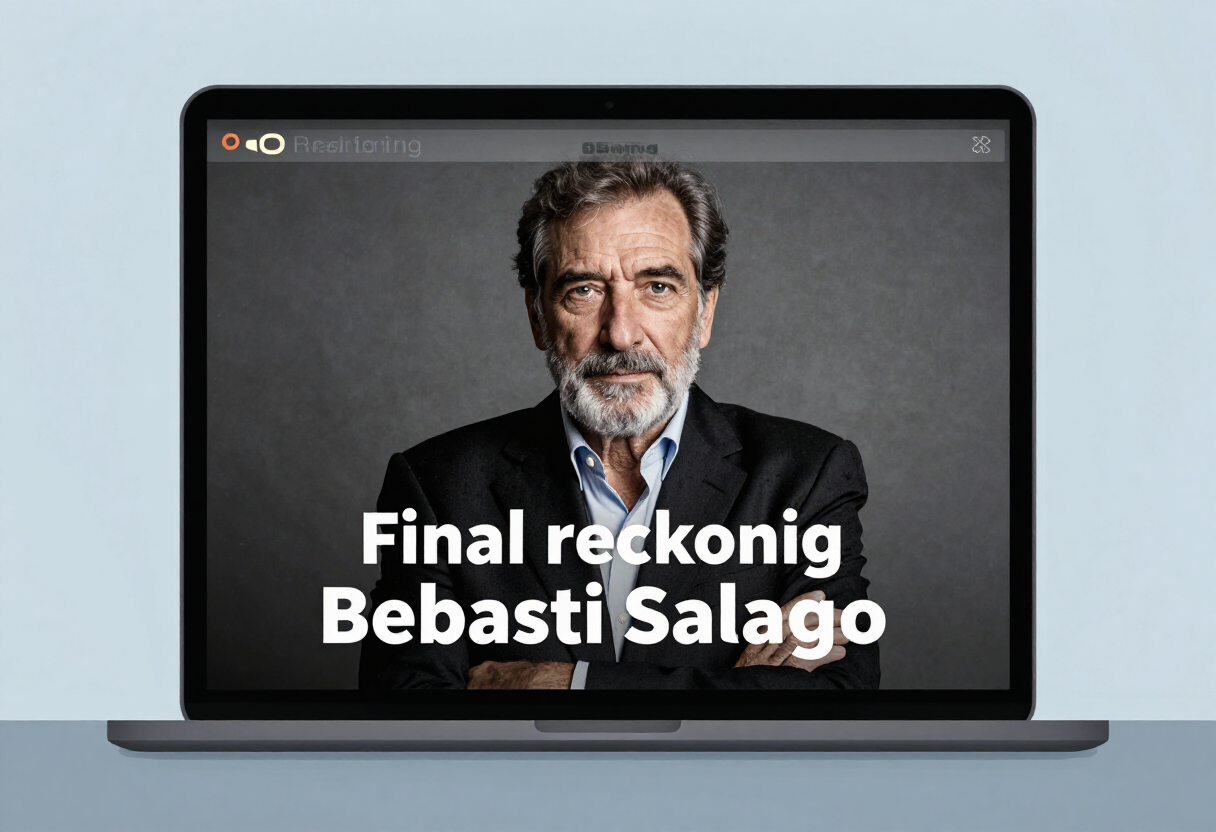
A posthumous retrospective of Sebastião Salgado's photography has opened in Germany, giving European audiences their first comprehensive reckoning with the Brazilian photographer's life's work since his death.
The exhibition frames itself exactly as its title suggests: a final accounting. Salgado, who spent more than five decades photographing migration, labor, famine and the natural world, built one of the most recognizable bodies of work in documentary photography. A retrospective staged after his death invites a different kind of looking — one that measures the whole arc rather than the latest project.
Salgado's career divides, roughly, into two great movements. The first belongs to his black-and-white reportage: the gold miners of Serra Pelada crowded on ladders in open pits, the famine and displacement of the Sahel, the exodus of migrants across continents for his multi-year series Migrations. The second belongs to landscape and ecology — most visibly Genesis, his eight-year survey of unspoiled places, and the reforestation of his family's former cattle ranch in Minas Gerais, carried out with his wife and lifelong collaborator Lélia Wanick Salgado through the Instituto Terra.
That duality — witness to human suffering on one side, a kind of visual hymn to the planet on the other — has always divided critics. Some have placed Salgado alongside the great humanist documentarians, praising the formal gravity and moral seriousness of his large-format monochrome prints. Others have questioned whether the same aesthetic that beautified his reportage could aestheticize suffering itself. A posthumous retrospective, freed from the pressure of a living author's intentions, is precisely the venue in which that argument can be rehearsed against the full range of the work rather than a single series.
The German presentation matters institutionally as well. Salgado's prints — often exhibited at monumental scale — have been staples of major museums and biennials for decades, and his books, produced with Taschen and designed by Lélia Wanick Salgado, rank among the most widely circulated photography monographs ever published. Whatever curatorial line the German retrospective draws through that material, it will function as a reference point for how the canon treats a photographer whose popularity with the public sometimes outstripped his standing among critics.
For a photographer who spent his career insisting that photography could be a form of testimony and of protest at once, the final reckoning now passes to the institutions that will steward the work. This German retrospective is the first major step in that process, and it is unlikely to be the last.
Key points
- A posthumous retrospective of Sebastião Salgado's work has opened in Germany
- Salgado photographed for more than five decades, from Serra Pelada to Genesis
- The exhibition offers the first comprehensive European view of his work since his death
Source: Google News: photographer retrospective
Daniel Okafor
Show full bio
News editor covering consumer brands and retail at Lens Gazette.