Japanese Food Truck Apologizes for AI Menu Image of Cheese It Never Served
Japan treats food packaging photos as legal fact, yet AI-generated food images are spreading through its restaurants — diners are pushing back, and the law hasn't caught up.
Japan treats a photograph on a food packet as a legal statement of fact, and that principle is now colliding head-on with generative AI. Recent reports describe a wave of AI-generated food images spreading through the country's restaurants and menus — and a consumer backlash strong enough that some diners say they boycott venues that use them.
What makes Japan different?
In much of the world, packaging photography flatters the contents. Japan does not permit it. Under some of the world's toughest packaging regulations, companies must show the product exactly as it exists inside the box, and any discrepancy — even a minor exaggeration — can be treated as a violation with legal consequences.
The logic is unusually literal. If a packet of crackers shows toppings arranged a particular way, the crackers inside must match that arrangement. Size, shape and appearance all have to closely mirror the picture. A photograph, in effect, functions as a claim.
That legal tradition is the backdrop for the current friction. An increasing number of food and beverage businesses are turning to generative AI to produce food images, menus and promotional posters, and the speed of adoption appears to have outrun both the law and public tolerance.
What happened with the food truck?
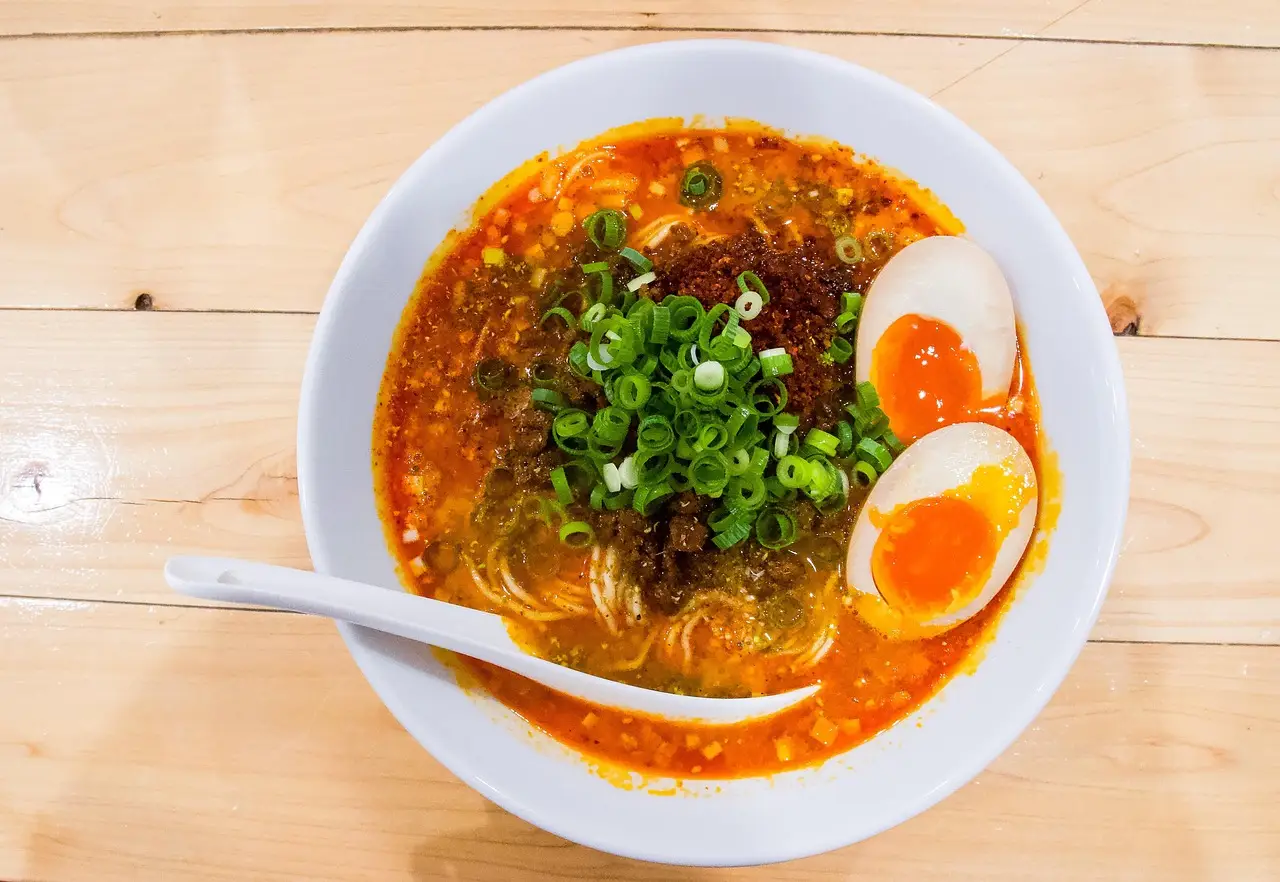
The incident that crystallized the debate involved a Japanese food truck that went viral — for the wrong reason. It promoted a "tomato and scrambled egg rice bowl" with AI images showing a melted cheese pull, though the dish contained no cheese at all. The gap between pixels and plate was not subtle; it was a fictional ingredient.
The online backlash came fast. The food truck owner issued an apology and pledged to replace the AI images with real photographs. It's a small story with a large signal: in a market where photographic accuracy carries legal weight, an invented ingredient reads as something close to fraud.
What does the law not say?
Here is the gap. Under current Japanese law, there is no requirement to disclose whether an image is AI-generated. The strict rules govern the match between image and product on packaging; they do not, at least not explicitly, force a restaurant to say whether its poster came from a camera or a prompt.
Consumers, though, are not waiting for legislation. Reports describe frustrated Japanese diners who deliberately avoid restaurants using AI-generated promotional imagery — a self-organized enforcement of authenticity that no regulator mandated. Whether that sentiment holds as AI images get cheaper and more ubiquitous is an open question, and the source offers no survey data to quantify the boycott sentiment.
There is also an unresolved definitional problem. If a packaged photo must depict the real item, does a photorealistic AI image of a dish that genuinely exists — accurately rendered, no invented cheese — violate anything? The reports don't say. That silence matters, because most promotional AI imagery will likely live in exactly that gray zone: plausible, appetizing, and technically faithful to the menu.
Why does this matter beyond Japan?
Japan has long served as a benchmark for honest food presentation — the country's precision extends to its famous hyper-real plastic food replicas, which exist precisely so customers can see what they will be served. AI imagery inverts that covenant. It offers the appearance of a dish without requiring the dish, or the cook, or the camera.
The questions now confronting the industry are blunt ones. What happens to consumer trust when the appetite is sold by a rendering? How far should AI be allowed to replace traditional photography and design in a market built on pictorial honesty? And will lawmakers extend the packaging standard's spirit — the image as factual claim — into an era when images can be generated wholesale?
No regulatory change is on the table yet, according to the reports. But with consumer anger already producing apologies and image swaps at the street level, the pressure on Japan to codify disclosure rules for AI food imagery seems likely to grow.
Key points
- Japanese law treats packaging photos as factual claims; any discrepancy, even minor exaggeration, can bring legal consequences
- A food truck apologized and pulled AI images after promoting a cheese-pull "tomato and scrambled egg rice bowl" containing no cheese
- No Japanese law currently requires disclosure of whether an image is AI-generated
- Some Japanese consumers say they avoid restaurants that use AI-generated promotional images
Original: x.com
Daniel Okafor
Show full bio
News editor covering companies, deals and strategy in Photography exhibitions, photographers, photo books, festivals and awards at Lens Gazette.