Wildlife Silhouettes Turn Shape Into the Story
Kate Garibaldi's essay on wildlife silhouettes argues that outline, posture and backlight can tell a stronger story than feather detail, provided shape stays readable.
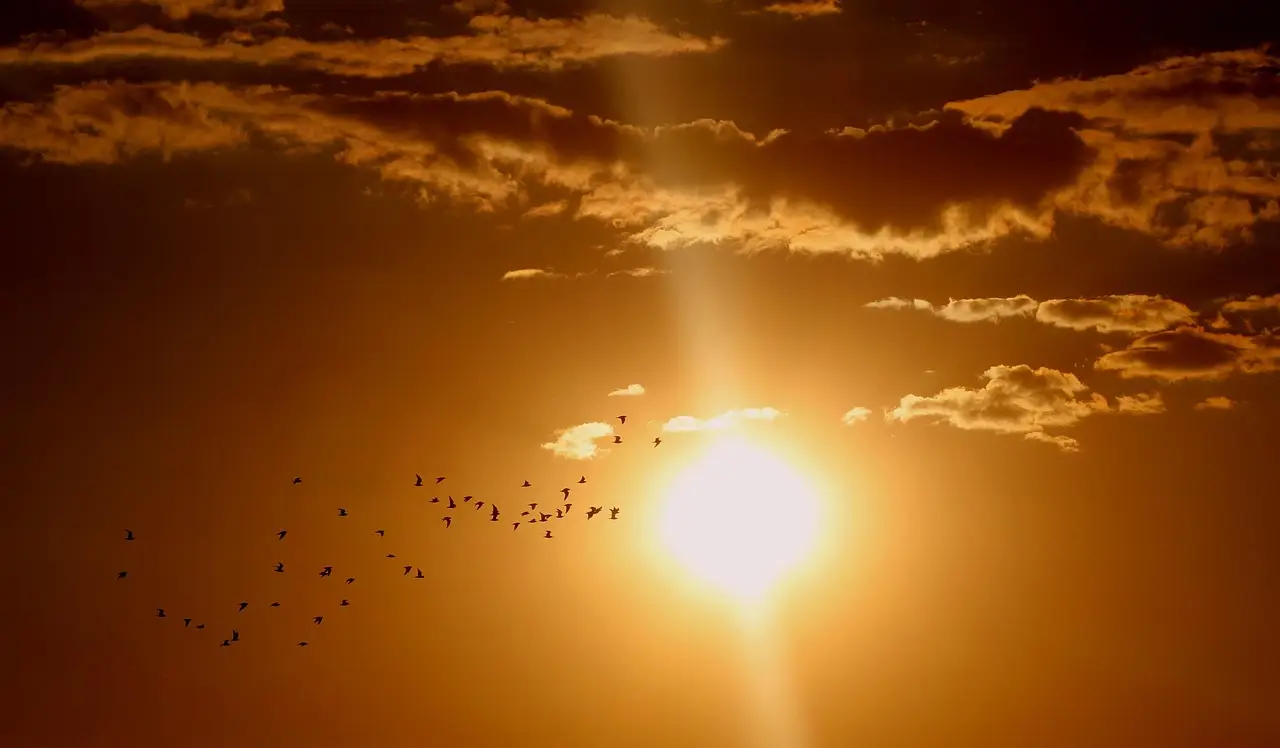
Wildlife photography usually rewards detail: feather texture, coat pattern, the catch of an eye. Photographer Kate Garibaldi makes the opposite case in a recent PetaPixel essay. She argues that reducing an animal to its outline can produce a more expressive image, one that asks the viewer to recognize the subject through form rather than surface. The essay, illustrated with her photographs, works through the method behind the technique with unusual care.
The takeaway is simple. A silhouette is a storytelling decision, not an exposure accident.
Why does shape carry the image?
When detail disappears, the outline becomes the only information left. Garibaldi writes that body proportions, head position and distinctive anatomy determine whether an animal stays recognizable. Some subjects suit the approach naturally. An elk with defined antlers, a fox with raised ears, or a bird with wings extended reads clearly even when rendered fully dark. An animal facing the camera can fail. Its body compresses, and features overlap into an unreadable mass.
Angle matters as much as species. A broadside position separates body, head and legs into distinct shapes. A three-quarter angle adds depth when the animal turns its head. A slight change in ear position, she notes, can transform an ordinary outline into a recognizable portrait.
What role do posture and timing play?
Posture becomes the main carrier of character once detail is gone. Garibaldi points to specific gestures: an elk bugling with head raised, a bear standing on its hind legs, a heron poised with neck extended. These moments communicate behavior without any visible fur or feather. Anticipation beats reaction. If a photographer knows a bird will launch from a particular perch, or that an animal pauses on an exposed ridge, they can prepare rather than scramble.
Continuous shooting helps with movement, but a burst of frames guarantees nothing. The goal, she writes, is the most meaningful position, not the most frames. For a bird in flight, that often means waiting for full wing extension.
How does the author handle exposure?
Garibaldi's own practice sits between the pure black silhouette and the conventional portrait. She treats backlit photographs as part of the same creative technique and often lifts the shadows slightly, either with exposure settings in the field or in post-processing, to reveal texture in fur and feathers while keeping the effect of the backlight. The result still emphasizes shape and the subject's relationship to light, but it carries more visual information than a flat dark shape.
Her technical guidance serves that vision. Automatic metering tends to brighten a dark subject against a bright sky, producing shadow detail where a silhouette needs none. Exposure compensation or manual exposure, set for the sky, keeps the subject dark and preserves the background's tonal transitions. The histogram matters most for holding the subtle color gradations that make a sunset background interesting.
What about composition and background?
Contrast is the foundation. Sunrise and sunset offer the familiar version, but Garibaldi also names bright overcast skies, open water, reflections and distant illuminated terrain as workable sources of separation. The sun need not appear in the frame. A colored band at the horizon or a bright gap between clouds can serve.
She treats the background as an active compositional element. Uniform skies let the shape stand out; complex backgrounds add atmosphere but can compete. Direction counts too. A bird flying toward the open side of the frame feels less confined than one pressed against the edge. Scale tells its own story: a large silhouette emphasizes anatomy, while a small animal against open sky communicates distance and isolation. Reflections in shallow water can double the shape into symmetry.
When is a silhouette the wrong choice?
Garibaldi is clear that the technique does not fit every encounter. Many situations need coloration, markings or expression to tell the story, and a close portrait can communicate far more than a dark outline. Her advice is to photograph a scene both ways when conditions allow, then compare which interpretation conveys the moment more effectively.
The essay closes on portfolio logic. Photographers spend long hours chasing sharp detail with telephoto lenses; silhouettes add variety and help tell a broader story about an encounter or location. Garibaldi's photographs suggest the approach rewards patient field observation as much as technical control, and her stated direction is toward images that reveal slightly more in the shadows, blending graphic shape with just enough light to deepen the frame.
Key points
- Photographs illustrating the essay are by Kate Garibaldi, published on PetaPixel.
- The essay covers anatomy, posture, composition, background light, separation and exposure for silhouettes.
- Garibaldi often lifts shadows slightly, in the field or in post, to keep texture inside a backlit shape.
- She advises photographing a scene both as a traditional exposure and as a silhouette to compare results.
Original: instagram.com
Grace Kim
Show full bio
Senior reporter covering companies, deals and strategy in Photography exhibitions, photographers, photo books, festivals and awards at Lens Gazette.