Why Reading Animal Behavior Beats Fast Reflexes in Wildlife Work
Kate Garibaldi's field method pairs species research with a one-press 'oh heck' camera preset — turning behavioral cues into 1/2000-second wildlife frames.
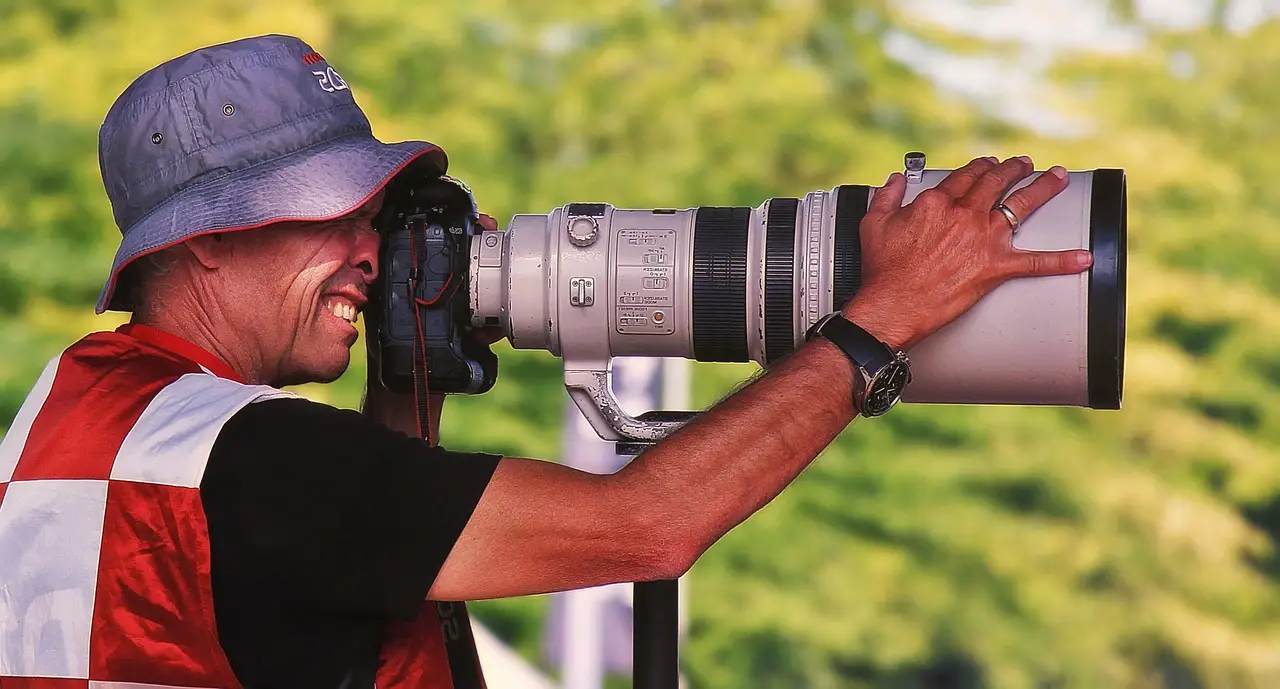
Wildlife photographer Kate Garibaldi argues that the difference between reacting to an action and being ready for it is behavioral knowledge, acquired before the camera even leaves the bag. Writing for PetaPixel, she lays out a working method built on observation, species research and disciplined camera preparation — one that practitioners can apply at a local park as readily as at a seasonal gathering.
Why behavior changes the photograph
A sharp portrait shows what an animal looks like; a behavioral frame shows how it lives. Garibaldi writes that the way an animal moves, feeds, communicates or responds to its surroundings adds "another layer of meaning and wow factor" to an image. Displaying, feeding, preening or interacting subjects introduce action and context, giving viewers something to interpret rather than simply observe.
Animals follow routines governed by instinct, environmental conditions and social relationships. Photographers who recognize those patterns can anticipate what happens next instead of chasing it. Garibaldi's own example: ducks that preen in water typically dunk, shake and flap to dry off — a sequence she says lets her capture the "angel wing" pose repeatedly across species.
Where to learn the craft
Research and field observation carry equal weight, she argues. Documentaries, books, scientific articles and species-specific resources teach feeding habits, courtship, territorial displays, migration and nesting — and footage shows how one action leads into another.
Birds make the ideal study subject because they are visible almost everywhere and display an extensive range of behavior. Her concrete training exercise costs nothing: sit on a park bench with a book and watch how nearby birds move, how often they pause to scan, and what they do immediately before flight.
She names her own observation sites:
- Rookeries along the New Jersey shore, for nesting, courtship, feeding and interactions
- Conowingo Dam in Maryland, where bald eagles gather in winter around fish, feeding and competing
- Areas of open water attracting wintering ducks, geese and snow geese
Local Audubon chapters, birding groups and organized photo walks at nature centers, she notes, can locate nearby hotspots and supply camaraderie and field assistance. The goal at these sites should be to observe as much as to photograph, and returning to the same location reveals patterns a single visit cannot.
What changes behind the camera?
Recognizing body language buys preparation time. Posture shifts, feather position, head movement and wing displays signal courtship, aggression, alertness or imminent flight; a bird shifting weight, lowering its body or opening its wings means raising shutter speed and engaging continuous autofocus before takeoff. Hunting herons and egrets, she suggests, are ideal practice subjects because their repetitive stalking of shallow water gives photographers time to test their own timing.
Her working shutter-speed ladder starts at roughly 1/500 second for stationary subjects, moves to 1/1000 second for walking animals, and reaches 1/2000 second or faster for takeoff, flight and rapid interactions. An eagle preening on a branch is manageable at 1/1000; a squabble over a fish argues for 1/2000 to 1/3200. Aperture follows the subject count: f/4 or f/5.6 isolates a single animal, while f/5.6 to f/8 — or even f/8 may not suffice — keeps two interacting birds sharp, trading light for depth of field. Auto ISO with a set minimum shutter speed handles unpredictable light more practically than manual adjustment mid-action.
Her most transferable tip is a custom "oh heck" button: one press switches the camera to its widest aperture, 1/2000 second, continuous autofocus and burst shooting, so sudden action — a takeoff, a fight — never finds her mid-menu.
What about interactions and ethics?
Multi-anteraction frames — courtship, competition, parents and young — carry more meaning than isolated portraits because they capture a relationship, she writes, though autofocus may hunt between overlapping subjects and wider compositions preserve context.
Ethics frame the whole method: maintain distance, follow local guidelines, and never disturb nesting, feeding or resting animals. "The objective is to document natural behavior, not change it," Garibaldi writes. Her screech owls rest in cavities by day; the real behavior of those nocturnal predators emerges only at dusk — a reminder that patience and repetition, not proximity, produce the strongest work.
Key points
- Garibaldi's 'oh heck' preset: widest aperture, 1/2000s, continuous AF, burst mode on one button
- Shutter ladder: 1/500s stationary, 1/1000s walking, 1/2000s+ for takeoff and flight
- Named sites: New Jersey shore rookeries and Conowingo Dam, Maryland, for wintering bald eagles
- Two-subject frames call for f/5.6–f/8 instead of wide-open apertures
Original: instagram.com
James Calloway
Show full bio
Market editor covering people, launches and day-to-day practice in Photography exhibitions, photographers, photo books, festivals and awards at Lens Gazette.