Tim Walker's Fairyland Opens at the National Portrait Gallery
Tim Walker's six-year project Fairyland opens at London's National Portrait Gallery until 7 Feb 2027, reframing queer icons in Tudor-style frames and turning the gallery's own history against it.
Tim Walker has spent six years building an exhibition, and it opens with a photograph his mother took in 1975. The picture shows a small boy in fairy wings. That boy, now in his fifties, is the subject and author of Tim Walker's Fairyland: Love and Legends, on show at the National Portrait Gallery in London until 7 February 2027.
"It's a picture of Tim from 1975, taken by his mum Lorna," says curator Susanna Brown. "When Tim showed it to me last year I said, 'We need to open the exhibition with that because it sets the scene for the whole project.'"
The show does not behave like a standard gallery retrospective. The NPG's white-cube minimalism is gone; the opening room is painted bold lavender, a giant hand reaches from one wall holding a flower, and the wall text carries squiggly doodles written in the first person. Exhibition design comes from Shona Heath, Walker's collaborator of 30 years.
Where did the project come from?
Walker writes that he was "born happily gay" on 27 November 1970, and that he soon learned "society said my nature was wrong." Fairyland was his childhood escape, a place to dream up romances and adventures; later the word 'fairy' became a homophobic taunt, and growing up amid news of HIV and AIDS — including the UK's grim public health campaign — he came to feel that being queer was dangerous, even shameful. Only now does he feel able to publicly embrace his sexuality through an exhibition.
The trigger was accidental. In 2020 Walker found a plaque on Highbury Fields commemorating the UK's first public gay rights protest, and realised he was born on the same day. The fight for the world he now inhabits had been running his whole life. That sent him off to photograph its pioneers.
What does the show actually look like?
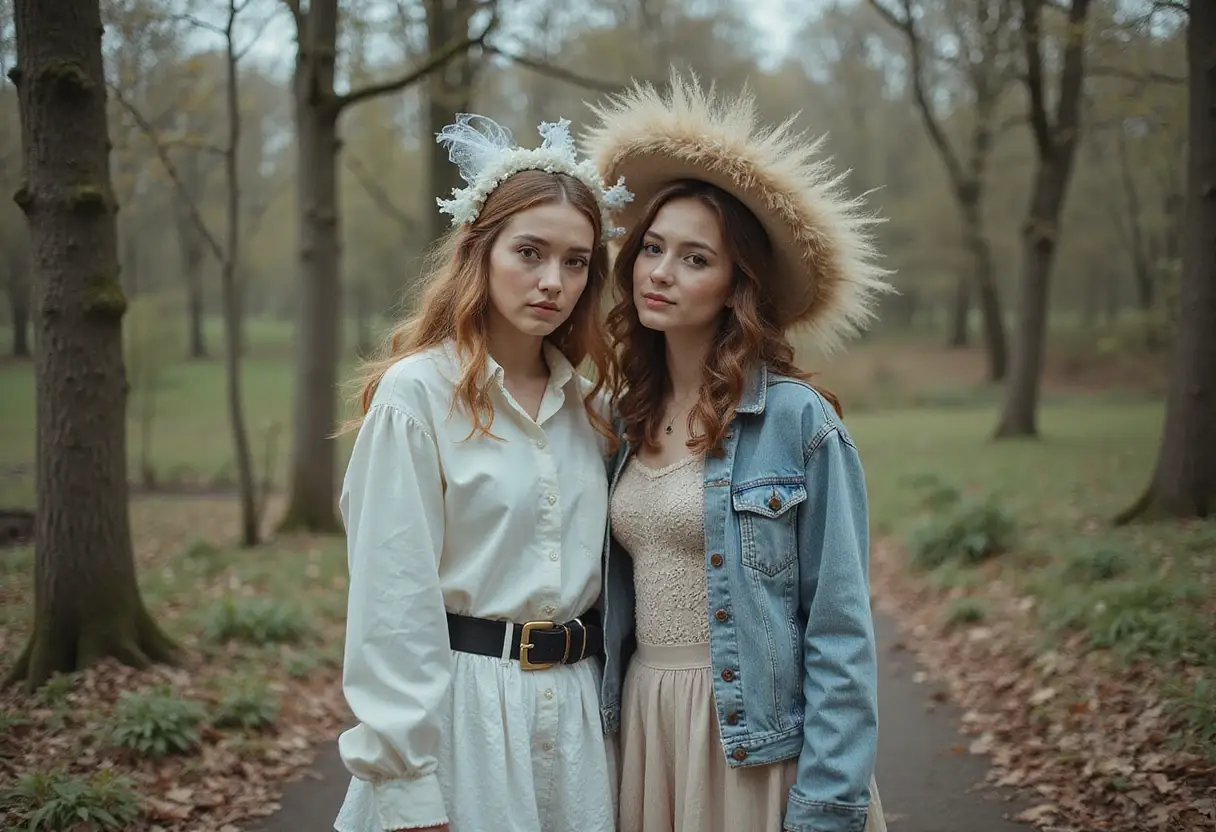
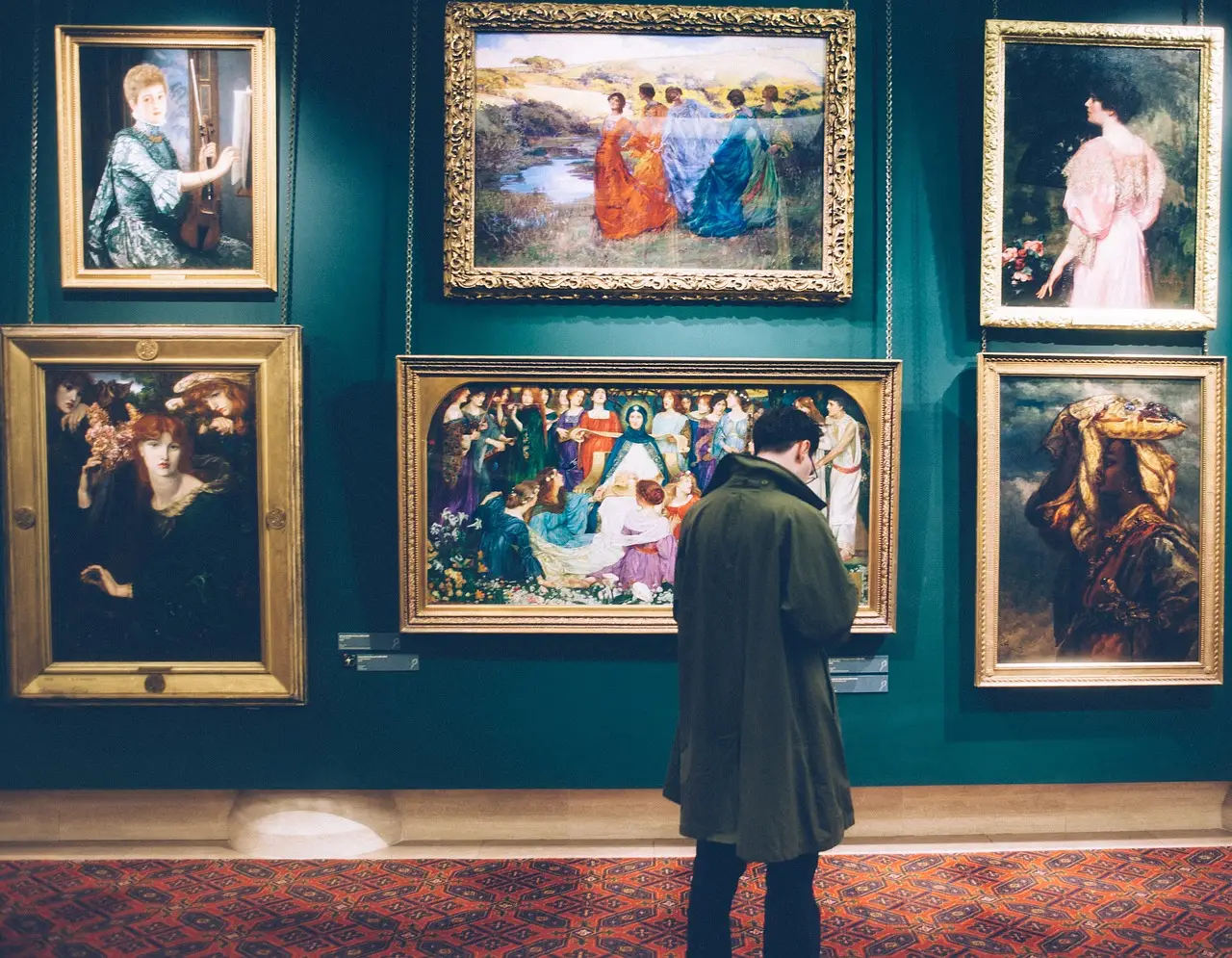
The first room of photographs references oil paintings in the NPG's collection dating to the 1500s. "Holbein and Hilliard memorialised the movers and shakers of the Tudor aristocracy for hundreds of years to come," Walker writes. "The trailblazers I photographed made history and deserve to be on our gallery walls too."
Early activists Shân Veillard-Thomas and Lisa Power, of the Gay Liberation Front and Stonewall, are photographed and framed in that style — some frames are the gallery's own, hundreds of years old, while Walker placed antique frames inside the images themselves, producing trompe l'oeil effects. It's an intervention, quietly asking who gets honoured and why.
Every portrait is a collaboration. Actress and activist Liz Carr told Walker her teachers cast her as the monarch in school plays, reasoning that her wheelchair was already a kind of throne. With Walker she reimagined herself as Elizabeth I after the NPG's c.1592 'Ditchley Portrait' — and every element in the picture, dress, shoes, earrings, the dog, even the walls, is made of paper. The metaphor, Brown explains, is that assumptions about a queer disabled woman are paper thin, and Carr can tear them down.
Fifteen sitters speak on the free audio guides rather than the usual artist-curator duo. "We're not only showing people's faces, we're also bringing their voices into this building," says Brown.
The room devoted to the early HIV and AIDS crisis — survivors, carers, and campaigners such as Jimmy Somerville — sits deliberately off the busy central corridor as a refuge, with portraits including Sunil Gupta, who has lived with HIV since 1995, and who helped found Autograph, the association for Black photographers.
Later rooms turn to the present: Queer Today features artists such as Jesse Glazzard, pictured with a live falcon. A black-painted room celebrates the Rebel Dykes, the community forged at Greenham Common and at the Chain Reaction club in Vauxhall, drawing on Karlheinz Weinberger's 1960s biker-girl photograph and rockabilly iconography. "I felt they needed a whole room for their big personalities and their big hair," Brown smiles. "We wanted to make these massive prints."
The final room, Pinups — Elton John, Chappell Roan, Björk, Kate Bush among them — is the boldest move in a gallery packed with families and school groups: a carpeted, velvet-brocade celebration of sexuality, drawing on Aubrey Beardsley, Japanese Shunga woodblocks, Fragonard and older mythologies.
"Queerness is as old as humanity, and these images are so joyful," says Brown. "It's an ecstatic finale to the show." Walker, for his part, frames the whole thing as a message: "I have the chance to tell the next generations that you are not alone. Your difference is your power."
A six-year project answering a national collection with its own frames. Whether the institution changes further after Walker leaves will be the real test.
Key points
- Tim Walker's Fairyland: Love and Legends runs at the National Portrait Gallery, London, until 7 February 2027.
- Walker worked on the exhibition for six years; it opens with a 1975 family photograph taken by his mother Lorna.
- Curator Susanna Brown previously worked with Walker on Tim Walker: Wonderful Things at the V&A in 2019-20.
- 15 sitters' voices feature on the exhibition's free audio guides.
- The project was sparked in 2020 by a plaque on Highbury Fields marking the UK's first public gay rights protest, on the day Walker was born.
Source: 1854.photography
Daniel Okafor
Show full bio
News editor covering companies, deals and strategy in Photography exhibitions, photographers, photo books, festivals and awards at Lens Gazette.