The Met's First Japanese Photography Show in Three Decades Opens
The Met opens its first Japanese photography exhibition in over 30 years: 15 artists, 25+ books, tracing the American military presence in postwar Japan until May 2027.
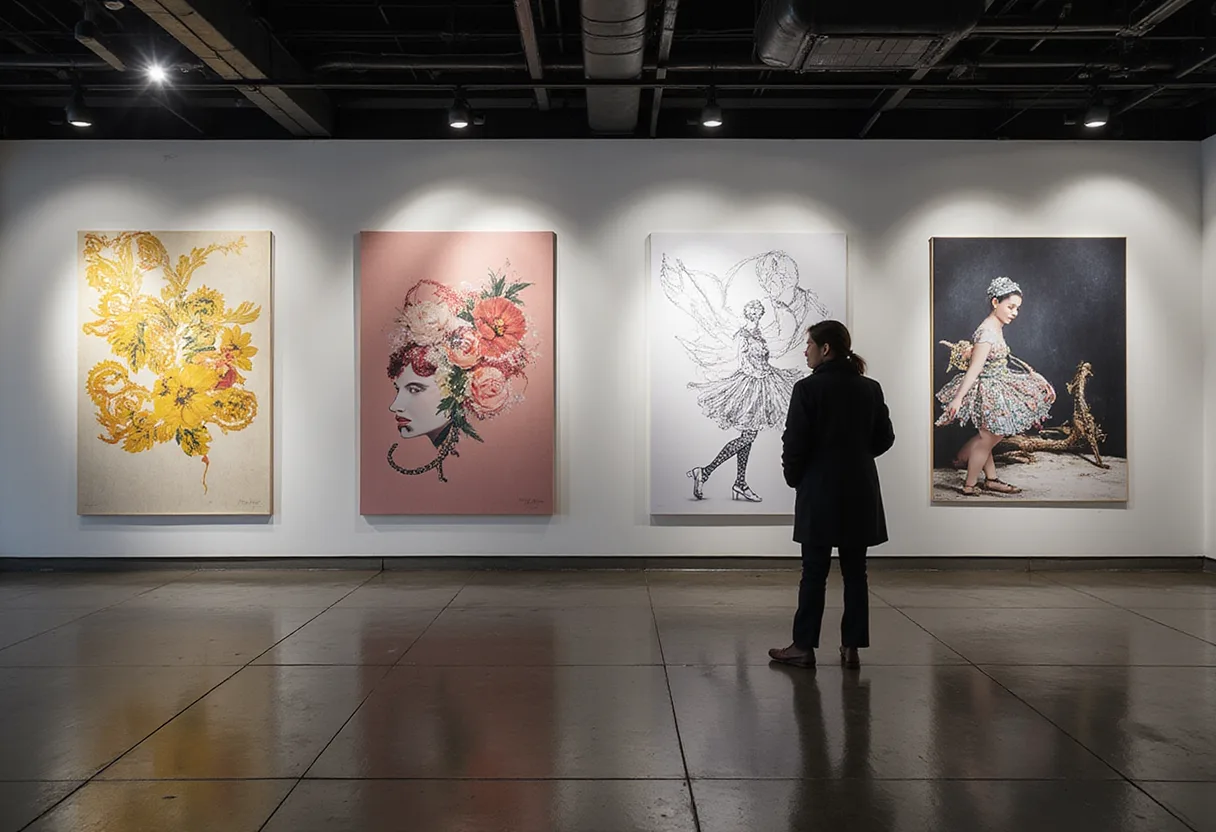
The Metropolitan Museum of Art in New York will present its first exhibition of Japanese photography in more than three decades. "A Long Shadow: Postwar Japan Through the Lens" runs until 2 May 2027 and brings together 15 intergenerational artists. The show combines photographic prints, more than 25 books and magazines, and a video installation. Together, these works show how photographers in Japan documented the country across the decades after the Second World War.
The exhibition signals a deliberate institutional shift. The Met last organized a show of Tōmatsu Shōmei's work in 1992. "The Met had organized an exhibition of Tōmatsu's work in 1992, and we were interested in building a stronger collection of his photographs and postwar Japanese photography more broadly," says exhibition curator Lisa Sutcliffe. Recent acquisitions back this ambition. The museum acquired a print by Tōmatsu in 2023, and several works in the show entered the collection through funds and gifts in 2025 and 2026. The takeaway is simple: the Met is investing seriously in postwar Japanese photography after a long absence.
What does the exhibition cover?
The show began with a narrower idea and grew. "Okinawa initially seemed like a compelling subject for an exhibition, bringing together questions of military occupation, sovereignty, rupture and identity," Sutcliffe says. "As my research developed, I expanded the scope to explore how photographers across Japan responded to and recorded the American military presence." The result spans generations, from Tōmatsu, who responded to his own historical moment, to contemporary artists such as Yamashiro Chikako, who continues to explore its consequences more than 50 years later.
A 2023 acquisition anchors the presentation. Sutcliffe describes the Tōmatsu piece: it depicts a woman caught between blurred layers of chain-link fence at an American airbase in Okinawa. Fences carried weight for the artist. Tōmatsu described them as porous boundaries dividing rich and poor, past and present, east and west. "His perspective was always from the outside looking in," Sutcliffe says. "For him, the perimeters of US military bases were particularly charged." The image distills the exhibition's core theme: occupation as a visible, physical divide.
Who are the photographers in the show?
Several bodies of work give the exhibition its human register. Ishikawa Mao's intimate series "Red Flower: The Women of Okinawa" (1975–77) depicts women who worked as hostesses in bars frequented by Black American servicemen in Okinawa. Ishiuchi Miyako, born in 1947, is represented by "Yokosuka Story #5" from her 1977 series "Yokosuka Story." Iida Takao's "Non Vol 2: Okinawa Wa Nigayo" ("Okinawa is a Bitter World"), from 1970, and Heshiki Kenshichi's series "Lungs of a Goat," also from 1970, round out the picture of a turbulent era.
Heshiki's work carries a specific biography. His family owned a factory that supplied the American military with flak vests. Photographs such as "Seeing the Customer Off" focus on the ordinary routines of this work. "Rather than objectifying the women he photographed, Heshiki emphasizes their strength and agency," Sutcliffe says. "I find this image particularly evocative in the way it conveys the dignity, mystery and ritual of their work." The curator's point is clear: these are portraits of labor, not spectacle.
Why do the books and magazines matter?
The exhibition treats printed matter as art, not as documentation. More than 25 books and magazines appear alongside the prints. Sutcliffe credits a shift in scholarship for this: "Thanks to the pioneering scholarship of Kaneko Ryuichi, Toda Masako and Ivan Vartanian, photobooks have come to be recognized as works of art in their own right, and magazines are increasingly being studied as equally important sites of artistic experimentation. This has encouraged museums to think beyond individual prints and consider the many ways photographers conceived, sequenced and circulated their work." For Japanese photographers of the postwar decades, the book was often the primary vehicle, and the Met's installation follows that logic.
Sutcliffe also situates the show within a broader institutional record. "Over the past several decades, important exhibitions and publications have expanded our understanding of postwar Japanese photography, particularly the experimental work associated with the Provoke era," she says. "A Long Shadow" builds on that foundation while steering it toward questions of occupation and its afterlife.
What does the curator want visitors to take away?
The exhibition argues for history told from below. "Political and military histories often overlook the experiences of ordinary people whose lives are profoundly shaped by these events," Sutcliffe says. "These photographs offer the perspectives of artists, sex workers and islanders, revealing how the upheavals of the postwar period were experienced in everyday life, particularly by women whose stories are often left out of historical narratives."
She also frames the show as a mirror for the present. "The moment when Japanese artists turned to photography and publishing to make sense of the tremendous changes taking place around them feels relevant to the social transformations unfolding across the globe today," she says. "I think there is something instructive about looking at how artists of earlier generations responded to periods of uncertainty and upheaval, and what they hoped to communicate through their work. What might their experiences teach us about our own moment in history?" Her closing hope is that visitors consider the role of photography in shaping how history is constructed and remembered, and leave with a more nuanced understanding of the American military occupation's lasting impact on Japanese society. With a run extending to May 2027, the Met has given this material room to settle into the institution's permanent conversation about photography and power.
Key points
- First Japanese photography exhibition at the Met in more than 30 years; runs until 2 May 2027.
- Features 15 artists, over 25 books and magazines, and a video installation.
- Curator Lisa Sutcliffe acquired a Tōmatsu Shōmei print in 2023 depicting a woman behind chain-link fence at an Okinawa airbase.
- Includes Ishikawa Mao's Red Flower series (1975–77) on women working in bars for Black American servicemen.
- The Met's last Japanese photography show was a Tōmatsu exhibition in 1992.
Source: theguardian.com
Grace Kim
Show full bio
Senior reporter covering companies, deals and strategy in Photography exhibitions, photographers, photo books, festivals and awards at Lens Gazette.