ICP Gathers 28 Japanese Women Photographers Across Seven Decades
Twenty-eight Japanese women photographers, from Eiko Yamazawa to Rinko Kawauchi, span seven decades at ICP through January 11, 2027 — the show's first U.S. presentation after Arles.
The International Center of Photography in New York has opened "I'm So Happy You Are Here: Japanese Women Photographers from the 1950s to Now," a survey of 28 photographers running October 15, 2026 through January 11, 2027 at 84 Ludlow Street. It is the first United States presentation of an exhibition that originated at Les Rencontres d'Arles in 2024 and has since traveled to The Hague, Frankfurt, Tokyo and London.
Lesley A. Martin, Mariko Takeuchi and Pauline Vermare curated the show, which grew out of the Aperture photobook published in 2024. Martin serves as Executive Director of Printed Matter; Takeuchi teaches at Kyoto University of the Arts; Vermare is the Phillip and Edith Leonian Curator of Photography at the Brooklyn Museum. Aperture organized the exhibition with Les Rencontres d'Arles, supported by the Ishibashi Foundation, the Anne Levy Charitable Trust and the 1970 Japan World's Exposition Memorial Fund.
What does the exhibition cover?
The show spans more than seven decades of practice and maps Japan's postwar transformations — reconstruction, rapid economic growth and the rise of consumer culture — through the women who documented and interpreted them. The curators argue these photographers did not merely record a changing society; they challenged its conventions and expanded what the medium could do.
"Each photographer is so powerful and so different," co-curator Mariko Takeuchi said at the press preview.
The earliest generation includes Eiko Yamazawa, who in 1926, aged 27, traveled alone aboard a cargo ship to the United States to study painting in San Francisco. Her mature photographic work turned to bold abstractions of color, form and composition — a through-line the exhibition traces forward to artists working now.
Who are the photographers on view?
The full list runs from postwar figures to contemporary practitioners: Aya Fujioka, Mikiko Hara, Hiromix, Mao Ishikawa, Miyako Ishiuchi, Mari Katayama, Rinko Kawauchi, Hiroko Komatsu, Michiko Kon, Yurie Nagashima, Asako Narahashi, Mika Ninagawa, Tamiko Nishimura, Rika Noguchi, Sakiko Nomura, Momo Okabe, Toshiko Okanoue, Yuki Onodera, Tomoko Sawada, Lieko Shiga, Kunié Sugiura, Nozomi Suzuki, Yuki Tawada, Toyoko Tokiwa, Tokuko Ushioda, Hitomi Watanabe, Eiko Yamazawa and Miwa Yanagi.
The range of approaches is the exhibition's argument in itself. Miyako Ishiuchi built a postwar practice around memory, the body and the traces of personal history. Rinko Kawauchi, representing a later generation, brings a poetic sensibility to ordinary moments, locating beauty and mystery in fleeting detail. Sakiko Nomura works in atmospheric black-and-white portraits of intimacy and the human body. Hiroko Komatsu takes a conceptual route, presenting photographs within immersive installations that examine industrial landscapes and contemporary society. Mao Ishikawa's documentary work addresses life in Okinawa and the realities surrounding the American military presence there.
What did the artists themselves say?
During the opening weekend, three participating photographers — Yurie Nagashima, Tomoko Sawada and Yuki Tawada — discussed their intergenerational practices in an artist talk. Nagashima, who uses self-portraiture to challenge traditional representations of women through personal experiences of family and motherhood, explained her method in the exhibition's wall text:
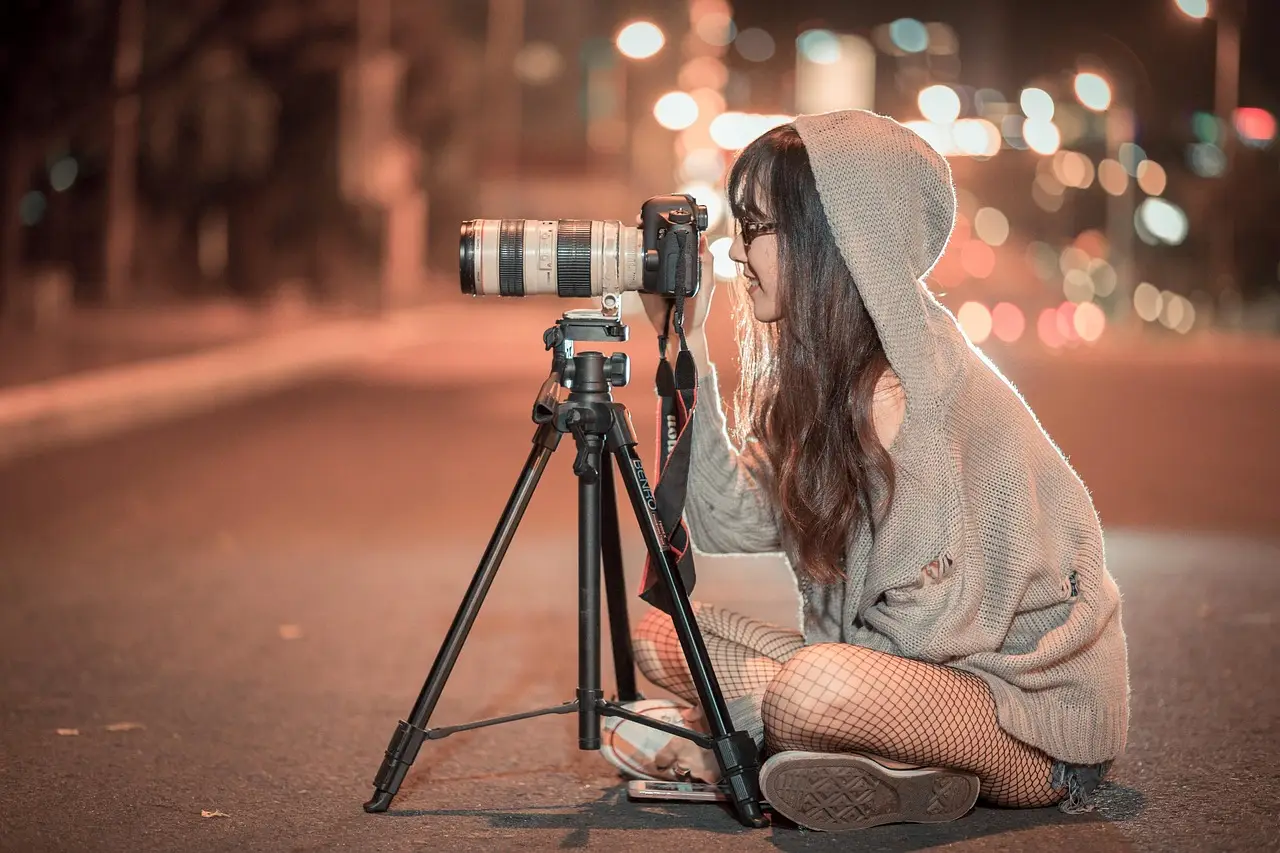
"The self-portrait means that you can take on both roles, as a model and as a photographer. When you have a camera on a tripod, you have the space in front of the camera and also the space behind the camera. It's very symbolic. It's a way of taking action against the historical roles of the male and female in photography."
Her formulation gives practitioners a compact theory of the show's larger project: women claiming both sides of the tripod, author and subject at once.
Why does this exhibition matter for the canon?
For a field still largely narrated through male postwar masters, the exhibition proposes a correction rather than a supplement. The work on view, the curators contend, is not a parallel history but an integral part of Japanese photographic history, shaped through independent and often unconventional approaches.
The institutional trajectory backs that claim. A 2024 Aperture book became a 2024 Arles exhibition, then toured four European and Asian cities, and now anchors a fall slot at ICP — a publishing-to-museum pipeline that signals durable institutional commitment rather than a one-off gesture.
With the New York run open through January 11, 2027, and curators based at Printed Matter, Kyoto University of the Arts and the Brooklyn Museum, the project seems positioned to keep moving through further venues and into teaching curricula on Japanese photography.
Key points
- The exhibition runs October 15, 2026 – January 11, 2027 at ICP, 84 Ludlow Street, New York.
- It presents 28 Japanese women photographers spanning the 1950s to the present.
- Curators are Lesley A. Martin, Mariko Takeuchi and Pauline Vermare.
- The show originated at Les Rencontres d'Arles in 2024 and grew from an Aperture photobook of the same year.
- It is the exhibition's first presentation in the United States after stops in The Hague, Frankfurt, Tokyo and London.
Original: icp.org
James Calloway
Show full bio
Market editor covering people, launches and day-to-day practice in Photography exhibitions, photographers, photo books, festivals and awards at Lens Gazette.